All sessions will begin on Tuesday, July 23, 2024, and end on Friday, July 26, 2024. All consultants teach or have taught AP and are endorsed by the College Board. They include AP Exam Readers and AP award winners, and they serve as lead consultants for other regional and national AP Institutes.
This week of APSI is Face-to-Face instruction on the UA Little Rock campus, from 8:00 am to 5:00 pm each day.
Consultant Information and Course Descriptions
July 23-26, 2024
AP Biology - Combined: Marshall Welch
Marshall Welch, Alpena School District 5, Alpena AR
AP Biology for New and Experienced AP Teachers
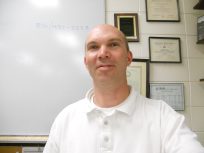 Marshall Welch has been a high school science educator for 34 years with the last 27 of those at Alpena High School in northwest Arkansas. He works also as a part-time faculty member at North Arkansas College where he is a physical science, astronomy, and biology instructor. While at Alpena, he has taught AP Biology for 19 years. In 2015, Marshall was recognized as a National Board Certified Teacher. He adheres to a curriculum framework driven instruction philosophy that has resulted in 75% of his students earning a 3, or higher, on the AP Biology Exam in the last 4 years.
Marshall initiated a competitive high school science research program that has over 1,400 regional, state, and international science fair awards won by students. He has had the privilege of mentoring 24 Intel International Science and Engineering Fair finalists. He has also collaborated with the Alpena FFA Chapter to produce over 100 National FFA Agriscience Fair Finalists. 15 of those were national award
winners earning 1st, 2nd, or 3rd place honors.
Marshall was selected among a small group of high school science educators to be trained as a College Board Professional Development Consultant in April 2013. He was trained in Chicago and has presented professional development events for the New York Stem Initiative, Texas Gear Up, Oklahoma Department of Education, California Department of Education, AP Regional Conference, AP National Conference, China Workshop and Summit (Shanghai, China), and the Los Angeles Unified School District along with local events in Arkansas. He has presented over 60 Advanced Placement Summer Institutes in Arkansas, Texas, New Mexico, Pennsylvania, and Costa Rica. He finds the move to a framework driven and inquiry-based curriculum in the AP sciences an interesting challenge and enjoys helping teachers transition to this direction of AP Science education.
Course Description
The 2024 AP Biology APSI will acquaint teachers with the eight Units and spiraling of the four Big Ideas found in the AP Biology curriculum framework. Participants will take an in-depth look at the AP Biology Course Exam and Description and how it is organized into Big Ideas, Units, Enduring Understandings, Essential Knowledge statements, Learning Objectives, and Science Practices. Each day will address a unit found in the curriculum framework. Each day will also include an AP Strategy session designed to enhance an AP Biology learning environment by moving from teacher to student-centered instruction. AP Concepts will also be offered in a daily session to help teachers assist students toward skills needed in an AP Biology class. Select AP Biology labs that correlate to each unit will be included. Additionally, inquiry investigation will be performed to help the teacher move from guided to more open-inquiry labs for their students. Participants are asked to have basic classroom supplies, a calculator, personal protective equipment and supplies for laboratory activities, and an internet capable electronic device if available. Through practice, sharing of ideas, discussions, and modeling, it is the intention that participants will become more skilled in instructing their students to become more successful in achieving the skills necessary in the AP Biology program of study.
What to Bring
Laptop, USB drive to save your work
AP Chemistry - Combined: Lisa Cumming
Lisa Cumming, Olmstead Falls High School, Olmstead Falls, OH
AP Chemistry – Combined for Teachers New to and Experienced in AP
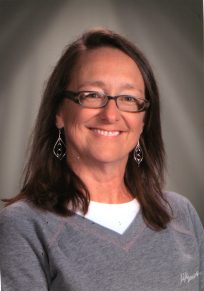 Lisa Cumming has taught Chemistry and AP Chemistry for 35 years, spending much of that career at Olmsted Falls High School – located in a suburb just west of Cleveland, Ohio. She started her career in Akron, Ohio at an urban school while spending summers teaching in the Upward Bound Program. In addition, Lisa has taught at the University of Akron and at Cuyahoga County Community College, teaching chemistry, math, physics, and biology. Once she was well-established at Olmsted Falls High School, she started the AP Program with the introduction of AP Chemistry. More recently Lisa introduced AP Seminar, with AP Research introduced the following year. Lisa is also quite involved in the AP Program outside of school as she has been an AP Reader since 2000 and then a Table Leader and is now a Question Leader. In addition, she wrote materials for AP Insight which targeted misconceptions in AP Chemistry, has been an item writer for the AP Chemistry Exam, co-authored a lab for the AP Inquiry-Based Lab Manual, and has helped to edit several chemistry textbooks. Lisa is also involved with the National Math and Science Initiative as a curriculum writer, teacher mentor, and coach, as well as tutoring chemistry for a private tutoring agency. When not involved in education, she and her husband enjoy spending time with their family of 4 girls, doing anything and everything outdoors, and travelling the world.
Course Description
The AP Summer Institute in Chemistry will focus on assisting AP teachers in building the foundations for success in teaching the AP Chemistry curriculum. An emphasis will be placed on the Course and Exam Description and its implementation in your classroom. You’ll also learn about completing the digital activation process at the start of the school year that will give you immediate access to the new resources and will help ensure that your students can register for AP Exams by the fall deadlines.
By attending this APSI, you’ll gain deeper insight into the following key takeaways, among several others:
- Understand the Course
- Plan the Course
- Teach the Course
- Assess Student Progress
- Engage as a Member of the AP Community
In addition, specific attention will be paid to the following AP Classroom resources:
- unit guides and the AP daily video collection
- AP question bank and unit assessments
- unit-based Personal Progress Checks
- joining the AP teacher community and other groups
Content that has been introduced and updated since the last redesign, such as photoelectron spectroscopy (PES) and hybridization, as well as content that has been reduced in scope or eliminated, such as molecular orbital theory will be noted and explained. Laboratory investigations will be introduced along with discussion of the theory, with special emphasis on student-inquiry labs. Participants will perform virtual and hands-on laboratory exercises with various levels of inquiry.
The exam will be analyzed, and the grading rubrics will be explored in detail. Participants will practice grading free response questions using the rubrics, and opportunities to practice writing assessment questions that will incorporate the exam’s inquiry style will be provided. We will review the requirements of the course audit and the syllabus requirements and time will be allotted for participants to prepare their own audit document, if that is necessary. Time will also be allotted for sharing best instructional practices and ideas as a group.
Teachers will also prepare an AP level activity or unit plan in small groups during the week and present them to the group. In addition, time will be allotted for the participants to lay out the plan for the school year for their own course. Finally, there will be ample time for sharing resources via a Google Drive folder.
What to Bring
Please bring a laptop or Chromebook with Vernier graphical analysis (a free program) downloaded.
AP Physics: Holley Mosley
Holley Mosley, Liberty High School, Frisco, TX
AP Physics 1/ Algebra-Based
 Holley Mosley teaches at Liberty High School in Frisco, TX. She had the honor of opening the school in 2006 and has been teaching physics there since 2007. She is experienced in teaching all of the AP Physics courses (AP Physics 1, AP Physics 2, AP Physics C: Mechanics, and AP Physics C: Electricity & Magnetism, as well as the retired AP Physics B course). In addition to teaching physics, she serves as the Science Department’s Instructional Coach, a role where she invests in growing the professional capacity of other teachers in her department. Holley has served as a reader, table leader, question leader, and writer for the AP Physics exams since 2014. She was a member of the AP Physics 2 Development Committee, the team of four high school teachers and four college professors who develop the AP Physics 2 exam and provide input for the curriculum, from 2018-2023. Additionally, she served as a member of the committee that revised the AP Physics Curriculum Framework, as an AP Daily Instructor, and as an AP Classroom question reviewer.
Holley has a B.S. in Forensic Science from Baylor University, M.Ed. in Curriculum and Instruction from The University of Texas at Arlington and a M.S. in Physics from Texas A&M – Commerce.
Course Description
This course will focus on the learning objectives and science practices that are part of the redesigned AP Physics 1 course and exam that is launching in the 2024-2025 school year. This in-person course is designed to maximize the learner experience, providing relevant AP content and pedagogy through meaningful engagement – all focused on best practices for preparing your AP students for success in your course and on the exam. Participants will learn strategies for promoting scientific inquiry, developing a laboratory program, developing scientific arguments, and utilizing resources in AP Classroom. Participants will also be invited to share their best activities, lessons, or labs with the group.
What to Bring
laptop, USB drive
AP Environmental Science: Courtney Mayer
Courtney Mayer – University of Texas at Austin High School, San Antonio, TX
AP Environmental Science for teachers both New to and Experienced with AP
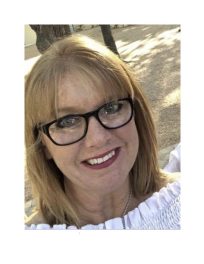 Courtney Mayer taught science courses for 23 years, including AP Environmental Science for 15 years at Churchill High School in San Antonio, Texas and currently at UT High School in Austin, Texas. She is a College Board Consultant for AP Environmental Science in the Southwestern Region. She has presented all over the United States and in China. Courtney is also a College Board consultant for Analytical Reading and Writing Strategies in Science, Designing Investigations and Experiments, Analyzing and Interpreting Quantitative Data, AP Course Skills and Practices, and is on the writing committee for the Pre-AP Biology Curriculum and a consultant for the College Board’s National Faculty and Cross-Curricular Instruction. Courtney is a reader and table leader at the AP Environmental Science reading where she scores free-response questions for thousands of students. She was honored in 2011 with the College Board's AP Award for helping to promote and continue the mission set by the College Board. Courtney has published 11 books, all around science topics, particularly AP Environmental Science. Courtney
graduated with a degree in Wildlife and Fishery Science from Texas A&M University in 1992 and she received her Master of Education in Administration from Lamar University.
Course Description
The goal of the AP Environmental Science course is to provide you with the scientific principles, concepts, and methodologies required to understand the interrelationships of the natural world, to
identify and analyze environmental problems both natural and human-made, to evaluate the relative risks associated with these problems, and to examine alternative solutions for resolving and/or preventing them.
What You Will Learn
- Develop an understanding of the Curriculum and Exam Description (CED) and how to integrate science practices and concepts
- Review best practices and time management tips
- Collaborate with fellow teachers
- Prepare unit plans that incorporate lab activities
- Develop a syllabus that will align your class the CED and draft a course calendar that will help you implement your syllabus
How You Will Benefit
- Gain insight into how to properly utilize AP Free Response Questions and Rubrics
- Acquire new materials to teach every major aspect of the course
- Use a variety of lab content/activities for every major area of the course
- Gain contacts that can also provide you support to teach the course in the most effective way
AP Computer Science A: Travis Burton
Travis Burton- Samuel Clemens High School, Schertz, TX
AP Computer Science A for teachers both New to and Experienced with AP
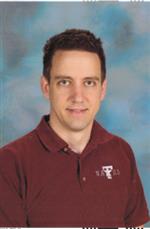 R. Travis Burton holds a Bachelor of Science from Texas A&M University and a Master’s degree in Education from the University of North Texas. After leaving a career in the private sector as a project manager, Mr. Burton became a computer science teacher at Samuel Clemens High School in Schertz, Texas. As a large school, by Texas standards, Samuel Clemens High School educates students from a variety of backgrounds. At Samuel Clemens Mr. Burton had found success teaching this diverse group of students the fundamentals of computer programming among other subjects such as Cyber Security, AP Art History, and AP Statistics. Recently, he has moved to the Dallas/Ft. Worth area to teach computer science at the School for the Talented and Gifted. Mr. Burton is an active participant in the AP community; he is a CP SC A item writer for ETS and regularly attends the AP Computer Science A Reading, currently held in Kansas City, Missouri, to collaborate with his peers and stay current with the trends of the AP CS A Exam. In addition to conducting national and international professional development, Mr. Burton recently presented at the Computer Science Teachers Summit at Facebook headquarters
Course Description
During this AP Computer Science A APSI, you’ll explore the course framework, the exam, and the new AP resources that will help you plan and focus instruction—and give you feedback throughout the year on the areas where individual students need additional focus. You’ll also learn about completing the digital activation process at the start of the school year that will give you immediate access to the new resources and will help ensure that your students can register for AP Exams by the new fall deadlines. By attending this APSI, you’ll gain deeper insight into the following key takeaways, among several others: Understand the Course; Plan the Course; Teach the Course; Assess Student Progress; and Engage as a Member of the AP Community. In addition, specific attention will be paid to the following AP Classroom resources: unit guides, personal progress checks, AP teacher community, and the AP question bank.
What to Bring
Please have ready your laptop, power cord, and USB drive to save your work.
AP Precalculus: Todd Steckler
Todd Steckler, Academy of Health and Science Professions, La Joya, TX
AP Precalculus for teachers both New to and Experienced with AP
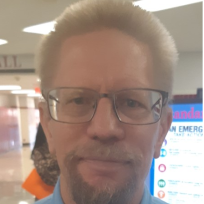 Todd Steckler – Hi. My name is Todd Steckler. I live in McAllen, TX with my wife Mayra (22 years). We have two children, Angela (20 years) is a sophomore at the University of Texas in Austin, and Jacob (15 years) is a sophomore in high school.
I grew up in North Dakota and graduated high school in 1984 from Mandan High School, in Mandan, North Dakota. I studied Mathematics at Minot State University in Minot, North Dakota and graduated with my B.S. in 1988.
After college graduation, I moved to Texas and accepted my first teaching job with the La Joya Independent School District. I continue to work with LJISD, as this is my 35th year of teaching mathematics. My first 30 years were at La Joya High School and the past 5 years have been at the Academy of Health Science Professions. I have taught AP Calculus AB each year (since 1995), AP Calculus BC most of those years (when there is sufficient enrollment), AP Statistics each year (since 2006), and Precalculus each year (since 1992). I am definitely looking forward to the first installment of AP Precalculus during the next school year.
I continued my university studies at the University of Texas – Pan American, in Edinburg, from 1997-2000, where I earned my Masters of Mathematical Sciences in 2000. Since 2001, I have been part-time employed as a dual enrollment and adjunct faculty member (mathematics) for South Texas College, in McAllen, TX.
I am a T^3 Regional Instructor for Texas Instruments and enjoy giving inservice trainings to fellow educators about TI graphing calculators, especially TI NSPIRE. I do some item writing for different companies for math assessments, I do some tutoring for Tutor.Com, and I do some consultant work for Hudson Global Scholars.
When I have some spare time, I enjoy following the Green Bay Packers. I am a proud owner of one piece of stock of this publicly-owned franchise. I enjoy working puzzles, preparing fajitas on the barbecue grill, and spending time with family.
Course Description
This course is for teachers preparing to teach AP Precalculus. A discussion regarding course purpose and philosophy will help guide our week’s work. We will fully explore the current Course and Exam Description (CED) to gain an in-depth understanding of the vision of the course. A detailed analysis of the Essential Knowledge statements will provide a cohesive view of function analysis, rate of change work, and modeling implementation. A variety of effective activities to support student learning will help increase student access to content. We will discuss common student misconceptions, AP exam question approaches and scoring, and classroom strategies to maximize learning. Discussions will focus on enhancing teacher understanding and development of topics as well as sharing ideas and activities. The online course will run for 5 days and will have both synchronous and asynchronous components. Participants will find access to a Google Drive beneficial since sharing can occur efficiently within the Google platform.
Course Goals
The topics listed below will be incorporated throughout the week. The emphasis, order, and inclusion of these and other topics will be driven by participant needs and goals.
- Introductions and Goals for the Week
- Curricular Requirements Discussion
- Diversity & Inclusion and Equity & Access Discussions
- AP Precalculus Course and Exam Description Deep-Dive
- AP Classroom Resources and Implementation
- Course Pacing Plan Development
- Strategies for Using Data to Assess, Reflect, and Adjust
- Unpacking and Implementing the Three Mathematical Practices
- Limit Notation as a Descriptive Thread in the Course
- Modeling Analysis Along with Interpretation of Residuals and Assumptions/Limitations
- Development and Planning of Unit 1: Polynomial and Rational Functions
- Incorporating Multiple Representations
- How Topics Appearing in Prerequisite Courses Manifest Differently
- Key Components of Unit 2: Exponential and Logarithmic Functions
- Key Components of Unit 3: Trigonometric and Polar Functions
- Key Components of Unit 4: Functions Involving Parameters, Vectors, and Matrices
- Analysis of CED Topic Notes and Learning Notes
- Creating a Classroom Community and Culture of Success
- Instructional Strategies and Effective Activity Design
- Exam Style Questions and Task Verbs
- A Deep-Dive with Practice Questions in the CED
- AP Exam Structure Discussion
- Expectations for Student Use of Justifications
- Graphing Calculator Discussions
What to bring
Items you should have access to during the week include:
- A laptop computer/ tablet
- A favorite lesson or practice to share
- A copy of your school’s academic calendar
- A copy of the textbook you will be using next year (if you have access to one)
- A graphing calculator
AP Statistics - Experienced: Doug Tyson
Doug Tyson – Central York High School, York, PA
AP Statistics for teachers Experienced with AP
 Doug Tyson has taught mathematics and statistics to high school and undergraduate students for more than 30 years. He currently teaches AP Statistics, Intro to Statistics, and Statistical Reasoning in Sports at Central York High School in York, PA. Doug is committed to increasing the visibility and quality of statistics education around the country. To that end, he happily served on the NCTM/ASA Joint Committee on Curriculum in Statistics and Probability, works as a Question Leader at the AP Statistics Reading, is a Professional Development/Workshop Consultant for the College Board, runs workshops and teacher training events in statistical education around the country, and is an active NCTM and ASA member.
Doug’s commitment to statistics education includes various publications: a College Board curriculum module on random sampling and random assignment (co-author), creator of AP Daily Videos for the College Board, the Teacher’s Edition for Statistics and Probability with Applications, 3rd and 4 th edition (author), media supplements to accompany The Practice of Statistics 5th and 6th edition (author and project manager), and the upcoming Teacher’s Edition for The Practice of Statistics 7th edition (author). He has been a speaker at regional and national mathematics education conferences, including NCTM Annual and state conferences, and been nominated for the Presidential Awards for Excellence in Mathematics and Science Teaching.
In a perfect world, Doug would be able to teach statistics without talking. While he still hasn’t achieved this goal, he’s gotten closer to achieving it.
Outside of work, Doug likes to spend time with his family, hunt, fish, read, eat corn dogs, and make snow with his homemade snow-making machine.
Course Description
Welcome to the wonderful world of Statistics! Without a doubt, this is the most enjoyable course I get to teach. I look forward to working with you and hope that you leave feeling prepared and excited about the opportunity to teach AP Statistics. During the workshop we will:
- Highlight important parts of the Course and Exam Description.
- Participate in many classroom-tested activities that illustrate key Learning Objectives.
- Discuss how to use resources from the College Board found within AP Classroom including Personal Progress Checks and the Question Bank.
- Review important topics from the course, including free-response questions from the AP exam.
- Discuss how the AP exam is created and how it is scored, with a focus on the most recent year’s AP exam. We will also discuss common student errors and how to avoid them.
- Practice using various types of technology, including graphing calculators and applets.
- Discuss other important topics for running an AP Statistics course, including textbook selection, recruiting students, assessing students, and other day-to-day issues.
- Answer as many questions as possible!
Digital copies of my lesson plans, and other resources will be located on our course website. Please bring a laptop/tablet and a graphing calculator. You can bring your textbook if you would like, but that is entirely optional.
AP Spanish Language and Culture: Ann Mar
Ann Mar – retired, San Antonio, TX
AP Spanish Language and Culture for teachers both New to and Experienced with AP
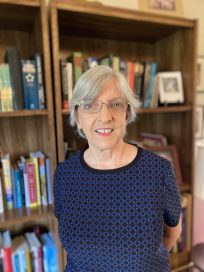 Ann Mar taught Spanish at North East and Alamo Heights Independent School Districts in San Antonio, Texas, and has worked with the College Board as a consultant, author and editor of curriculum modules and professional development materials. She has served as a question Leader at the Spanish Language and Culture reading, and as a member of the test development committee. In addition to authoring course materials for her classroom and district, Mar is a co-author of Wayside Publishing’s textbook EntreCulturas I, a proficiency-based Novice level textbook for middle and high school students. She holds a B.A. in Anthropology from the College of William and Mary and a Masters in Applied Linguistics from the Universidad Nacional Autónoma de México. In 2015, Humanities Texas honored her with the James F. Veninga Outstanding Teacher of the Humanities Award.
Course Description
In the AP Summer Institute, participants will gain a clear understanding of the Skills and Objectives that underlie a strong performance on the AP Spanish Language and Culture Exam tasks. We will review the many College Board tools teachers can employ while planning units of instruction. These include College-Board provided AP Unit Guides, Faculty Lectures, Daily Videos, AP Classroom assessments, Question Bank. In addition, participants will become proficient at finding authentic sources relating to the course themes and developing engaging activities to help students gain language skills and cultural insights. With College Board Resources, authentic materials and available textbooks all available, participants will develop a plan of attack to select resources that will best support their students as they create units of instruction for their specific instructional context, with the goal of building language proficiency and success on the AP Exam for their students.
What to bring
A USB drive to save your work.
AP World History - New: Kody Engle
Kody Engle – Jenks High School, Tulsa, OK
AP World History, Modern for teachers New to AP
 Kody Engle has taught in the Tulsa, OK area for 20 years. Kody started teaching AP World History in 2007 and began participating in the AP World History Reading in 2008 and has acted as a Reader (2008-2012), Table Leader (2012-2016), and currently serves as a Question and Exam Leader (2017-Present). In addition to attending the AP Reading each year, Kody currently serves on the AP World History Test Development Committee where he works alongside high school and college faculty and the College Board to revise test items for use in future APWH exams.
Course Description
AP World History: Modern is a course that continues to grow in student and faculty participation. The goal of this APSI is to introduce the main themes and skills to educators who are either new to the course or are a seasoned veteran who is hoping to refine some of their methods and approaches to the course.
AP World History: Modern is an introductory college-level modern world history course. Students cultivate their understanding of world history from c. 1200 CE to the present through analyzing historical sources and learning to make connections and craft historical arguments as they explore concepts like humans and the environment, cultural developments and interactions, governance, economic systems, social interactions and organization, and technology and innovation.
Goals of the Institute:
- Recognize the components of the Course and Exam Description and be able to identify the curricular requirements of the course
- Understand the organization of the Unit Guides and Topics and create instructional plans that fit the 6 themes and 4 time periods of the course
- Present a variety of methods to instruct historical thinking skills and reasoning processes
- Use the learning objectives to guide instruction and assessment of historical developments
- Understand how to locate and use online resources to create best assessment practices.
Tentative Daily Schedule:
Day One: Becoming Familiar with the Course
- Overview of College Board Resources
- Topic Focus: Unit 0 – How to introduce AP World History up to 1200 C.E.
- Topic Focus: Time Period 1 (Units 1 and 2): Bridging Empire and Expansion and Networks of Exchange
- Exam Focus: Multiple Choice Questions
- Historical Reasoning Skill: Context
Day Two: Planning the Course
- Dive into the Course Exam Description
- Topic Focus: Time Period 2 (Units 3 and 4): Land-Based and Maritime Empires
- Exam Focus: Short Answer Questions
- Historical Reasoning Skill: Comparison
Day Three: Introducing the Course to Students
- Check out AP Classroom Daily Video and Resources
- Topic Focus: Time Period 3 (Units 5 and 6): The Age of Revolutions
- Exam Focus: Long Essay Questions
- Historical Reasoning Skill: Causation
Day Four: Teaching the Course
- Check out AP Classroom Question Bank
- Topic Focus: Time Period 4 (Units 7, 8 and 9): Conflicts and Globalization in the 20th and 21st centuries.
- Exam Focus: Document Based Questions
- Historical Reasoning Skill: Change and Continuity Over Time
- Using AP Practice Exams
- How to write/adapt questions to fit the Exam
What to bring:
Items you should have access to during the week include:
- A laptop computer/ tablet
- A favorite lesson or practice to share
- AP Classroom (if your school administration has signed off on the course)
- A copy of your school’s academic calendar
- A copy of the textbook you will be using next year (if you have access to one)
AP U.S. Government: Eugene Chase
Eugene Chase- Edmond North High School, Edmond, OK
AP U.S. Government and Politics for teachers both New to and Experienced in AP
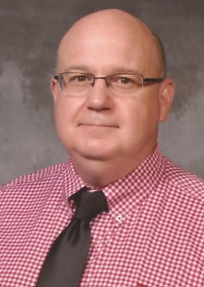 Eugene Chase teaches US and Comparative Government and Politics at Edmond North High School in Edmond, Oklahoma, where he also serves as social studies department chair. A reader and table leader at the AP US Government reading, he has been consulting for the College Board since 1999 and has presented at AP and Pre-AP workshops nationwide and at the AP National Conference. He is a National Board Certified Teacher (AYA Social Studies – History) and has also served as an assessor for the National Board. Gene has been an AP Government advisor for four textbooks and has provided staff development to many school districts including Chicago Public Schools and Boston Public Schools. Also working with the Education Testing Service, he has been an item writer for the US and Comparative Government and Politics exams and has been assessor for the Praxis Series teacher licensure tests. He holds a BA in political science from the University of Oklahoma and an MA in political science from the University of Central Oklahoma. Gene was an university adjunct instructor for eight years teaching American National Government and Social Studies Methods.
Course Description
The goals for this session are to: review and fully understand the AP US Government and Politics Exam curriculum & skill set, develop a pacing guide, share classroom teaching strategies, develop and share classroom resources, use AP Classroom to increase student performance, and score sample student responses to develop an understanding of student writing requirements. Participants will discuss and develop “non lecture” methods of presenting material. We will also spend time discussing and sharing strategies to improve student writing. A substantial portion of the agenda will be driven by participant requests. Of special interest will be our examination of online/distance/hybrid instruction and its possibilities and limitations. Finally, we will discuss the AP Course Audit and the options that teachers have to meet its requirements.
What to Bring
A USB drive to save your work.
AP Art and Design - New: Sherry Ross
Sherry Ross – Aubumdale High School, Bartow, FL
AP Art and Design for teachers New to AP
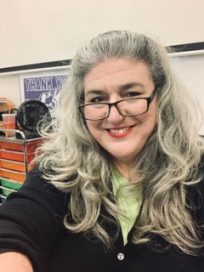 Sherry Ross is an Art teacher of nearly thirty years teaching all levels and a wide variety of media. She has over twenty years of experience teaching AP Art and Design and has served as College Board APAD Reader for a decade. She has worked to build AP programs at several Title One schools and has served as mentor and resource to her colleagues. She created online resources for Fiveable.me so that students across the county could have a greater chance of success on their APAD test.
An award winning Artist, Ms. Ross specializes in painting and photography, but jokes that she has Art ADD, as she loves experimenting with all media. She lives in Central Florida with her family, a dog, assorted cats, and a small herd of chickens.
Course Description
The AP Art and Design APSI is designed to provide teachers with a deeper understanding of the
course and the requirements for successful completion by their students. We will examine the
College Board Course and Exam Description (CED), explore the rubrics, and create personal
artwork for teachers to use as exemplars in instruction. There will be dedicated instructional
segments, ample time for question and answers, course planning exercises, and asynchronous
work time for individual artwork creation. No prior experience teaching AP is needed.
AP Art and Design - Experienced: Trish Winnard
Trish Winnard- Heritage Hall Upper School, Oklahoma City, OK
AP Art and Design for Teachers Experienced in AP
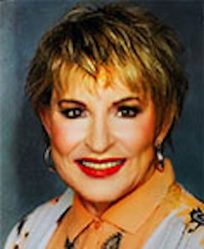 Patricia Winnard has taught art for 50 years and Advanced Placement Studio Art for 26 years. She is a Fulbright Scholar, National Board Certified Teacher and a NAEA Teacher of Distinction. Over her teaching career she has received the AP Outstanding Recognition Award, Teacher of the Year, finalist for Oklahoma State Teacher of the Year, Oklahoma Art Teacher of the Year, Secondary Art Teacher of the Year, Western Region Art Teacher of the Year, finalist for National Art Teacher of the Year and Disney Teacher of the Year. She has done extensive brain research with renowned author and
originator of the Multiple Intelligences, Howard Gardner, at Harvard University. She has received over $110,000.00 in grant funding. Patricia has been a AP Studio Art Reader for 20 years. She has conducted over 150 1, 2-day and summer training art institutes as a consultant for the College Board for the last 21 years. She was a guest lecturer at the 2008, 2012, 2023 AP
National Convention. She taught AP Studio Art in Beijing, China as an exchange professor with the Freeman Foundation in 2011. She is a published writer and illustrator for Christian children’s books. She is currently an AP Studio Art teacher at Heritage Hall Upper School in Oklahoma City where she began and has nurtured a thriving program for the last 18 years. She is also a mentor for the Master Teaching Program for the Oklahoma City Schools and Integris Health Network. Last year she was selected to participate in the Robert Rauschenberg Project in Washington DC. This year she was selected as one of the 2022 Cambridge University Who’s Who Among Executive and Professional Women in Teaching and Education.
Course Description
An overview of Pre-AP and AP Art and Design will be examined and discussed. Strategies and tips for organization and implementation of the redesigned studio course will follow. Participants will engage in a series of thought provoking brainstorming practices evoking creative responses for the Sustained Investigation . Use of the sketch/idea book will be a document used to ideate and explore the idea. The study of such will include both formalistic and intuitive structure that will include both technological, photographical and by-hand processes. Participants will engage in new and innovative art making activities and thinking strategies.
The use of technology in the AP Art and Design course will be discussed and demonstrated. The issue of teaching students benchmarks for “quality” in art forms will be addressed with the use of reflective, summative and oral evaluation systems. The Reading 2020 and scoring the portfolios will be reviewed and discussed, from the vantage point of a reader, through an overview of images. AP Central and other instructional resources will also be discussed and shared. Best practices will be shared between participants.
What to bring
- Apron
- Assortment of papers, paints, ,drawing mediums
- Rubber gloves
- Sketchbook**
- Photos, references
- Misc. collage supplies
- Laptop computer NOTE: I am going green this year. I will provide participants with workshop materials on a CD or flash drives only. Please let the summer institute director know if you would like a hard copy.
- Favorite websites and “best practices/lesson plan to share
- Any other “stuff” you want to bring !


