

 1920s
1920s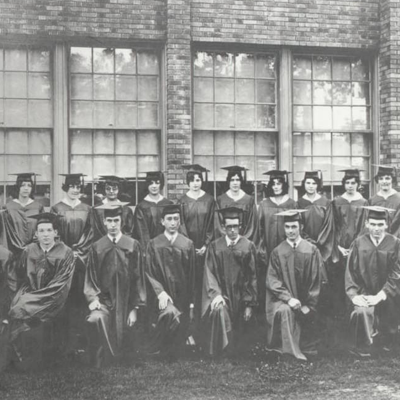
1920s
Little Rock Junior College is Founded - 1927
The history of the University of Arkansas at Little Rock begins in 1927 when John A. Larson had a goal to expand access to higher education in Arkansas' capital city. Despite limited funding, Little Rock Junior College opened on the second floor of Little Rock Senior High School.
First Class Graduates - 1929
The inaugural class consisted of 12 graduates and commencement was held jointly with Little Rock Senior High School in 1928. The following year, the college graduated the first students who had completed the institution's full two-year program after enrolling when LRJC opened its doors.
1930s
Campus Relocation - 1931
LRJC made its first campus relocation in 1931, moving to the former Uriah M. Rose Grammar School at 13th and State. The new campus welcomed 425 students and gave the college its own identity, separate from its high school location.
The Rise of Greek Life - 1932
The first Greek organizations took shape with the founding of Phi Alpha Beta, the first men's fraternity. In 1932, the Battlecriers Club, evolved into the foundation for the Arkansas Beta chapter of Pi Beta Phi. The Delta Kappa fraternity was also established this year, sparking a spirited rivalry with Phi Alpha Beta. The Greek community continued to grow with the founding of the Tri Phi sorority in 1938.
LRJC Opens Peanut Butter Plant - 1938
During the Great Depression, Little Rock Junior College created a student-run peanut butter plant on 14th Street to help rural students afford college. The operation provided students with paid work and hands-on experience, and refelected the college's commitment to education and supporting students during challenging times.
1940s
LRJC Adjusts Courses and Activities to Meet Wartime Needs - 1943
In 1943, the spring term was shortened by eliminating final exams in order to allow students to receive the maximum amount of college credit before entering the armed forces during World War II. Students and faculty participated in projects, such as assisting in charity drives, explaining the importance of rationing, and teaching first aid classes.
Postwar Enrollment Surges - 1946
After World War II, the GI Bill provided education benefits to returning veterans and brought a rush of students to LRJC. Enrollment leaped from 250 to 800 by fall 1946, prompting classes to be held six days a week and increasing the faculty from 22 to 45. The surge transformed LRJC and expanded its role in meeting the community's postwar demand for higher education.
Trojans Win Junior Rose Bowl - 1949
In 1949, the Trojans achieved an historic undefeated season. The team closed out its remarkable run by defeating Santa Ana Junior College 25-19, winning the junior college national championship in Pasadena, CA.
1950s
Enrollment Growth – 1951-1952
As LRJC entered the 1950s, the college expanded rapidly to meet the community's growing educational needs. In 1951, the college enrolled 457 daytime students and more than 700 students in its night school program, which became a vital resource for military veterans and working professionals.
Silver Anniversary Celebration – 1952
LRJC marked its 25th anniversary with a year-long celebration from May 1952 to May 1953. Festivities included special exhibits of student and faculty artwork, a series of theatrical productions, and colorful brochures mailed to alumni and local high school graduates.
LRJC Becomes a Four-Year Institution – 1954-1957
Interest continued to grow in transforming LRJC into a four-year institution. The board elected Dr. Carey V. Stabler as the new LRJC president. Stabler worked with faculty on the new school structure, which included four schools and three degrees. On June 1, 1957, the college trustees voted to accept Stabler's idea to officially name the institution Little Rock University.