
Join us in celebrating 100 years of UA Little Rock by exploring the milestones, achievements, and people who helped shape our remarkable journey. Explore the pivotal moments of the 1930s.
Continued Growth
The 1930s at Little Rock Junior College were a decade of exciting growth and student engagement. It also marked the college’s first relocation, which signaled broader support and increased dedication to higher education opportunities in the capital city.
Leadership:
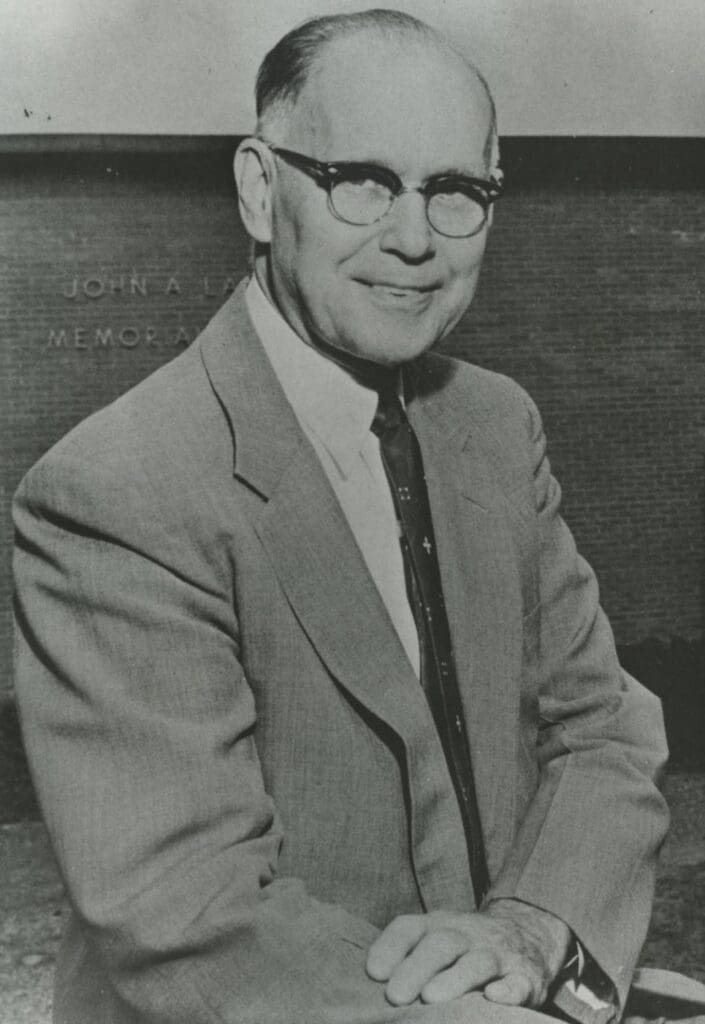
John A. Larson: President, 1930-1949
E.Q. Brothers: Dean, 1931-1953
Inaugural Football Team – 1930
One of the more memorable moments of this decade was the creation of the football team. In 1930, Little Rock Junior College fielded its first football team after students pointed out that the college had one of the state’s largest freshman classes but no football program. Coached by chemistry instructor Kenneth Bird and recent college football player Johnny Estrada, the 14-member squad chose the name “Trojans” – a name that has remained the university’s athletic identity ever since.

Although the inaugural team lost all six games without scoring a point, football continued at the college for four more seasons before the program was discontinued in 1935.
First Homecoming – 1931
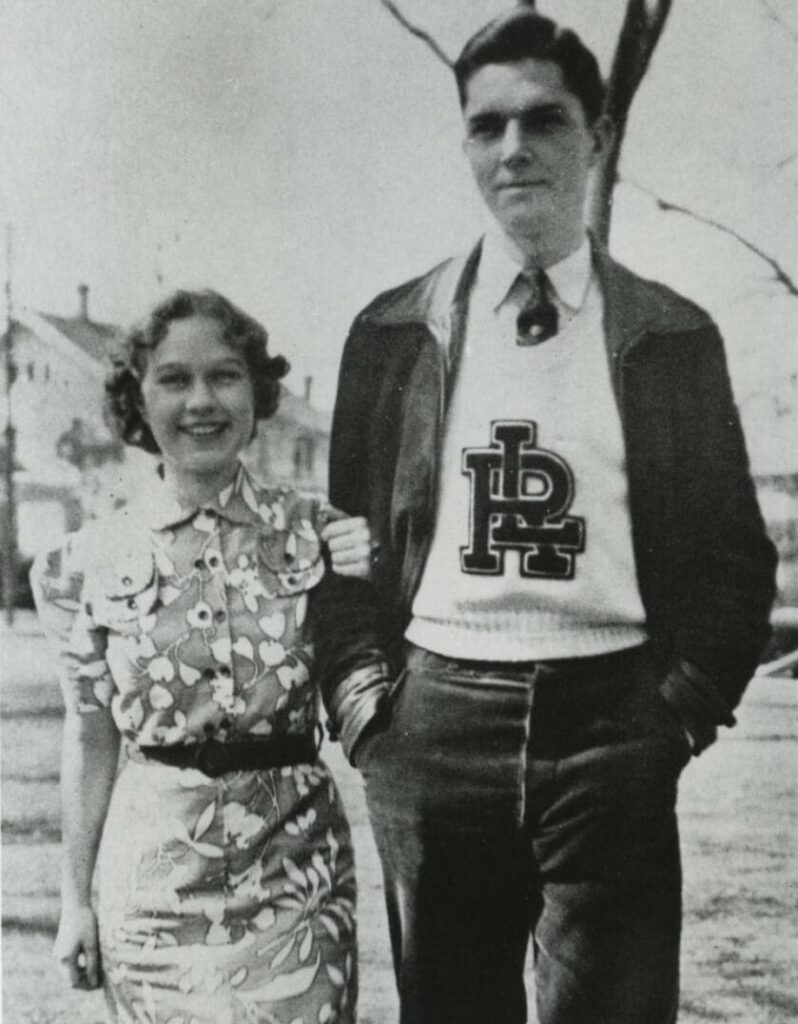
LRJC held its first homecoming celebration in November 1931, just weeks after the Trojans earned their first gridiron victory with a 13-12 win over El Dorado Junior College. Homecoming featured a special assembly, a parade through downtown Little Rock, a football game, and a dance.
School traditions continued to grow throughout the decade, including the adoption of the college’s alma mater in 1935. Written by Blanche Markham after winning a campus-wide contest sponsored by The Trojan, the song’s lyrics were:
Hail LRJC, Hail to thy name!
We’ll wave thy colors, Long sing thy fame!
Maroon and White forever! Loyal we’ll be;
Our Alma Mater, LRJC!
Campus Relocation – 1931
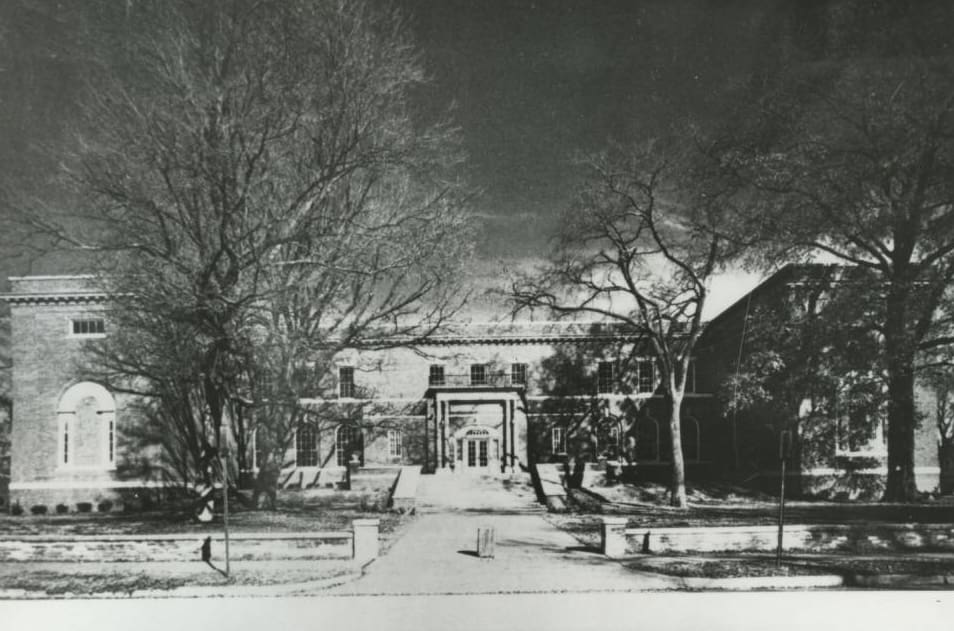
LRJC made its first campus relocation in 1931, moving from the second floor of Little Rock Senior High School (what is currently known as Central High), to the former Uriah M. Rose Grammar School at 13th and State. The new campus welcomed 425 students and gave the college its own identity, separate from its high school location.
Under the leadership of President John A. Larson, the college invested $10,000 in remodeling and equipment to prepare the campus for its growing student population. The total monthly utility bill was just $50 – a reminder of a very different era.
The Rise of Greek Life – 1932
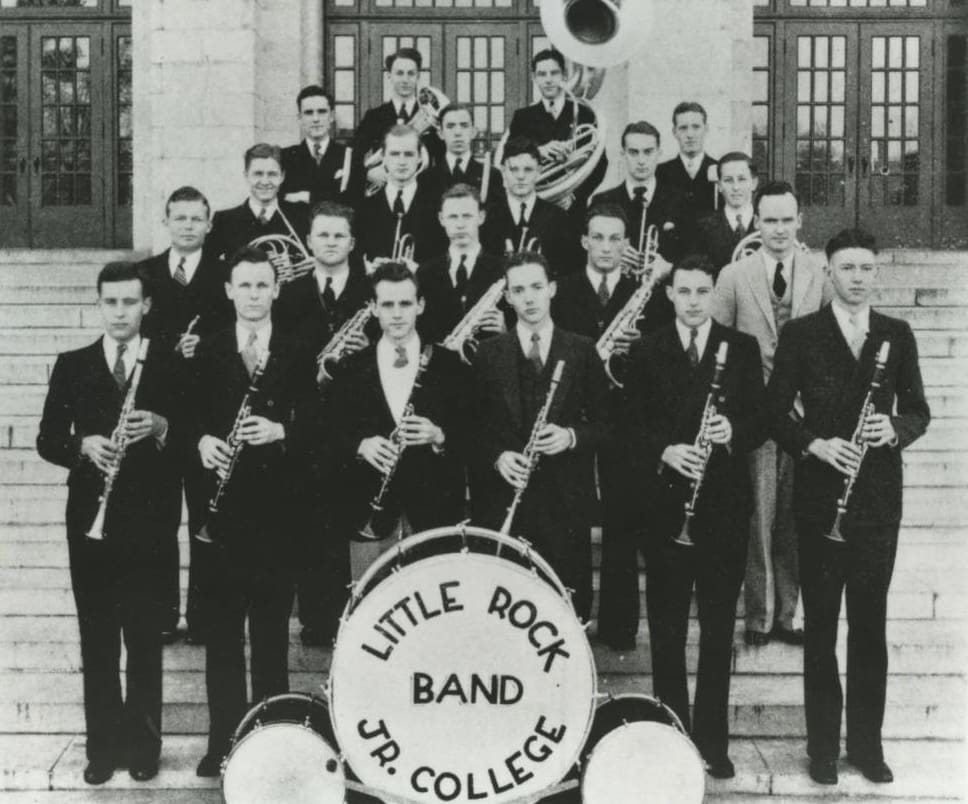
As enrollment grew at LRJC, so did student life. The first Greek organizations took shape with the founding of the men’s fraternity Phi Alpha Beta. In 1932, the Battlecriers Club, initially created to support Trojan athletics, evolved into the college’s first sorority, Beta Chi. This local sorority formed the foundation for the Arkansas Beta chapter of Pi Beta Phi.
The Delta Kappa fraternity was also established this year, which sparked a spirited rivalry with Phi Alpha Beta. The Greek community continued to grow with the founding of the Tri Phi sorority in 1938, creating lasting traditions of Greek life leadership, service, and campus involvement that continue today.
Donaghey Week – 1932
A new campus tradition took root in 1932 with the celebration of Donaghey Week, an annual event created to honor former Arkansas Gov. George W. Donaghey and his generous endowment to LRJC. Built around the slogan, “Honor to Whom Honor is Due,” the first observance featured a box supper, a series of radio programs, special editions of the campus newspaper, and a luncheon in honor of Gov. and Mrs. Donaghey. Although the week’s activities changed over time, Donaghey Week remained a cherished tradition for nearly three decades.
LRJC Receives Carnegie Corporation Grants – 1937 and 1938
In the fall of 1937, LRJC received a $6,000 grant from the Carnegie Corporation to upgrade its library collection. The funds enabled the college to buy new books, expanding resources for students and faculty. As one of only 10 institutions chosen in this round of grants, this helped earn the college national recognition. The Carnegie Corporation continued its support the following year, awarding a $1,500 music set that included a phonograph and records.
LRJC Opens Peanut Butter Plant – 1938
During the Great Depression, Little Rock Junior College created a student-run peanut butter plant on 14th Street to help rural students afford college. The operation provided students with paid work and hands-on experience in scientific farming, production, and distribution. The program reflected the college’s commitment to practical education and supporting students during challenging times. The jars carried the slogan, “Build Arkansas – Use Jaycee Butter.” One year later, the plant relocated to Hot Springs, Arkansas.
Moving Forward
As we celebrate our Centennial, each decade’s moments of impact will be published monthly. Follow along as we explore the people, milestones, and moments that shaped UA Little Rock’s first century and continue to inspire its future.