
UA Little Rock Professor Earns Best Paper Award for AI Research
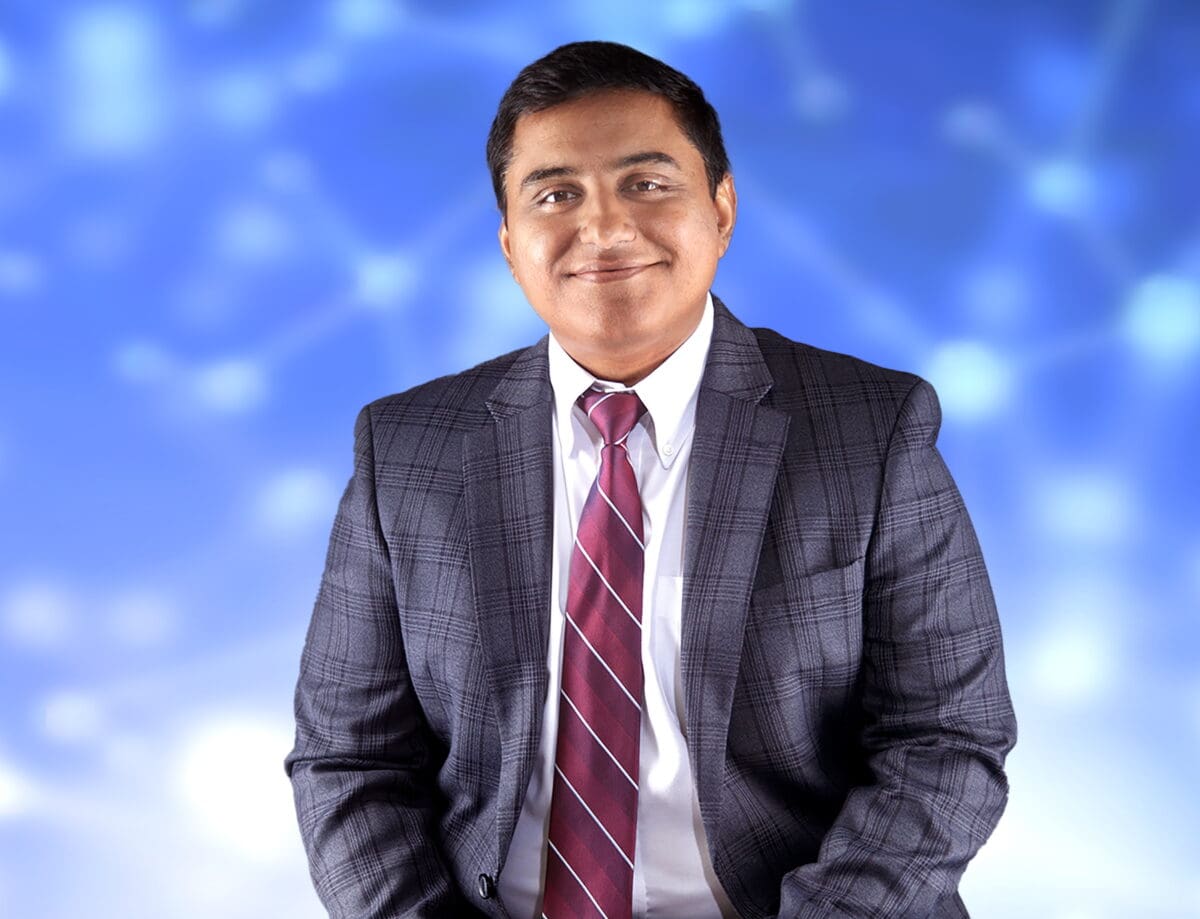
Dr. Nitin Agarwal, the Maulden-Entergy Chair and Donaghey Distinguished Professor of Information Science at the University of Arkansas at Little Rock, has received the Best Paper Award at the 2025 International Conference on AI-Based Media Innovation (AIMEDIA 2025) in Venice, Italy, for groundbreaking research that uses artificial intelligence to uncover bias embedded in YouTube content.
Agarwal’s award-winning paper, “AI-Driven Multi-Layer Narrative Analysis for Uncovering Bias in YouTube Content,” introduces a novel, human-centered AI framework that goes beyond surface-level metrics to reveal how emotion, sentiment and bias shift throughout digital video content. The research was recognized for advancing media transparency and accountability in an era dominated by engagement-driven algorithms.
The study addresses a growing concern in the digital age: how platforms such as YouTube shape public perception through algorithmic design and emotionally charged framing. While most prior research has focused on titles, thumbnails and engagement statistics, Agarwal’s team examined the full narrative arc of videos to better understand how messages evolve from first impression to underlying substance.
Using artificial intelligence, the researchers conducted a multi-layer analysis of YouTube content, evaluating titles, descriptions, transcripts and AI-generated summaries. This approach allowed the team to trace how emotional tone and bias change as viewers move deeper into the content.
The results were “striking,” Agarwal said.
Sentiment grew more positive and joyful across deeper layers of analysis, while anger and toxicity declined sharply. Video titles, which are often optimized to attract clicks, were consistently the most provocative, while the core narratives tended to be more balanced, measured and constructive.
“This research shows how AI can be used to interpret meaning, not just data,” Agarwal said. “By analyzing content holistically, we can uncover gaps between what grabs attention on the surface and what a message actually communicates. That distinction is essential for building more transparent and trustworthy digital environments.”
Published in the IARIA Congress 2025 proceedings, the study represents a significant advance in AI-driven media analysis. By integrating sentiment, emotion and toxicity detection across multiple content layers, the research establishes a new framework for evaluating online media beyond headlines and engagement metrics.
The implications extend well beyond YouTube. The methodology can be applied across social and digital platforms to help researchers, policymakers and technology developers better understand how algorithms influence engagement and how those systems might be redesigned to promote fairness, accuracy, and contextual integrity.
“Our goal is to help both platforms and audiences distinguish between attention-grabbing rhetoric and authentic communication,” Agarwal said. “This kind of analysis moves us closer to AI systems that genuinely support informed decision-making.”
The recognition adds to a growing list of international honors for Agarwal and the Collaboratorium for Social Media and Online Behavioral Studies (COSMOS), which he founded and directs. COSMOS conducts interdisciplinary research at the intersection of computer science, behavioral analysis, and social impact, with support from federal agencies and international partners focused on algorithmic transparency, cognitive warfare, AI applications, and digital ethics.