Students experience dig of a lifetime in ‘Land of Frankincense’
Four undergraduate students experienced the archaeological dig of their lives during a recent excavation project that took them to a UNESCO World Heritage site in the ancient port city of Al Baleed in Oman.
Dr. Krista Lewis, chair and associate professor of anthropology at UALR, directed the students in their inaugural field season at the Land of Frankincense, an archaeological park visited by more than 45,000 people a year.
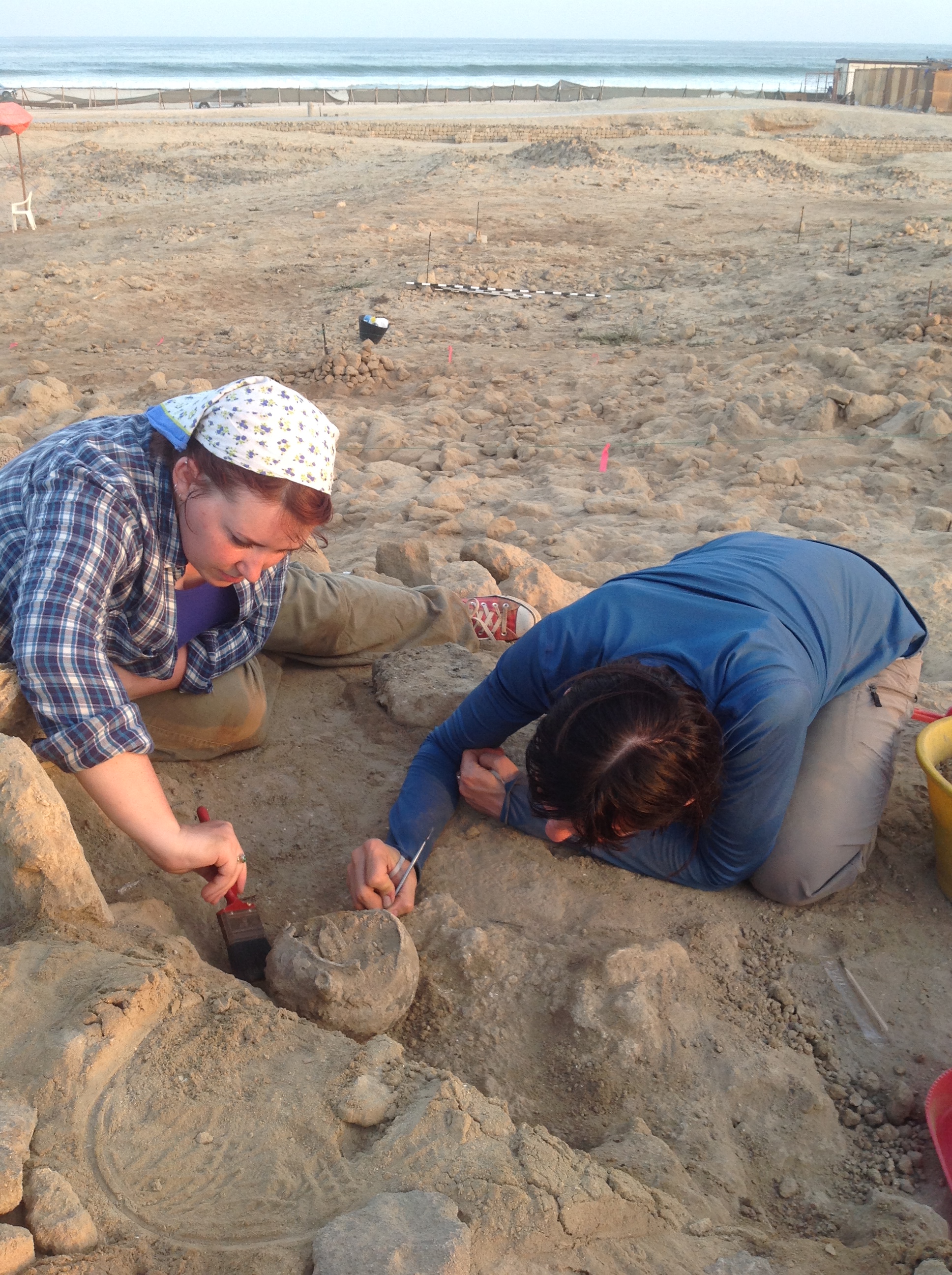
UALR student Deanna Holdcraft, left, excavates in ancient ruins in Oman
UALR anthropology majors, Deanna Holdcraft and Devin Sorrows, along with recent UALR graduate Susanne Crouch and Arizona State University honors student Rebecca Harkness, made the 8,000-mile journey to Oman with Lewis.
Since graduation, Crouch has been doing a lot of traveling before applying for graduate school.
“This was really an amazing opportunity. We were able to test out and provide feedback for the procedures that will be used at the site for a long time to come,” Crouch said.
“Additionally, the site itself is exciting, partly because it’s possible to find the same style of buildings and city layouts still in use throughout the region,” she added.
Al-Baleed was a major trading port along the late ancient and medieval frankincense trading routes, according to Lewis, and recent excavations reveal globalized social and economic networks similar to that found in contemporary society.
Frankincense, a resin from the bark of the native Boswellia trees, is in abundance in the area. It is an incense burned for health and ritual purposes in the Middle East, and it has been used in religious ceremonies for thousands of years.
The UALR Land of Frankincense Archaeological Project is a cooperation between UALR, the Omani Office of the Advisor to His Majesty the Sultan for Cultural Affairs, and the Al Baleed archaeological museum and park, according to Lewis.
Over the summer, the students helped explore spaces that are part of a single large building mound located near one of the ancient city’s main gates. It appears to be a combination merchants’ house and goods storage facility and dates to approximately 1500-1650 A.D.
During the previous excavation season in 2013, Lewis and her colleagues established the project’s foundation, including developing customized procedures for excavation, documentation, artifact collection, and analysis.
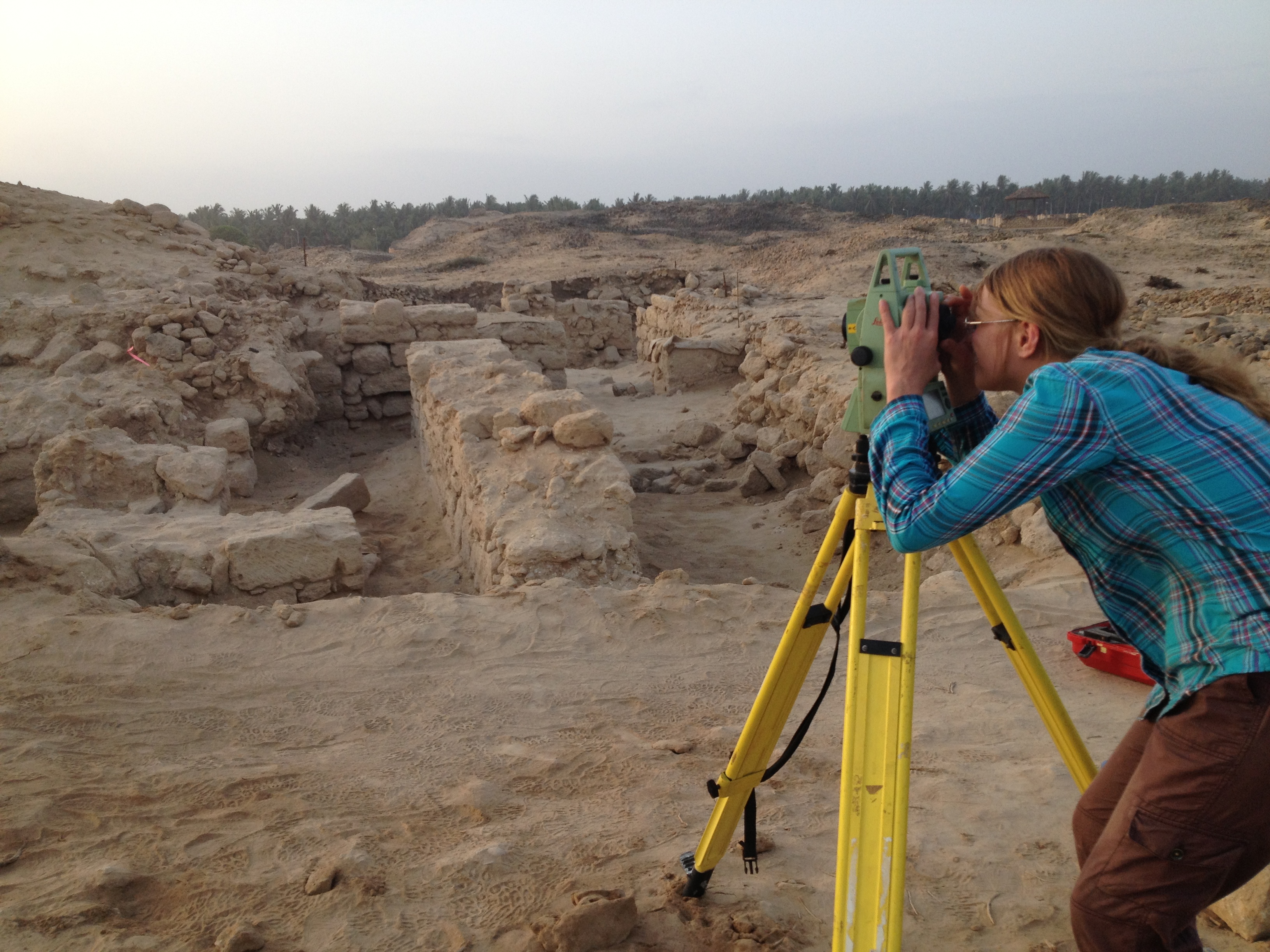
UALR graduate, Susanne Crouch, uses a laser and prism tool to digitally measure distance, direction, and height. Archeologists use it to create maps and record locations and elevations in three-dimensional formats.
“We use an excavation database and recording system specially built by our team using the latest technology. Our system is unique to Al Baleed and does not exist anywhere else in the world,” said Lewis.
“Excavations traditionally record their finds using notebooks and pencils, but we have implemented a fully digital excavation strategy using iPads. This allows us to collect data directly into our database in the field while the excavation is ongoing,” she added.
“This approach facilitates more information to be gathered quickly and accurately over many years of work to better interpret, analyze, and present data,” said Lewis.
The new recording system will not only be useful for primary scientific purposes, but also for training programs and educational use, including advancing museum display and interpretation of information and artifacts from Al Baleed, according to Lewis.
Crouch, who graduated in May, agreed that testing 21st-century tools that have thoroughly modernized the process of excavating an ancient site like the Land of Frankincense was among the most enticing aspects of the trip.
Sorrows, who expects to graduate in December, concurred with Crouch that the ability to utilize modern technology, such as radiocarbon dating, ground-penetrating radar, and satellite imagery, provide crucial data about archaeological sites.

UALR’s Devin Sorrows digs at a site in the Land of Frankincense
“I firmly believe that this is direction that archaeology is going,” he said.
“By using modern methods of data collection with tested, conventional methods, we’re able to acquire a substantial amount of reliable data that will help answer the various questions we may have about a site,” said Sorrows.
Sorrows is particularly interested in turn-of-the-century archaeology and industrial archaeology and is planning on working on as many sites related to this certain cultural period as possible.
View more stories in
NewsTags:
