
School of Literary and Performing Arts Launches Hands-On Simulation Course
The School of Literary and Performing Arts at UA Little Rock is advancing student professionalization and community collaboration through an innovative curriculum focused on simulation-based learning.
The first course, “Special Topics in Simulation and Therapeutic Uses of the Performing Arts,” was created by Stacy Pendergraft, the producing artistic director of the school.
The spring 2025 pilot involved student participation in real-world simulation scenarios with on-campus and external partners such as the University of Arkansas for Medical Sciences (UAMS), the UA Little Rock School of Nursing, the Federal Bureau of Investigation, the Arkansas State Police, Arkansas Repertory Theatre, the Bill and Hillary Clinton National Airport, and CHI St. Vincent.
“After planning this course for the past few semesters, it’s been a joy to see it come to fruition,” Pendergraft said. “The course’s success relies on collaboration, and we are grateful to work with such wonderful partners at UA Little Rock and in the local community.”
Among the course’s early projects, the students acted as patients for mental health training simulations in the UA Little Rock School of Nursing’s Simulation Lab.
“My background in theatre has helped me understand how to play a character in order to advance a story,” said Maxx Hodges, a student in the special topics course. “Knowing how to ‘sit’ in another mindset while still being myself has helped me assist learners in simulation attain their learning objectives, and it has also helped me give valuable communication feedback once the simulation is completed.”
Later in the semester, students participated in a day-long exercise for the Regional Crisis Negotiation Course hosted by the Federal Bureau of Investigation and Arkansas State Police. Involving 22 law enforcement agencies from across the state, the simulation gave students the opportunity to portray individuals in high-stakes crisis scenarios and allowed officers to hone their response and communication skills.
The course has also incorporated work in drama therapy and emergency preparedness. In collaboration with the Arkansas Repertory Theatre, Tamra Patterson Calamese, the director of community, learning, and public programs, led a two-week unit on drama therapy that offered insight into the therapeutic aspects of their performance.
“Truthfully rendered simulation portrayal can also elicit emotional reactions and foster a ‘safe place’ for learners to train communication skills in high stakes circumstances,” said Cooper Sikes, a student in the course. “It’s been so meaningful to apply my theatre skills in simulation and to actually have an impact on the way responders communicate in high stakes or emergency situations.”
An additional aspect of the course was a simulation for the FAA-mandated Triennial Full-Scale Exercise at the Bill and Hillary Clinton National Airport, which was focused on enhancing readiness and emergency responsiveness.
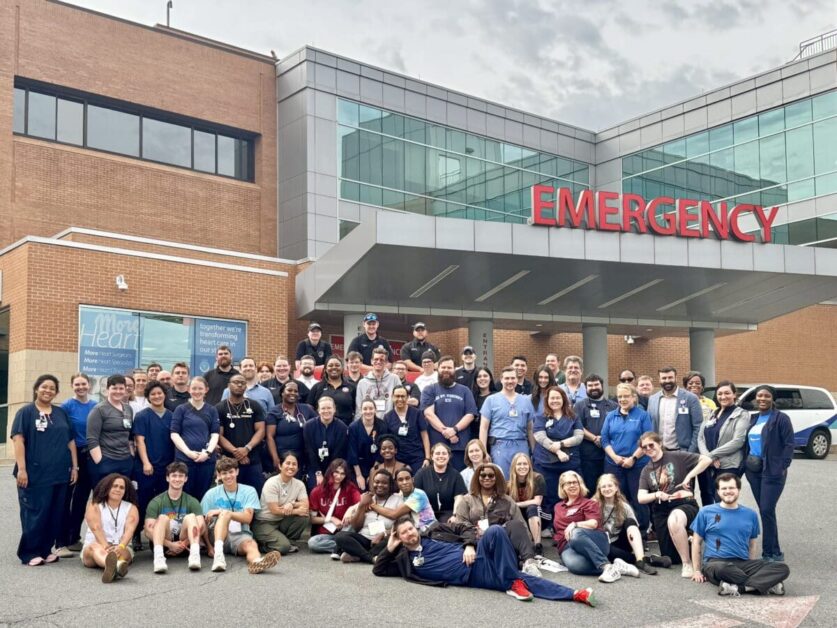
The course concluded with students participating as scenario actors and providing specialty make-up effects for the CHI St. Vincent Mass Casualty Incident training.
Students joined forces with MEMS and CHI St. Vincent Emergency Department healthcare providers in a simulation that gave participants the opportunity to train with Pulsara, a communications and logistics platform that can be used in mass casualty emergencies.
Through this hands-on approach to curriculum, the School of Literary and Performing Arts continues to offer immersive experiences for its students while strengthening community partnerships across Little Rock.