
UA Little Rock Creates Workforce Development Center Council to Strengthen Career Pathways and Community Impact
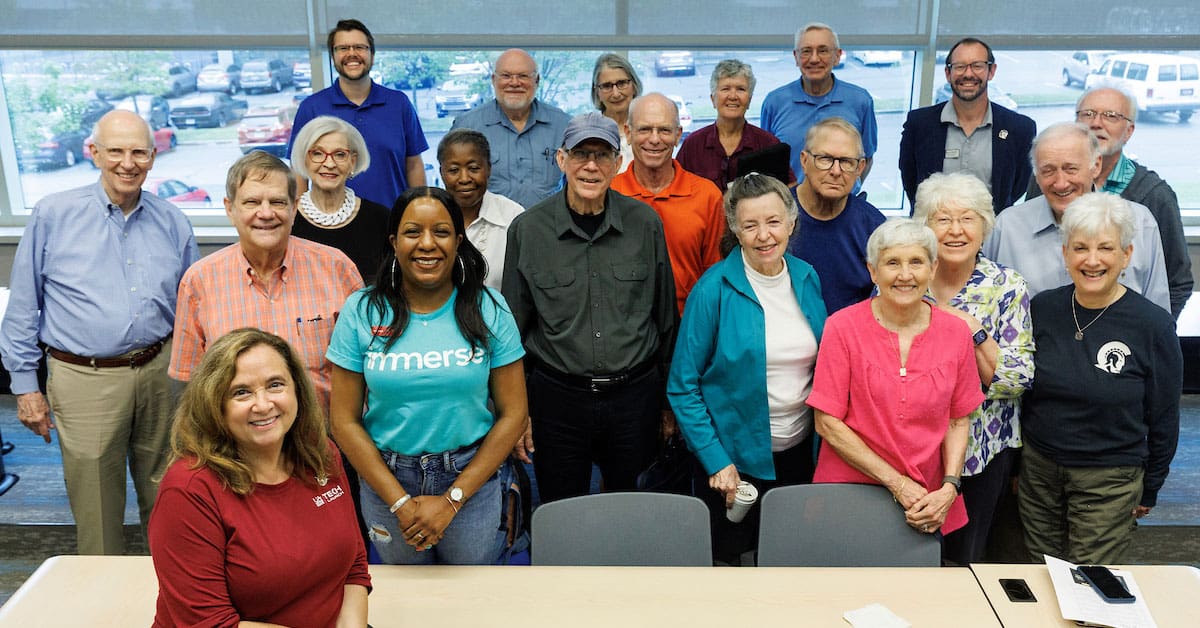
The University of Arkansas at Little Rock has launched the Workforce Development Center Council, a new cross-campus advisory group designed to strengthen the university’s role in meeting Arkansas’s evolving workforce needs.
The council brings together leaders from across academic colleges and administrative units to discuss emerging workforce trends and to identify how UA Little Rock can respond through new programs, partnerships, and student opportunities.
“The primary goals of this group are to discuss emerging workforce trends in each of our respective colleges, departments, and units and how our Workforce Development Center—and the university as a whole—can respond to them,” said Dr. Aaron Duvall, executive director of workforce development. “I envision this council as a space to brainstorm, collaborate, and stay informed, especially since workforce development can’t occur in silos.”
Located in the Reynolds Business Building, the Workforce Development Center is home to the offices of Study Abroad, University Career Services, Extended Education, and Concurrent Enrollment. The center is focused on streamlining processes across these units while advancing several key priorities:
- Examining prior learning assessment across the university
- Tracking workforce data
- Expanding internship opportunities for students
- Developing new certificate programs
- Ensuring students have ample career opportunities after graduation
- Working to upskill employees throughout central Arkansas
With this approach, the center will support lifelong learners – from concurrent enrollment students as young as 14 to professionals seeking to reskill and upskill later in their careers.
“It’s an honor to join colleagues across campus in serving on this council,” said Dr. David White, director of the Survey Research Center at UA Little Rock. “I’m eager to explore how the Survey Research Center can help shape evidence-based solutions to real-world challenges and foster positive change in our community.”
The Workforce Development Center Council includes representatives from every college and major administrative area:
- Dr. Ahmed Abu Halimeh, interim chair of the Department of Computer Science and interim director of the Emerging Analytics Center
- Dr. Ann Bain, executive vice chancellor for academic affairs and provost
- Dr. Melvin Beavers, interim associate vice chancellor for academic affairs
- Dr. Mike Cavanaugh, director of the School of Criminal Justice and Criminology
- Dr. Laura Danforth, co-director of the School of Social Work
- Dr. Aaron Duvall, executive director of workforce development
- Marla Johnson, UA Little Rock’s tech-entrepreneur-in-residence
- Dr. Barclay Key, chair of the Department of History
- Dr. Matt Matusiak, associate dean in the College of Business, Health, and Human Services
- Dr. Derek Slagle, director of the School of Public Affairs
- Diana Snyder, assistant dean for career services at the William H. Bowen School of Law
- Fairah Solomon, associate professor of nursing
- Kiel Thorlton, director of the School of Mass Communication
- Dr. Anne Turner, assistant professor in Construction Management and Civil and Construction Engineering
- Thomas Wallace, coordinator of the Web Design and Development and Information Technology programs
- Dr. David White, director of the Survey Research Center
The council will serve as a hub for collaboration across campus, helping UA Little Rock strengthen connections with industry partners while ensuring students are prepared to succeed in today’s dynamic job market.
“Ultimately, from concurrent enrollment to extended education, we have a unique opportunity to support learners from ages 14 to 100,” Duvall said. “This council is an important step toward ensuring UA Little Rock continues to meet the needs of both students and employers in central Arkansas and beyond.”
Members of the UA Little Rock community and the public who wish to share ideas or provide feedback on workforce development efforts are encouraged to contact Dr. Aaron Duvall at [email protected].