
UA Little Rock Students Gain Hands-On Experience with Enterprise Servers
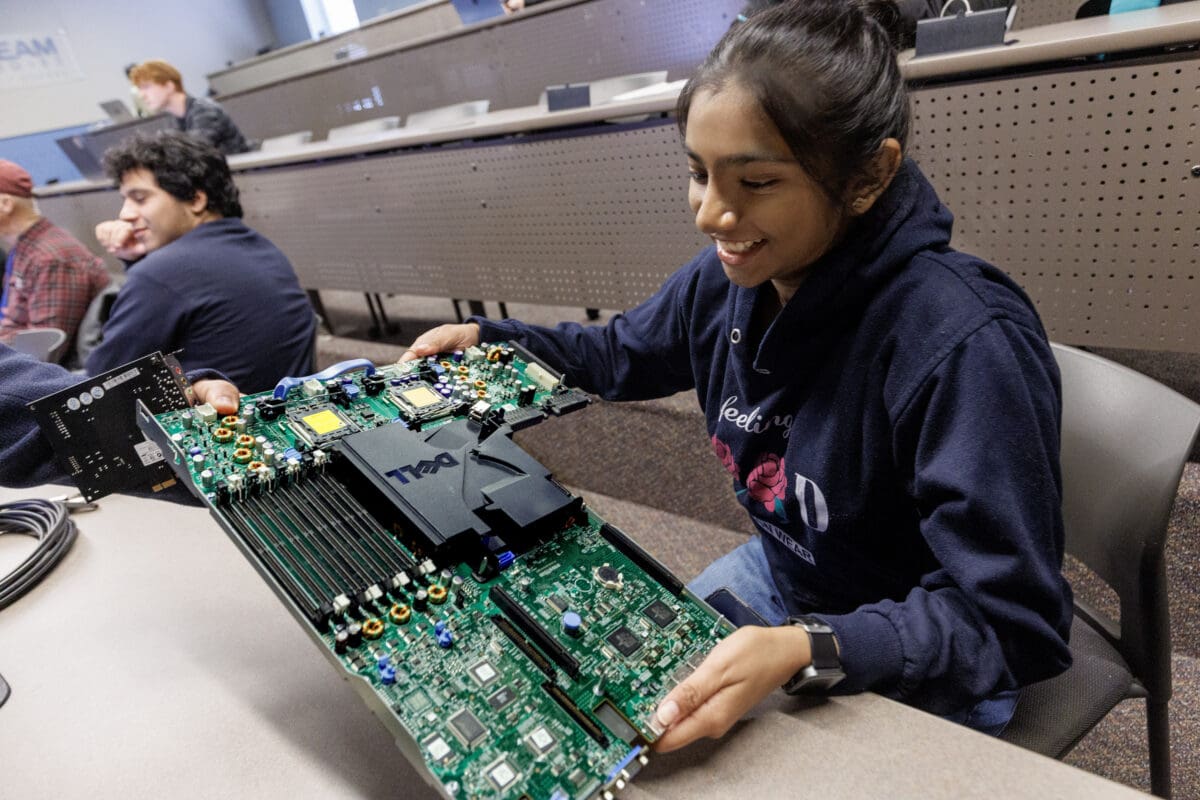
Students in the Computing Essentials course at the University of Arkansas at Little Rock gained hands-on exposure to enterprise computing this fall through a pair of interactive lectures led by Dr. Abdelrahman Elfikky, assistant professor in the Department of Computer Science.
Designed to connect classroom learning with real-world applications, the sessions emphasized active participation and collaboration while introducing students to the technologies that power modern data centers.
The lectures featured Hadi Rashid, systems administrator at the Emerging Analytics Center (EAC), a research facility led by Dr. Ahmed Abu Halimeh, chair of the Department of Computer Science. Rashid, who holds a master’s degree in computer science and is pursuing his Ph.D., specializes in data center operations, cloud infrastructure, and systems automation, including the development of OpenStack-based cloud and high-performance computing (HPC) platforms within the EIT data center.
The hands-on initiative was developed in collaboration with Dr. AbuHalimeh to give students early exposure to enterprise-level computing environments. Working together, Dr. Elfikky and Rashid planned and delivered a two-part lecture series focused on enterprise server technology.
The first session, “Beyond Your PC/Laptop: Introduction to Enterprise Server Technology,” introduced key differences between consumer and enterprise systems, including CPU architecture, ECC memory, RAID storage, redundancy, and out-of-band management. Students also observed a side-by-side hardware comparison between a desktop system and an enterprise server.
The second session featured a live, in-class demonstration using a server rack and networking equipment. Students explored a simulated network environment and remotely managed servers to experience out-of-band access firsthand.
Following the lecture, students toured the Computational Research Center in EIT Room 617, where they observed data center infrastructure such as cooling systems, raised-floor airflow, redundant power distribution, and fire suppression systems. The center supports more than 129 compute nodes for OpenStack, HPC, GPU platforms, and advanced storage systems.
Elfikky expressed gratitude to the department, led by Dr. Ahmed Abuhalimeh, for the strong support, guidance, and encouragement. He also thanked Dr. Billy Spann, former instructor of Computing Essentials, for his foundational contributions to the course, as well as Rashid and teaching assistant Karun Shrestha for their continued support in making this experience possible.
The sessions reflect the department’s commitment to hands-on, industry-relevant learning that prepares students for careers in today’s technology-driven workforce.