
UA Little Rock Alum Nathan Jeffers Leads Marketing and PR at CARTI
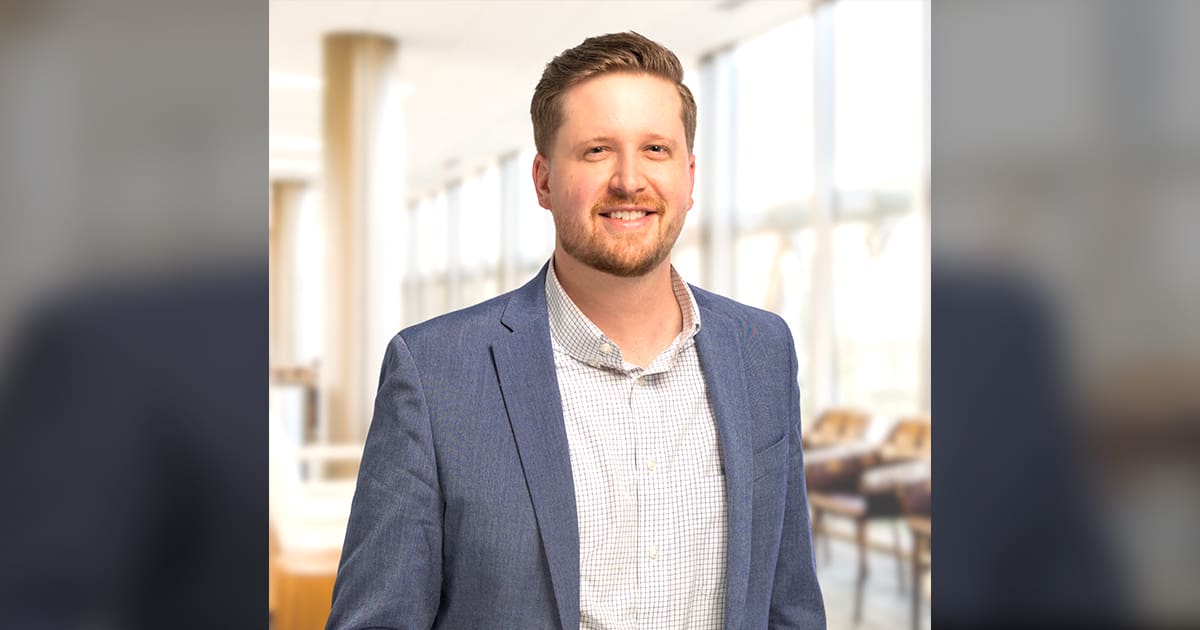
Nathan Jeffers has built his career on the belief that clear, compassionate communication can change lives.
The Jacksonville native, who now lives in Cabot, serves as director of marketing and public relations at CARTI, an Arkansas-based cancer care network with 18 locations. He stepped into the role after a personal health experience reshaped his perspective on communication in health care.
That turning point clarified his calling and propelled him toward a new professional path.
“Nurses, mentors, family and friends all visited as I healed, and the unique perspective it afforded, along with the pause to my ‘normal’ daily life, changed everything,” he said. “After leaving the hospital, I immediately focused on moving into a communications role within the health care field and quickly determined the best way I could enact this change would be to further my education with a master’s degree at UA Little Rock.”
Jeffers earned his bachelor’s degree in speech communication, now applied communication, from University of Arkansas at Little Rock. He returned to the university in 2018 to complete a master’s degree in applied communication.
“Before I had even graduated, the prospective degree helped me gain interviews and ultimately my first role in health care,” Jeffers said. “The skills I learned laid a foundation for my daily work — individually, within teams and across the organization.”
Graduate school came with challenges. Jeffers worked two jobs while completing his coursework part time, but he said the demanding schedule helped him stay focused on his goals.
“I firmly believe the greatest forms of strength are born from struggle, and earning my master’s degree was both an incredible experience and an intellectual challenge,” he said.
Jeffers said the demands of work and graduate school often pushed him to his limits.
“There were certainly days when it was hard to focus because I was worn out from work or the hours I could dedicate were limited,” he said. “But keeping an eye on both my short- and long-term goals helped me dig deep to find motivation.”
That perspective, he said, became part of his growth.
“Looking back at who I was before I started my master’s journey and who I would become made those difficult moments worthwhile,” he said. “As an early advisor once told me, life is often not about the end result — it’s about the journey it takes to get there.”
Jeffers recalled collaborating with classmates in the Communication Skills Center, learning communication theory, and developing skills in writing, organizational culture and crisis communication — tools he still uses today. He credited his wife, Jess, for her support throughout the program and said several faculty members shaped his academic experience, particularly Dr. Gerald Driskill and Dr. April Chatham-Carpenter.
“UA Little Rock helped me become a better version of myself,” Jeffers said, describing the university as authentic, welcoming and empowering.
“UA Little Rock is a place where working adults can grow without having to pause real life,” he said. “I’m grateful it’s a university that meets people where they are, embraces them and helps them move closer to who they want to become.”
Driskill said Jeffers stood out as a graduate student for his commitment to personal and professional development.
“He’s committed to modeling ethical and effective communication,” Driskill said. “He practices re-vision — returning to projects to strengthen them.”
Driskill still uses Jeffers’ final graduate project, which examined organizational culture and responses to the COVID-19 crisis, as a model for current students.
“He went beyond expectations, not only by integrating credible research but by providing analysis with meaningful applications,” he said.
In his role at CARTI, Jeffers continues to apply those principles.
“His focus on an ethic of care — on patient care and those they serve — captures how he lives out our department’s mission of co-creating better social worlds through positive communication,” Driskill said.