
From UA Little Rock to Global Impact: Graduate Launches Life-Saving Health Nonprofit
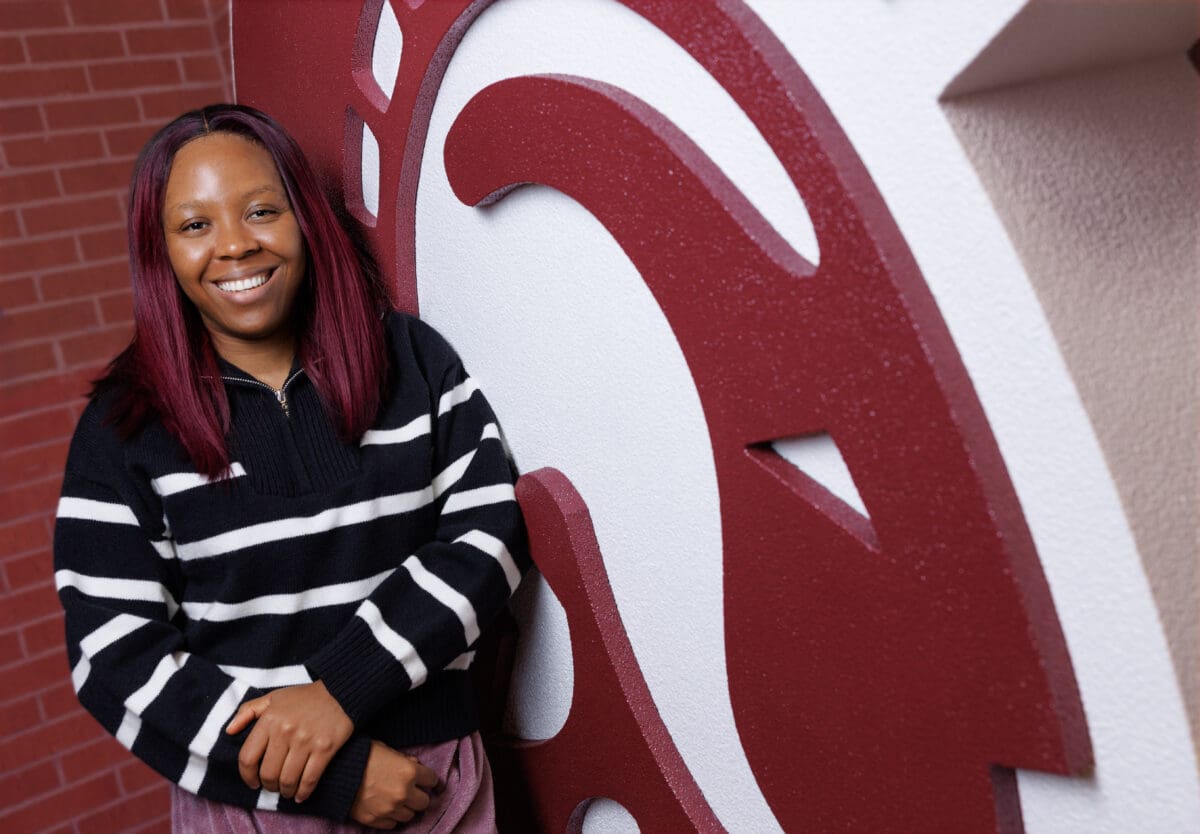
In communities where medical emergencies often go unanswered, advocacy can mean the difference between life and death. At the University of Arkansas at Little Rock, Theresa Okon found the academic foundation and practical tools to turn that belief into action. Today, she is the founder of Cedar and Ruby Health Alliance, a nonprofit dedicated to advancing health equity and emergency preparedness in underserved communities — work that is already saving lives.
Originally from Akwa Ibom State, Nigeria, Okon graduated in December with a master’s degree in mass communication. During her time at UA Little Rock, she served as a graduate assistant in the School of Mass Communication and as a senator in the Student Government Association.
Okon’s passion for public health advocacy began at a young age. When she was eight years old, she witnessed her grandfather suffer from a stroke — a traumatic experience that would shape the course of her life. Following the stroke, he was unable to perform many daily activities independently. While her family was fortunate to have a doctor in the family who could provide medical advice and support, the experience revealed the reality about the healthcare disparities in Nigeria.
“My grandad was blessed to have a son who could give him medical advice and counseling,” Okon said. “But what about people who do not have anyone to support them? What happens to them? That was where my passion started.”
Growing up in Nigeria, Okon saw how limited access to healthcare, emergency response systems, and public health education often turns preventable conditions into life-threatening crises. Many communities lack basic resources such as ambulances, CPR training, or reliable medical guidance, leaving families unprepared when emergencies occur.
Cedar and Ruby Health Alliance (CRHA) was founded to address those gaps. The nonprofit organization focuses on reducing the burden of cardiovascular disease, preventing and managing diabetes, and equipping underserved communities with life-saving skills. Through health screenings, education on nutrition and physical activity, CPR training, and interactive workshops, the organization emphasizes prevention, awareness, and timely emergency response.
Okon said the organization’s work is rooted in the belief that every life matters. By combining advocacy, hands-on training, and community engagement, CRHA aims to reduce preventable deaths in communities across African communities where access to emergency care and health education remains limited.
CRHA grew out of Okon’s experience as a graduate student at UA Little Rock, where she merged her academic training in mass communication with her passion for advocacy. She founded the nonprofit in September 2025 while completing her master’s degree and marks her time serving in SGA as pivotal for the creation of CRHA.
“Being a senator in the Student Government Association really opened my eyes,” Okon said. “I’ve always cared about helping people, but SGA helped me see how that passion could turn into something bigger. Being part of those conversations about solutions and advocacy made me realize I could create impact not just on campus, but in communities both in the U.S. and in Nigeria.”
Okon identified cardiovascular disease and diabetes as central focuses of CRHA based on both lived experience and observed patterns in Nigerian communities. She noted that demanding labor conditions, limited access to preventive care, and the absence of reliable emergency response systems contribute to rising mortality rates from hypertension and stroke.
“In Nigeria, we don’t have a working 911 system or emergency ambulances,” Okon said. “When someone collapses, there is often no immediate medical aid, and we keep losing people before help can arrive.”
She added that hospitals continue to record increasing cases of hypertension that often progress into stroke, while symptoms associated with diabetes frequently go untreated or undiagnosed. Compounding the issue is a lack of CPR and basic life support training, leaving bystanders unprepared to respond during emergencies. These gaps directly informed CRHA’s emphasis on community-based CPR education and emergency preparedness.
Through CRHA’s outreach efforts, Okon aims to confront the stigma that often prevents people from seeking medical care. The organization’s campaigns are designed to create awareness and encourage people to speak up about their health challenges.
“The health system has positioned people going through medical challenges in a way where they feel as if they cannot speak up for themselves for fear of being looked down upon, especially in the workplace,” Okon said. “We are trying to break down these barriers to make those suffering feel seen and know they will still be valued regardless of what they are going through.”
CRHA measures the effectiveness of its programs through community participation, engagement, and follow-up. Okon pointed to recent outreach efforts surrounding World Diabetes Day, which included market visits, street campaigns, and digital media engagement. She said many participants are motivated by personal loss, often sharing stories of loved ones who died during preventable emergencies.
“One person will tell you about a neighbor, another about a family member who has been a victim of an emergency situation,” she said. “Those stories show us the impact and why people want to learn the skills we are providing.”
Early outcomes have already demonstrated the organization’s impact. During one of CRHA’s first CPR training sessions in a rural Nigerian community, participants with no prior medical training learned life-saving techniques. Weeks later, Okon received news that a community member had successfully used CPR skills learned in the training to revive someone who collapsed while working on a farm.
Building trust in communities where faith in healthcare systems is low requires consistency, Okon said. CRHA maintains regular community presence through free health screenings, education sessions, media campaigns, and continued outreach.
One of CRHA’s most significant initiatives to date took place during World Diabetes Day, when the organization hosted a free health screening in Nigeria. Working alongside local medical professionals, CRHA provided screenings and distributed free medications to approximately 150 individuals at high risk for diabetes, as well as community members managing hypertension and stroke-related conditions.
“We worked with medical experts to provide free medications to about 150 people,” Okon said. “Because access to medication in Nigeria does not require insurance in the same way it does in the United States, we were able to respond quickly and reach people who needed care. That outreach was one of the largest and most impactful initiatives we’ve completed since the organization was founded.”
Looking ahead, Okon hopes to establish a subsidiary of Cedar and Ruby Health Alliance, such as an urgent care clinic, within the next five years. She is also collaborating with a team of app developers to create a blood donation app for Nigerian residents that she plans to use in partnership with hospitals to conduct blood drives.
In addition to her work in public health advocacy, Okon is preparing to release a memoir centered on healing through self-acceptance. “Finding Healing in Self Acceptance: Battle Against Rejection, Anxiety, and Self-Esteem” will be published through Amazon KDP and released on Jan. 31, 2026.
Drawing from her own experiences with early childhood rejection, trauma, and mental health struggles, the book explores how personal healing can emerge from within rather than through external validation. Okon describes the project as both deeply personal and community-minded — written not only as part of her own healing journey, but as a resource for others who have experienced adversity.
“Finding healing is not something you look for outside of yourself. It’s something you discover within. I want people to know that their background does not define their future, and that even through rejection, they can still become who they want to be,” Okon said.
Through her academic journey at UA Little Rock, Okon transformed personal experience into purposeful leadership. By combining her training in mass communication with hands-on involvement in student leadership, she developed the skills needed to advocate effectively for underserved communities beyond campus. Today, that foundation continues to shape her work through Cedar and Ruby Health Alliance, where she turns knowledge into action and ensures more communities are prepared when it matters most.