
How UA Little Rock is Preparing Students for an AI-Driven Workforce
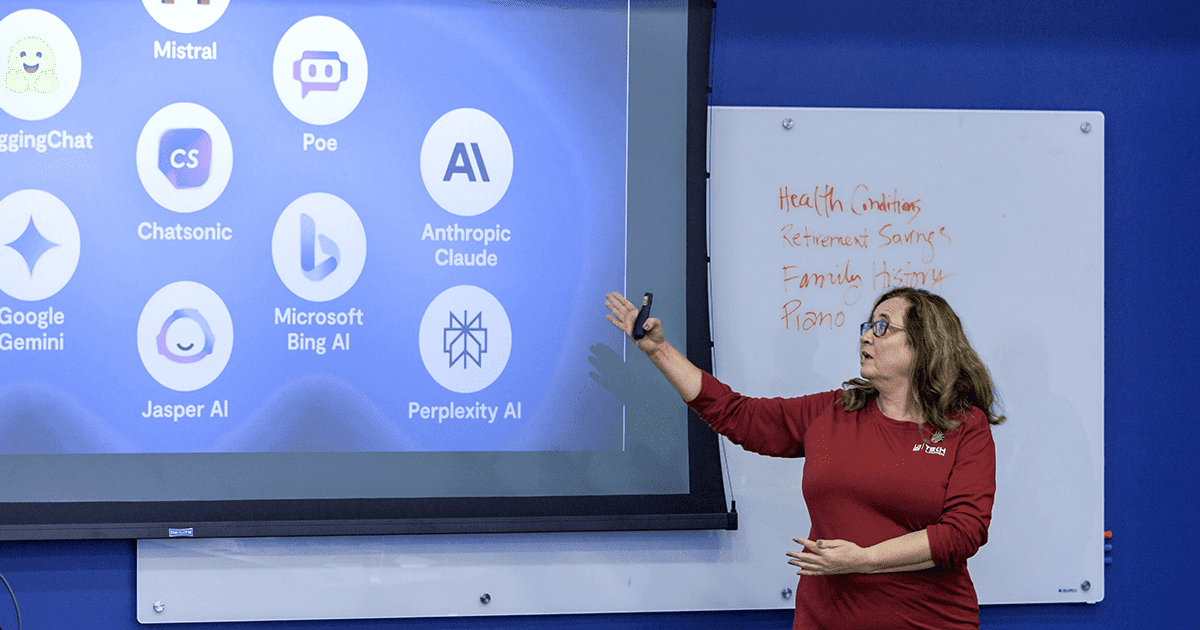
Artificial intelligence is rapidly transforming how work is conducted across industries, from healthcare and manufacturing to marketing and finance. While headlines often focus on fears that automation will replace workers, experts at the University of Arkansas at Little Rock say the reality is more complex – and full of opportunity for those prepared to adapt.
According to Dr. Aaron Duvall, director of workforce development at UA Little Rock, two out of every three jobs will be exposed to AI as it continues to become normalized in daily tasks. Rather than resulting in fewer jobs, he sees the rise of AI reimagining the way people work altogether.
“Within the next four years, over 60% of jobs will have job task changes – not layoffs, but a reimagining of the way work is being done,” Duvall said. “In that case, it’s interesting that half the people in the workforce right now have had zero AI training in the past year. It creates a big gap.”
Employers want their employees to have AI skills as they enter the workforce, and experts such as Dr. Duvall and UA Little Rock Tech Entrepreneur-in-Residence Marla Johnson see these skills as a necessity in today’s constantly evolving technical landscape. Through new training initiatives, industry partnerships, and hands-on events for students, UA Little Rock is working to ensure graduates are prepared to work in an AI-driven economy.
AI tools are already helping businesses streamline everyday work. Tasks that once required hours of manual effort – such as compiling reports, analyzing data, or summarizing meetings – can now be completed in minutes with AI support. Duvall said AI often changes how long tasks take rather than eliminating the work itself, allowing employees to focus on higher-level decision-making.
In her current role, Johnson works with STEM faculty and students to commercialize research and build high-growth startups. A technology entrepreneur and business leader with more than 30 years of experience in innovation and company building, she encourages students to use AI, saying they will not be as competitive candidates in the workforce if they do not know how to use these tools to their full potential. Her advice is to become an expert in how AI is used in your specific field.
“It will be a competitive disadvantage for my students if they are starting a company and they don’t know how to apply AI toward their market research or pitch presentation development, for example,” she said. “I specifically teach my students prompts to use and ways to utilize AI in order to develop ideas into an actual business plan.”
Being workforce ready has taken on a whole new meaning in this AI-driven economy. Entering the job market now requires the skills and knowledge not only to use AI as a support tool but also to support business needs.
“We have to move from fear to fluency with AI,” Johnson said. “The limits of what these tools can do are really your clarity of thinking and your imagination.”
Duvall draws an important distinction between simply using AI tools and understanding how to apply them effectively in the workplace. While many workers are experimenting with tools like ChatGPT, far fewer know how to integrate them into real workflows or use them to improve productivity and decision-making.
Duvall said the university is working to help students acquire these skills in order to be leaders and trendsetters in AI as they enter the workforce. The skills highlighted include advanced prompting, deep research with AI, and the ability to build and use AI-powered agents to automate everyday tasks.
Beyond preparing students, UA Little Rock is also working to connect AI innovation with industry and the broader community. Johnson also coordinates AI training and education programs for companies and community members and regularly hosts events and workshops that bring together students, faculty, and business leaders to explore how AI can be applied to real-world challenges.
One example is the university’s “Coding for Wellness” AI hackathon, which brings together students from across the state to develop technology solutions focused on healthcare and wellness. During the event, students collaborate with mentors from healthcare organizations and industry partners to design applications that address real problems.
While the technology is evolving rapidly, both Duvall and Johnson emphasize that AI should be viewed as a tool that enhances human work rather than replaces it entirely. According to Johnson, critical thinking is essential to effective AI use. Users must be able to evaluate and question the information it provides, using the technology not just for answers but as a thought partner that challenges ideas and helps expand knowledge.
“Workers who use AI are going to replace workers who don’t,” Johnson said. “Companies are looking for innovative, creative people who understand how these tools can help solve problems and improve processes.”
As artificial intelligence continues to reshape industries, UA Little Rock is working to ensure students graduate with the skills needed to work alongside AI rather than fear it, positioning them to lead in the workforce of the future.