
Students Lead Creation of New Trojan Forge Makerspace at UA Little Rock
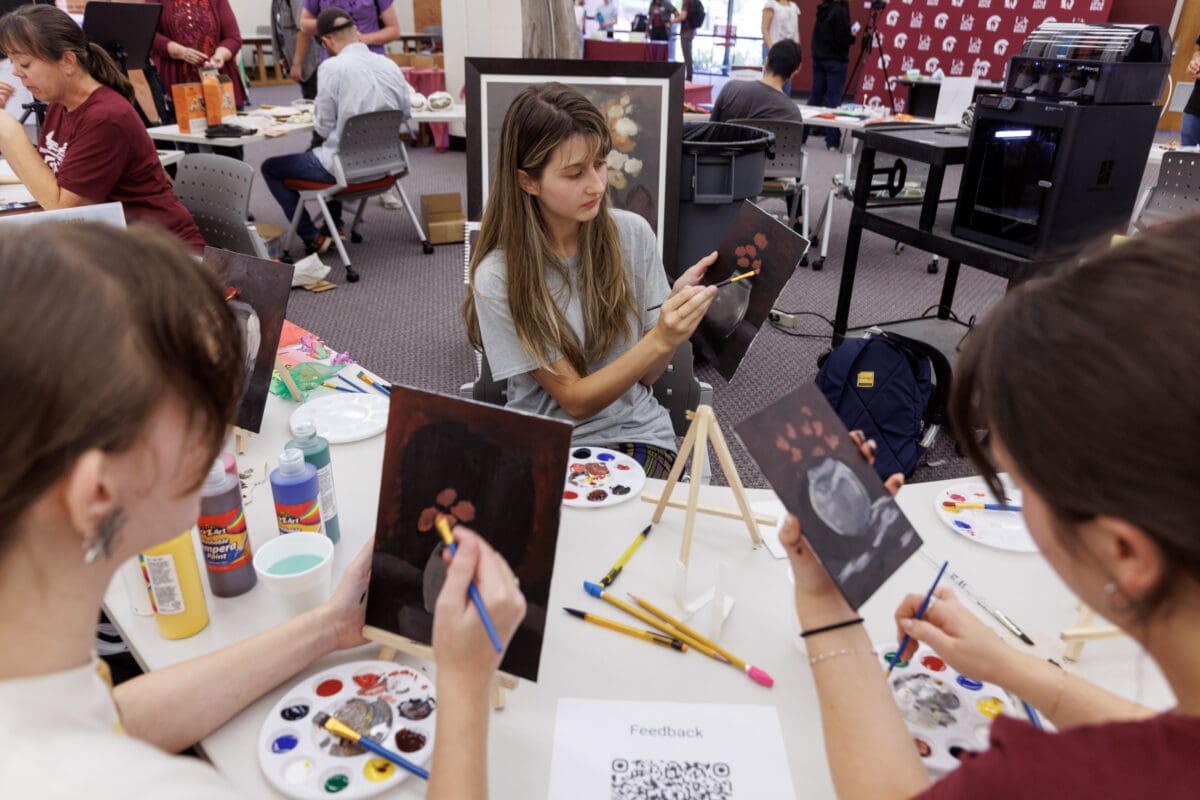
Students at the University of Arkansas at Little Rock are helping shape a new campus makerspace designed to bring creativity, technology, and hands-on experimentation together in one place.
The project, called Trojan Forge, will give students access to tools such as 3D printers, laser cutters, vinyl cutters, screen-printing equipment and woodworking tools. The space is designed to bring students from different majors together to experiment, build projects and collaborate.
Students in Library Vision Partners, a campus focus group created in 2023 to give students a voice in how the library evolves, have helped bring the idea to life.
The group hosted a March 11 town hall in the Ottenheimer Library to share plans for Trojan Forge and gather feedback from the campus community.
Will Fausel, an electrical and computer engineering major, Learning Commons IT support specialist and member of the Library Vision Partners group, said the concept for Trojan Forge began during his second semester at UA Little Rock, when the library asked students in the Vision Partners program to help design a makerspace for campus.
At the time, he said, students were still trying to figure out what that space might look like.
To test the idea, organizers hosted a prototype event in August 2025 and launched a student survey to help shape the makerspace’s vision.
Brandon Sollars, director of the Learning Commons and adviser to the Library Vision Partners program, said the results demonstrated overwhelming student support for creating a makerspace on campus.
The survey showed 98 percent of respondents supported the idea, giving the group strong backing to present their proposal to university leadership.
That proposal led to $50,000 in funding for the project, by the chancellor’s office for campus improvement initiatives.
Survey responses also helped identify the tools and resources students want in the space. Many requested equipment such as 3D printers, laser cutters, woodworking hand tools, screen-printing equipment and a soundproof studio for recording music and podcasts.
Valerisse Bell-Ovwiomoriemu, an adviser on the Library Vision Partners committee, said organizers will review the most requested items and determine what the initial budget can support.
The team plans to compare student requests with available funding and narrow the list to equipment that can be included in the first phase of the project. Bell-Ovwiomoriemu said the long-term goal is to build a multidisciplinary space that can expand as additional resources become available.
Organizers also hope faculty will use the space for demonstrations, presentations and expert-led workshops that introduce students to tools and creative practices outside their primary fields of study.
Trojan Forge will also incorporate the library’s existing 3D printing services, allowing students to submit print jobs online and receive printed objects through the library.
The makerspace will be located on the first floor of the Ottenheimer Library, where students will be able to experiment with tools, develop projects and explore creative ideas across disciplines.
Organizers say Trojan Forge reflects several years of student research, feedback and advocacy through the Library Vision Partners program.
Construction is expected to begin in April, with organizers aiming to open the space in August in time for the start of the fall semester.
Students and faculty can continue sharing ideas through the Trojan Forge interest survey, which remains open indefinitely. More information about the project is available on the Ottenheimer Library website at https://ualr.edu/library/.