
UA Little Rock Graduate Student Helps Identify Cold Case Victim After More Than 30 Years
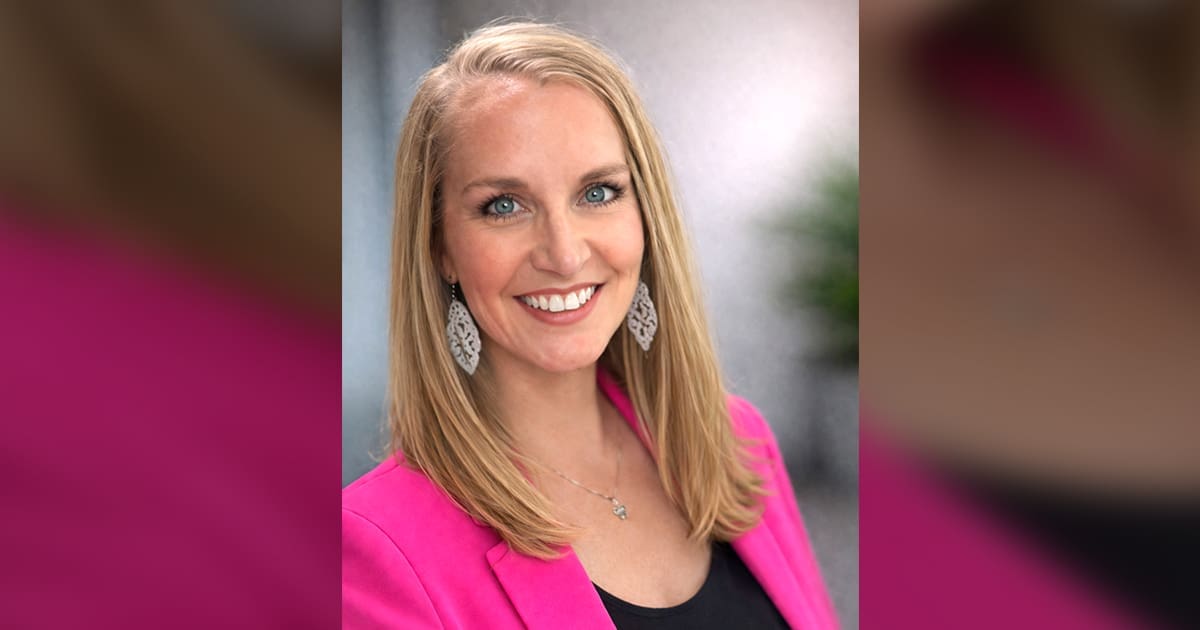
What began as a quest to learn more about her family’s heritage has led one University of Arkansas at Little Rock graduate student to help identify more than 60 previously unknown victims and perpetrators in cold cases across the United States and Canada.
One of those cases hit especially close to home. Stephanie Wyatt, an investigative genetic genealogist and a graduate student in UA Little Rock’s Applied Communication program, recently played a key role in identifying the woman long known as the Conway County Jane Doe — a victim whose identity remained a mystery for more than three decades.
In February 2026, the 32-year-old woman was identified as Jamie Ann Moore, bringing long-awaited answers to a case that had remained unsolved since 1994.
Wyatt’s interest in communication is rooted in her professional background. She holds an undergraduate degree in public relations and previously worked in human resources before transitioning into genetic genealogy. She currently works for the Arkansas Department of Transportation while pursuing her graduate degree.
Returning to school was not always something Wyatt saw as attainable. She said her mother is the only person in her family with a college degree, and she will be the first to earn her master’s degree. “There was a lot of self-doubt at first,” Wyatt said. “But the support I found at UA Little Rock gave me the confidence to believe I could be successful.”
Wyatt’s path into genetic genealogy began as a personal project. Her father’s adoption sparked her interest in the field of genealogy as she searched for answers about her family’s medical history. However, this search quickly expanded beyond her own story.
Wyatt turned her self-taught skills toward helping others who were searching for similar answers about their history. For nearly a decade, she volunteered to assist individuals searching for biological family members, including adoptees and those with unknown parentage. Over time, that work evolved into something more complex: helping identify individuals who could not identify themselves, such as those with amnesia or medical conditions preventing speech, and eventually, victims in cold cases.
In 2019, Wyatt joined a team of investigative genetic genealogists at Parabon NanoLabs, where she began applying her skills to criminal investigations and unidentified remains cases across the country.
Wyatt later volunteered with the Arkansas State Police after the case of Conway County Jane Doe stalled despite earlier DNA testing efforts. Drawing on her experience, she said she believed there were still leads worth pursuing and a path toward identification.
“I reached out because I felt like there was still progress to be made, even if it was slow,” Wyatt said. “When you’ve been in this field long enough, the DNA starts to act like a roadmap. The matches and the amount of shared DNA can tell you where to look, and I had a feeling about where to start.”
Wyatt said the work begins with a DNA profile, which is then compared to distant relatives in public databases. By grouping shared matches and tracing common ancestors, she and other investigators are able to reconstruct fragmented family trees and narrow down an unidentified person’s identity.
“It’s like putting together a puzzle without knowing what the final picture looks like,” she said. “You group pieces together, find patterns, and eventually, something connects.”
Even a single distant match can be enough to move a case forward.
“In this case, there was one match in the DNA database that helped push us forward toward identification,” Wyatt said. “Just one person made that possible, and they probably don’t even know. They’re not closely related, and it’s possible they never even knew Jamie existed.”
This, she said, is why it is so important for people who have had their DNA tested to upload their results to the databases that make this kind of work possible. There are three databases used for this sort of research: GEDmatch, FamilyTreeDNA, and DNA Justice. Anyone who wants to participate can help investigators by uploading their results and opting in to law enforcement matching.
“Especially with unidentified human remains, people don’t realize how many have been separated from their family but aren’t on any list as reported missing,” Wyatt said. “This was the case with Conway County Jane Doe.”
Wyatt said she hopes more people understand both the role the public can play and the realities of the process. Even small contributions, like uploading DNA data to public databases, can make a difference — often without people even realizing it.
“In most cases, if you choose to assist, you probably won’t even realize you’re helping,” she said. “But those small pieces can be what allow us to move a case forward.”
She added that investigative genetic genealogy is a careful, step-by-step process.
“It’s not an instant answer,” she said. “Sometimes we’re narrowing it down from hundreds of people to a much smaller group, and it takes time and additional information to get to one name.”
Beyond science, Wyatt’s work also depends heavily on communication — a skill she continues to develop through her studies at UA Little Rock.
Her role involves translating complex genetic findings into clear, actionable information for investigators, many of whom are not specialists in DNA analysis. She said her studies in applied communication have helped her navigate relationships with law enforcement while working on sensitive, often emotional cases.
“You’re working with people who may have been on these cases for decades,” she said. “There’s a lot of emotion tied to that, so how you communicate matters.”
For Wyatt, identifying Moore was both a breakthrough and a reminder of the weight of the work.
“It’s very bittersweet,” she said. “There is that celebratory moment that you finally found the connection, but it’s very fleeting because you realize there are painful implications as well. Jamie got her name back, and Jamie’s family is now processing that loss.”
Wyatt said she is grateful for the opportunity to play a role in helping family members find not only answers, but peace.
As investigators continue working the case, Wyatt hopes her efforts highlight the potential of investigative genetic genealogy and the need for more resources to support it in Arkansas.
For Wyatt, the goal remains simple — to help give people their names back and bring a measure of peace to the families still searching for answers.