
Dr. Carrie Phillips’ CASE Leadership Elevates UA Little Rock on National Stage
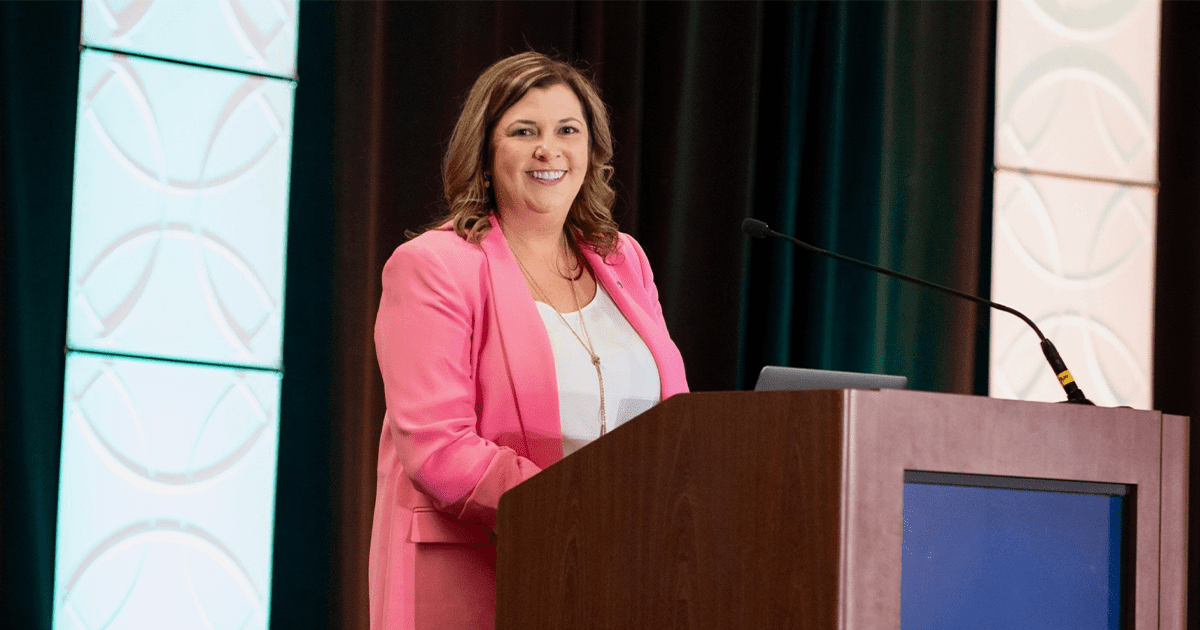
As the CASE District IV Conference convened in Dallas in April, Dr. Carrie Phillips marked the approaching close of her term as district chair, capping four years of growth, stronger connections, and expanded engagement across the region.
Phillips, chief marketing and communications officer at the University of Arkansas at Little Rock, will conclude her term as chair of CASE District IV later this year, a role she held from 2024 to 2026, after serving as chair-elect beginning in 2022. She will continue to serve in an advisory role as past chair.
CASE — the Council for Advancement and Support of Education — is a global professional organization composed of colleges, universities, independent schools, and nonprofit institutions. It supports professionals in fundraising, alumni relations, communications and marketing, and provides strategy and tools to strengthen enrollment, engagement and long-term sustainability.
The end of Phillips’ formal leadership marks the culmination of a nearly 20-year volunteer journey with CASE District IV that began, she said, almost by accident.
“This was never the plan,” she said. “After getting my degree, I planned to work for a year or so at a college while the economy got better and then find something else. Instead, I found a career.”
That early work in higher education led to what she describes as a “voluntold” assignment — attending a CASE district conference that quickly pulled her into volunteer service. From there, she moved into successive cabinet and conference leadership roles, including serving as District IV conference chair in 2020.
“I left the first conference with a volunteer spot the next year. The rest, as they say, is history,” she said.
When she stepped into the chair-elect role, Phillips said District IV lacked a cohesive structure for engagement outside its annual conference. That gap became the foundation for what she considers her most significant contribution.
“Our district didn’t quite have an identity,” Phillips said. “I developed the engagement model that our district implemented. We created a plan that didn’t exist and executed it. That plan resulted in more than 1,000 engagements each year outside of the conference for our district. I’m really proud of that effort.”
Phillips said the work positioned the district for continued growth. The framework she helped design has since been adopted by all seven other CASE districts. She also shared the results with CASE trustees at a national meeting a few years ago, elevating both District IV and UA Little Rock’s presence in national advancement discussions.
Leading a district that spans Arkansas, Louisiana, New Mexico, Oklahoma, and Texas, required alignment, Phillips said. Member institutions vary widely in size, mission and resources. She and the District IV cabinet worked to build a shared framework that could connect and support those institutions through intentional outreach and programming.
“We sat down as a cabinet and looked at our overall engagement goal, identified the groups we wanted to reach and developed tactics to support them,” she said. “It was a very marketing-driven approach.”
That systems-focused leadership mirrors Phillips’ work at UA Little Rock, a metropolitan research institution committed to expanding access to education and preparing career-ready graduates for the regional workforce. In her role at the university, she oversees institutional marketing and communications strategy. That work shapes UA Little Rock’s enrollment messaging, strengthens brand positioning, and aligns the university’s storytelling across campus. Through her involvement with CASE, Phillips has connected UA Little Rock with national best practices and peer institutions addressing similar priorities in enrollment, communications and institutional positioning.
“CASE is good for UA Little Rock,” she said. “There are so many institutions that we can always learn something from.”
Those connections have had practical impact. Phillips said early planning for the university’s upcoming centennial celebration has been informed by conversations with CASE colleagues across the country. She also has contributed to CASE efforts to establish professional metrics for marketing and communications — standards designed to help institutions assess effectiveness and improve operations.
“Because of my involvement at the leadership level, we’ve been able to give feedback and help shape those standards,” she said. “When complete, that work will be a key tool to help units across the world assess their approach and continue improving their marketing and communications function.”
She credited UA Little Rock leadership, including Chancellor Christina S. Drale and Vice Chancellor Christian O’Neal, with supporting her service and recognizing its institutional value.
“I have to begin with thank yous,” Phillips said. “Chancellor Drale and Christian O’Neal were both incredibly supportive of my CASE involvement. They saw the bigger picture of how this could help the institution.”
O’Neal said Phillips’ leadership strengthened both District IV and UA Little Rock’s reputation.
“Carrie’s leadership has elevated not only our work at UA Little Rock, but the visibility of our institution across the CASE District IV region and beyond,” O’Neal said. “She brings a thoughtful, strategic approach to everything she does and has a unique ability to connect people and ideas in meaningful ways. Carrie has managed well at home and well at CASE. We are all better for it.”
Chancellor Drale said Phillips’ impact has been just as significant within the university.
“Carrie brings to the table a consummate professionalism that has allowed us to transform our marketing and communication division into the powerhouse it is today,” Drale said. “She has an impressive creative talent as well as sharp analytical skills. But her superpower is her ability to understand the importance of mission and purpose and translate those into strategy, structure, and messaging. And for an extra bonus, she is a delight to work with.”
For Phillips, the most lasting impact of her CASE journey is rooted in community.
“CASE friends became family,” she said. “We are better together.”
As she hands leadership to her successor, Baleigh McCoin, executive director of Advancement and Marketing at Paris Junior College in Paris, Texas, Phillips is confident in the district’s continued progress. Phillips said she is especially proud that McCoin is the first leader from a two-year institution to serve in the role.
“We’ve built the framework, and I’m excited to see her build on it and continue to refine it,” she said.
While her term comes to a close, her involvement continues, as does the work of advancing institutions such as UA Little Rock through collaboration and shared purpose.