
Engineering Graduate Advances Cybersecurity and Public Safety
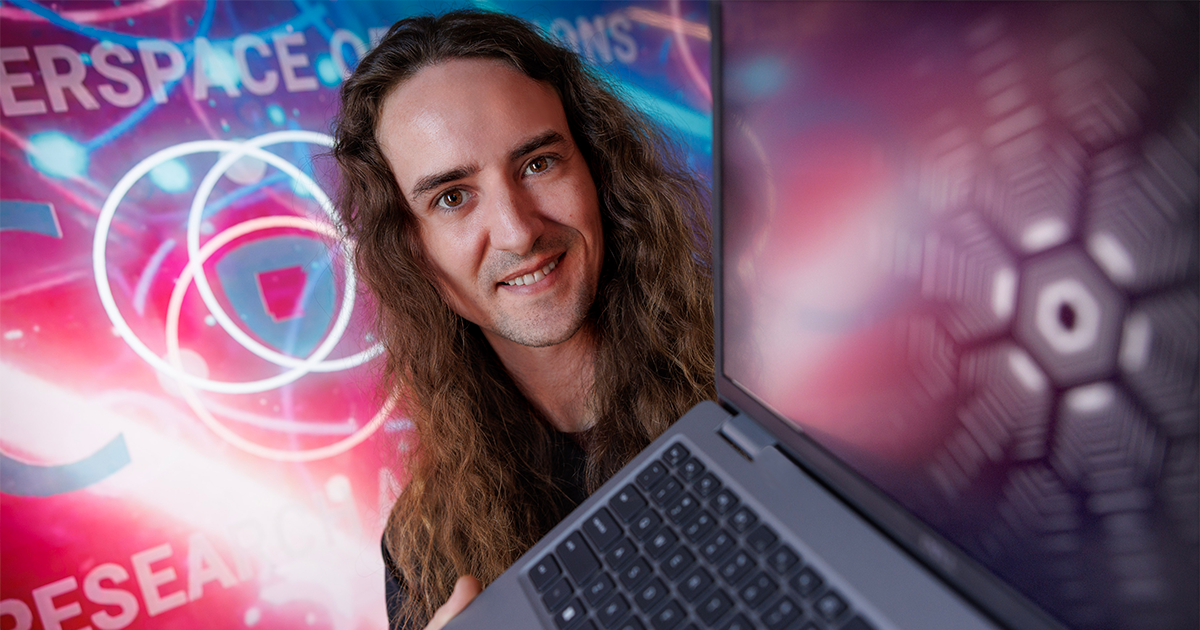
Whether he’s designing virtual reality simulations to help protect critical energy infrastructure or introducing K-12 students to emerging technologies, Colin McNerny has spent his time at UA Little Rock turning technical knowledge into real-world impact.
The Little Rock native graduated this spring with a Master of Science in electrical and computer engineering after years of involvement in research projects, student leadership, and outreach initiatives across campus.
McNerny said he chose UA Little Rock because of its strong academic environment and mentorship opportunities.
“The graduate school at UA Little Rock is world class in terms of research, mentorship, and furthering education,” he said.
During his time at UA Little Rock, McNerny balanced advanced research with service that extended beyond the university to the broader community. At the Cyberspace Operations, Research and Education (CORE) Center, he designed virtual reality simulations of industrial control systems for the Consortium for Cyber Innovation. The work is supported by a grant from the Department of Energy focused on protecting critical energy infrastructure from cyberattacks.
He also used his interest in technology to improve public safety on campus. Drawing on his professional experience as a traffic safety specialist, he developed a technology designed to make crosswalks safer for pedestrians and wildlife.
His research explored how signals from vehicles and mobile devices could be detected near intersections, allowing the system to warn pedestrians and drivers of one another’s presence before they come into view. McNerny says these technologies could help reduce traffic accidents involving pedestrians and wildlife regardless of visibility, weather conditions, or existing safety infrastructure.
In addition to his research, McNerny has mentored fellow students and held leadership positions as chair and secretary of the Association for Computing Machinery student chapter.
His passion for technology education also led him to teach virtual reality and cybersecurity summer camps for K-12 students. Through programs hosted by the Emerging Analytics Center and GenCyber, McNerny introduced students to emerging technologies while encouraging thoughtful discussions about their ethical use.
“I am inspired by seeing how excited students are when they try VR for the first time,” McNerny said. “Empowering them with the tools to make their own worlds and seeing their creativity blossom is a reward in itself.”
One of McNerny’s favorite college memories, he said, came during a trip to the University of Arkansas in Fayetteville, where he and fellow students showcased an augmented reality game they developed called “Spook Splat.”
While he has enjoyed opportunities to present projects and lead student organizations, some of his most meaningful experiences happened behind the scenes in the lab.
“Those quiet hours in the lab, not knowing if the project I had been working on for months would actually work,” he said. “Then resting on it and finding out how to fix the problem immediately the next day. Those moments are rare and meaningful.”
After graduation, McNerny plans to pursue a career in engineering while continuing his research at the CORE Center.
“If my work helps people feel safer and improves their quality of life in any way, I have made an impact,” he said.