
UA Little Rock Expands Cybersecurity Support for Arkansas Communities
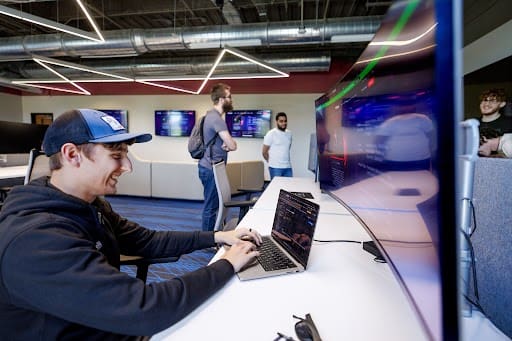
The Cyberspace Operations Research and Education (CORE) Center at the University of Arkansas at Little Rock will now reach more Arkansas communities through the Cyber Learning Network (CLN).
By expanding the CORE Cybersecurity Clinic through the CLN, UA Little Rock is creating new opportunities for students to gain hands-on experience while meeting needs in communities across the state, bringing together students and faculty from 11 colleges and universities. The CLN extends cybersecurity services to more communities than any one institution could alone, while fostering collaboration, shared expertise, and experiential learning. Through this network, the CORE Cybersecurity Clinic is expanding to Ouachita Baptist University, the University of Arkansas Community College at Hope-Texarkana, and North Arkansas College of the University of Arkansas this fall.
“Every partner site is another place where our students get to apply what they’re learning to a real problem with real stakes,” said Dr. Sandra Leiterman, director of cybersecurity education and outreach. “That kind of experience is hard to replicate in a classroom, and it’s what makes our graduates ready to contribute on day one.”
The CORE Cybersecurity Clinic’s goal is to make cybersecurity expertise available to organizations such as small nonprofits, school districts, health clinics, rural utilities, and small businesses that provide essential services but lack their own cybersecurity staff. These organizations face increasing cyber threats and lack access to costly risk assessments or enterprise security programs.
CORE Center teams, made up of students and faculty experts, work directly with organizations to evaluate their systems, identify vulnerabilities, and deliver actionable recommendations. The clinic identifies the most likely ways hackers could attempt to gain access, then provides prioritized recommendations and safeguarding strategies to help organizations anticipate the top threats and proactively strengthen their defenses.
For Nathan Thomason, a student researcher at the CORE Center, those experiences helped launch his career.
“UA Little Rock’s CORE Center provided me with a foundation of excellence to rely on throughout my studies as an undergraduate student and at the beginning of my cybersecurity career,” Thomason said.
He said working directly with Arkansas organizations and emerging cybersecurity technologies gave his education a deeper sense of purpose.
“The opportunities to engage with my local community and pursue bleeding-edge cybersecurity technologies that I was presented with as a researcher allowed my studies to have a measurable impact on my community,” he said.
The clinic’s work is also shaped by ongoing research at the CORE Center, where faculty and students are developing new approaches to cybersecurity defense. Rather than remaining in the research phase, many of these ideas are tested and refined through the clinic’s work, allowing researchers and students to evaluate new methods while providing clients with recommendations informed by the latest cybersecurity research.
One of the center’s newest research projects explores how artificial intelligence can help organizations identify the most likely paths a cyberattack could take through their systems and prioritize the security improvements that will have the greatest impact. The CORE Center is also collaborating with the Institute for AI Policy and Strategy, a national nonpartisan AI policy think tank, on initiatives that support cybersecurity policy and the protection of the nation’s critical infrastructure, helping connect the center’s applied research with broader national conversations about emerging cyber threats.
The clinic also provides students with valuable, real-world experience beyond the classroom. Working with organizations across Arkansas, they learn not only how to identify cybersecurity risks but also how to explain technical concepts in ways that help non-technical leaders make informed decisions. Those communication skills are just as critical as technical expertise in preparing students for careers in cybersecurity.
“Working at the CORE Center has been wonderful because it’s given me real-world experience in my field,” said Divija Vijay, a sophomore double majoring in computer science and cybersecurity. “On the projects I get to work on, I’m always learning new concepts and technical skills. It’s a really supportive environment that genuinely cares about our growth.”
Through the CLN, the CORE Center is helping schools, nonprofits, utilities, and businesses better understand their cybersecurity risks while giving students opportunities to gain practical experience addressing the challenges organizations face every day.
“Arkansas has cracked the code for making these partnerships work,” said Dr. Philip Huff, director of the CORE Center and assistant professor of computer science. “Communities across the state need practical help defending against cyberattacks, and our students are ready and able to meet that need. Now our job is to clear the path so these partnerships can thrive and strengthen cybersecurity across Arkansas.”