
UA Little Rock Graduate Earns Second National Recognition for Gifted Education Work
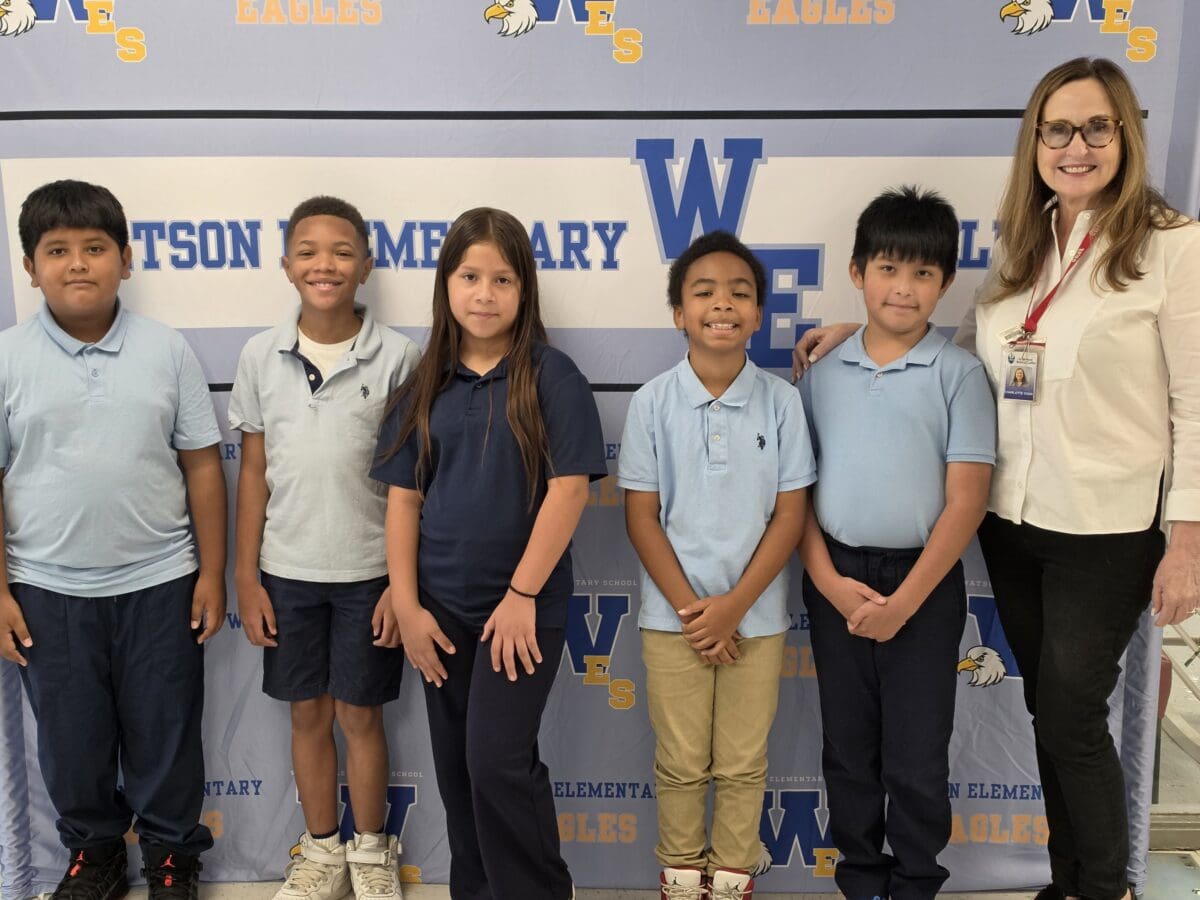
For Charlotte Bomar, creativity is more than a classroom tool. It’s how she helps her students see what they can achieve.
This approach has earned Bomar two national honors for her work in gifted education. The National Association for Gifted Children has named her the 2026 Outstanding Master’s Student in Gifted Education, after she received the 2025 E. Paul Torrance Award for her dedication to fostering creativity in gifted education.
The two awards recognize different aspects of Bomar’s work, but she sees them as closely connected.
“Receiving these two national recognitions is both humbling and deeply affirming,” said Bomar, who graduated earlier this year from the graduate Gifted, Creative, and Talented Education program. “The E. Paul Torrance Award recognized my commitment to nurturing creativity, while the NAGC Master’s and Specialist Award honors how I have applied my graduate learning to gifted education.”
Bomar believes creativity is central to effective gifted education, giving students opportunities to think in new ways, take intellectual risks, and demonstrate their abilities beyond traditional measures of academic achievement.
“My work in the classroom has taught me that creativity and giftedness do not always look the way we expect them to,” she said. “Some students demonstrate their abilities through academic achievement, while others reveal their gifts when they are given opportunities to design, build, question, problem-solve, or approach a challenge in an original way.”
Now in her fourth year at Little Rock’s Watson Elementary, she continues to draw on her classroom experience in her approach to gifted education. Working directly with students has demonstrated to her how important it is to give children different ways to show their strengths.
“Potential cannot emerge if students are never given the chance to explore it,” she said. “I view creativity not simply as an enrichment activity, but as a pathway for recognizing and developing giftedness.”
Her graduate studies at UA Little Rock helped her connect that classroom experience with research and proven teaching methods. Through the university’s program, she gained a deeper understanding of gifted learners and became more intentional about using creativity, differentiation, and curriculum design for her students.
The program also connected her to mentors who encouraged her to take her ideas beyond the classroom. Dr. Ann Robinson, director of the Jodie Mahony Center for Gifted Education and Bomar’s advisor, said Bomar embraced those opportunities from the beginning, becoming the first graduate student in the program to participate in the UA Little Rock Creative Works Expo. She has also taken an active role in state and national organizations championing gifted and talented education.
“From the first day she entered the program, she took on every challenge,” Robinson said. “It has been such a pleasure to work with her, and she has truly become an ambassador for the program and the university. Charlotte is so fun to be around, and she brings all that joy to her classroom every day.”
That sense of encouragement was something Bomar experienced throughout her graduate studies.
“My professors did more than teach course content; they modeled the kind of educator I strive to be,” Bomar said. “They recognized my strengths, encouraged my ideas, challenged me to grow, and helped me see that my classroom experiences could contribute to the larger field of gifted education.”
That support helped her grow from an educator focused on her own classroom into an advocate for gifted education.
“As educators, we often focus on the next lesson, the next student need, or the next opportunity, without pausing to recognize the larger impact of what we are doing,” she said. “These honors have affirmed that the creative, student-centered experiences I design are not only meaningful for my students, but can also contribute to the broader field of gifted education.”
That broader perspective has also shaped Bomar’s advocacy for students whose talents might otherwise be overlooked. She hopes gifted education in Arkansas becomes more equitable and accessible, regardless of where a student lives, the language they speak, their family income, or the type of school they attend. She supports approaches such as universal screening, multiple measures for identifying giftedness, and additional teacher training. She also hopes to expand access to high-quality gifted programming, creative learning experiences, and advanced opportunities, particularly in rural and high-poverty communities across the state.
“Arkansas has tremendous talent in every community, and we must ensure that all students have opportunities to discover and develop their gifts,” she said.
Although she has completed her master’s degree, she sees it as a beginning, not an ending. She plans to remain connected to gifted students while continuing to share what she has learned with other educators. In the future, she hopes to pursue a doctoral degree and teach at the university level, preparing future educators to recognize and nurture gifted potential.
For young teachers considering gifted education, her advice follows the same ideas that guide her own teaching: stay curious, keep learning, and remember that giftedness doesn’t look just one way.
“Giftedness does not have one look, background, language, or test score,” she said. “Take time to know your students, listen to their ideas, and create different opportunities for them to reveal their strengths.”
For Bomar, those opportunities are where creativity flourishes. By giving students different ways to explore ideas, solve problems, and demonstrate their strengths, she hopes more students will have the chance to discover their potential.