
Bowen Law Students Complete Comprehensive Study of County Law Libraries
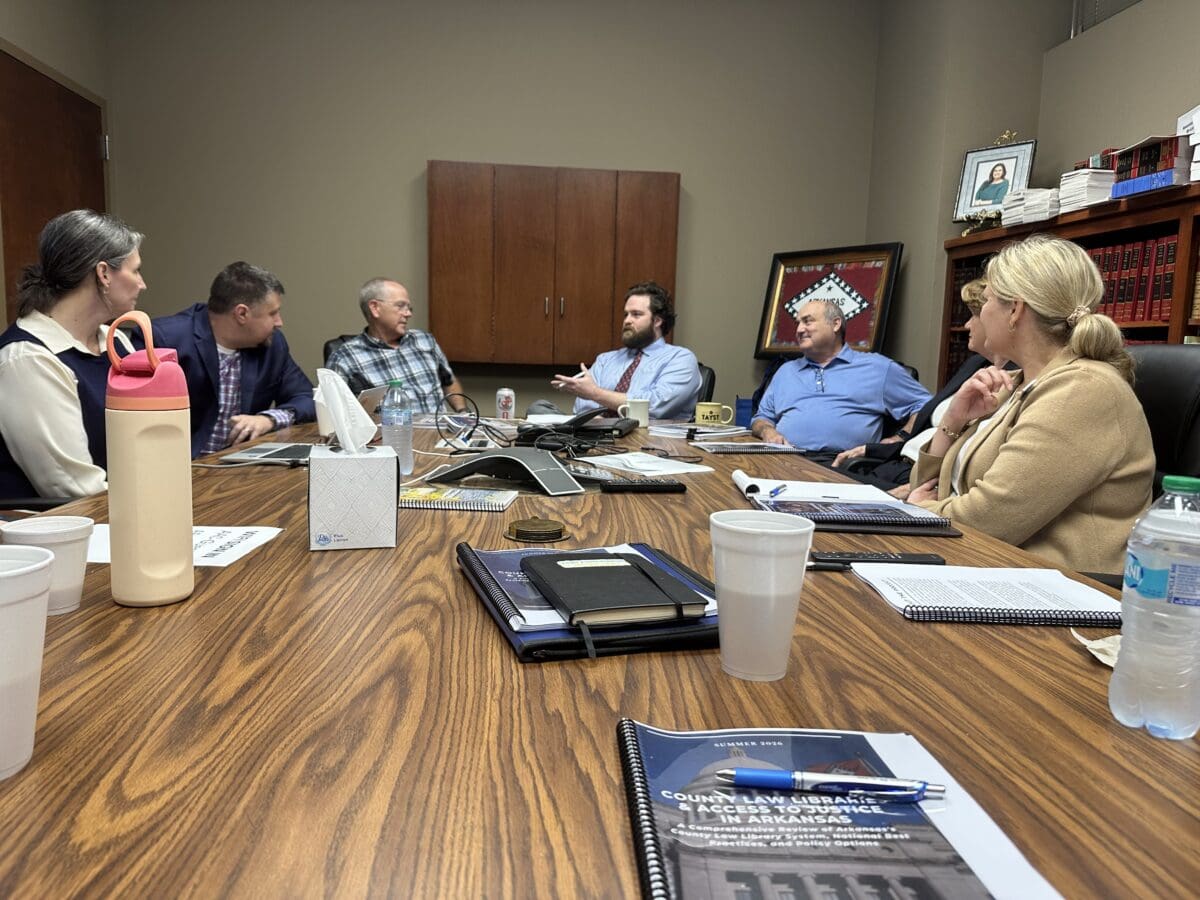
Several students from the University of Arkansas at Little Rock William H. Bowen School of Law recently completed a research project on Arkansas county law libraries, and how the model of funding and execution for those libraries might be improved.
The seven students — Brandon Bean, Rabecca Cisneros, Hank Herzfeld, Matthew Stocks, Katie Rainey, Abigail Hustead, and Blakely Spears — conducted their research over the summer, working extensively with Taylor Handford, an attorney at the Association of Arkansas Counties. In early August, the students presented their findings to Sen. Clarke Tucker, Rep. Carol Dalby, and members of the AAC legal staff.
Their work was so “excellent” that Dalby and others asked some of the students to also present at a recent meeting of the Arkansas Bar Association Board of Trustees, she said. “This is an issue of importance not only to practicing attorneys, but the citizens of Arkansas.”
Dalby also believes legislation could arise from the work the students completed.
“Legislators want efficient use of tax dollars, (as well as) the fines and fees that go into this system, and county law libraries need to be brought into the 21st Century,” she said. “People want to see improvements, and as the chair of House Judiciary, I’m always looking for ways to improve items that fall under that committee.”
Handford “would be very surprised if legislation doesn’t come out of this research project aimed at improving aspects of a system that is antiquated and in need of reform,” he said. “The data and information (students) uncovered, compiled, and presented in a cogent, understandable manner was spectacular.”
Tucker, too, is “confident we can enact some reforms at the county and state level that would be a direct result of this work,” he said. “We’re blessed to have a talented group willing to take this on — we have tremendous staffs, but there’s a limit to what they can do when already operating at capacity — because it’s a question worth investigating, and this is a huge benefit to us as legislators.”
“The quality of their work was extremely high from an effort and analytical standpoint — I don’t think any effort like this has ever been undertaken on this issue in our state — and their presentation was so impressive,” added Tucker. “Our future is bright” as a state with students like this at Bowen law school.
“I felt very heard and respected, (as) we were giving them data on what is really happening, not just ‘vibes,'” said Cisneros, who is in her second year at Bowen. Both Tucker and Dalby “want to be good stewards of resources and make sure the rights of people are taken care of.”
The public should care about this issue, because county law libraries are not only points of access to justice for Arkansans, but research spots for attorneys who represent them, said Rainey, a Little Rock native who is in her final year of law school at Bowen and currently working with the prosecuting attorney’s office in Pulaski County. “Having working, sustainable county law libraries serves the public.”
The research was prompted by conversations with Tucker and Jim Jackson, an Arkansas Bar Association Trustee and Bowen alumnus, regarding the Administration of Justice law, which funds county law libraries, said Bowen Dean Colin Crawford. Students found significant differences across the state in how funding is distributed and spent, with several counties having substantial balances.
“We’re terrifically proud of (these students),” Crawford said. “It’s really impressive work.”
Indeed, Handford made clear to students he would be a resource, but he couldn’t “hold their hand,” so they had to “take the bull by the horns,” which they did, and he’s proud the AAC could partner with Bowen on such a worthwhile project.
“We most definitely appreciated their hard work and the professional product,” Dalby noted. “It was very well done and informative.”
Students drove all over the state for this project, because while simply sorting through all the county data required “so much labor and time, you have to physically go there to get the full picture,” Tucker noted. “They left no stone unturned.”
The AAC was already looking into county law libraries, and how they’re functioning, so it made sense to collaborate with Bowen to “tackle the issue in a holistic way,” said Handford, a Batesville native who has his law degree from Bowen. This project was valuable for students to understand the role counties play — “the local level is really where the rubber meets the proverbial road” — and their research confirmed that the county law library system requires reform, which will be based largely on stakeholder input, as well as determining who county law libraries are really meant to serve (judges and attorneys, the general public, those detained in jails and prisons, or some combination).
Under the law, funding goes to county treasurers, who remit those funds to appropriate partners, ideally the county’s law library board, but, in some cases, counties didn’t even have law library boards, Crawford said. “There’s no uniform habit — some counties have their materials locked up,” and some counties refused to talk about their law libraries with the students, despite the libraries being funded by public dollars — so the system warrants “a rethinking.”
Roughly half of the students focused on Arkansas county law libraries, while the other half examined the systems for county law libraries in other states. Cisneros led the former, while Rainey was team lead for the latter.
“I really like relevant work, and as a transplant to Arkansas, I was able to get a better idea of access to justice and public policy in Arkansas” through this project, said Cisneros, who relocated to Arkansas from Utah and sees similarities between the two states. “What works as a solution in one area of a state” that is densely populated may not work in more rural areas of a state, and vice versa.
“My biggest takeaway is there’s no ‘one way’ — every state and county is a bit different — there’s no national model,” but thriving county law libraries that best serve the legal community and general public through resources, awareness, and clinics did share some commonalities, Rainey said. They’re mandated by state code, and generally run through the judiciary in each county in conjunction with local county libraries, and there’s specificity in the laws on exactly what funding is for, with oversight.
“There’s local control, but a report-back on spending,” so that funding can’t be misappropriated, she said. “Local control is important, because they know best, but there needs to be some accountability.”
Cisneros and her fellow law students engaged in healthy debate about the balance of local control and government oversight for this issue.
“It seems the intent was for local control, but with no method to re-draw or reallocate funds, so a different problem was created, despite the best intentions,” said Cisneros, a military veteran and former school principal drawn to Bowen for its affordability and pillars of access to justice, public service, and professionalism. “There can be a chasm between policy-makers and those who execute policies.”
A system created before the internet has to “modernize with the times,” and while Tucker believes the state should defer to counties on these decisions, he wants to see counties learn from each other, he said. “If they can share best practices, that will improve the end product (for people) trying to make their way through the justice system.”
As an attorney herself, Dalby understands the value for a law student of working on a project of this nature.
“This real-world learning experience makes for better attorneys, because they can see the impact of an issue on a wide range of people,” she said. “It broadens the horizons of students.”
The project isn’t closed, either, as the law school and its students continue to collaborate with the Association of Arkansas Counties. Bowen students could assist in drafting legislation that might enhance the law library system.
Building up the state’s courthouse kiosks — computer stations located in courthouses and libraries throughout Arkansas that provide free access to legal forms, step-by-step guides, and interactive tools for civil legal matters — would be a “low-cost, high-result option,” said Cisneros. “They’re very successful — people use them — and your access to justice should not be limited by financial,” educational, or geographical barriers.
The state currently has more than 90 kiosks, according to the Arkansas Access to Justice Foundation, which collaborates on the kiosks project with the Court Improvement Program and the Administrative Office of the Courts.
The kiosks “have filled the gap, expanding access to legal resources,” noted Handford. They “have a dedicated mission and purpose,” whereas county law library boards “have become a vestige of a system no longer functioning” as intended.
Cisneros found the county law library project invaluable.
“All of the research, writing, and analytical skills the law school is teaching us came out doing this report,” Cisneros said. She was also able to collaborate with team members she didn’t previously know well and distill data down “to what’s important for policymakers (versus) what is fluff.”
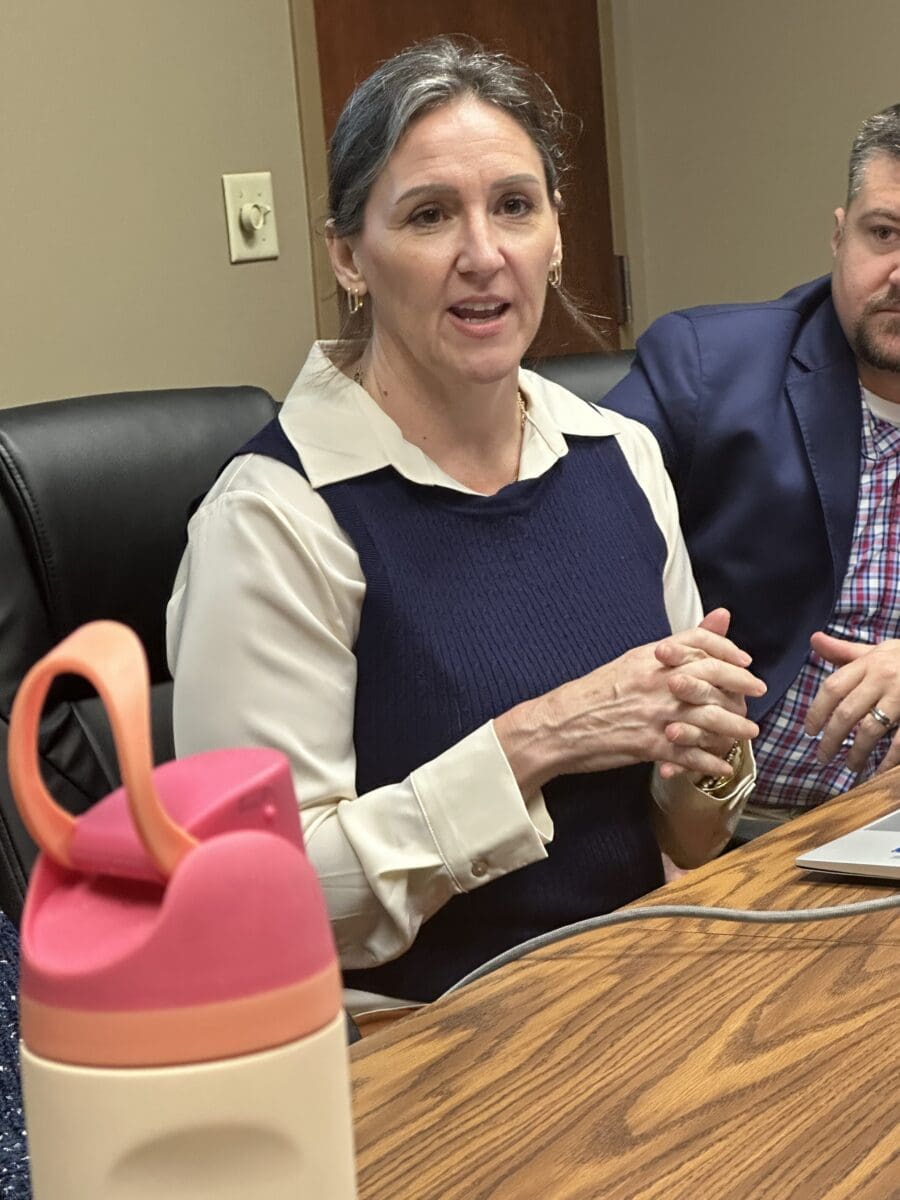
Additionally, “I loved going out on road trips” to various Arkansas counties, Cisneros said with a smile. “Everyone was overwhelmingly helpful and nice — I have fallen in love with the people of Arkansas.”