
UA Little Rock Faculty Mentoring Program Sees Record Participation
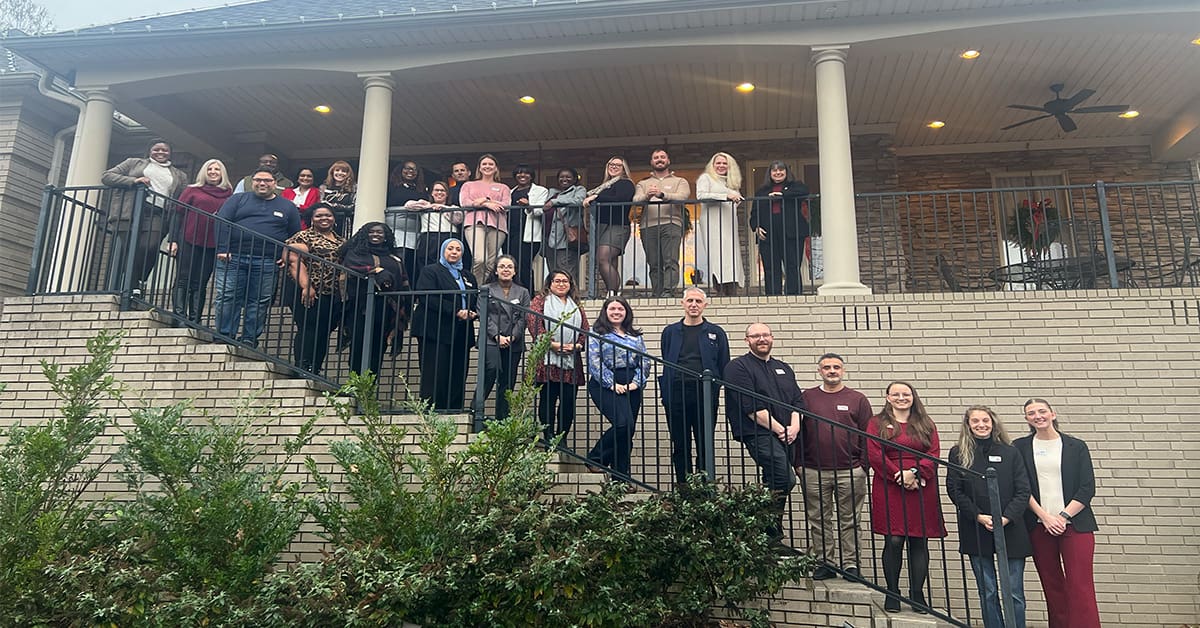
UA Little Rock’s Faculty Mentoring Program (FMP) continues to see strong participation, welcoming dozens of new faculty members each year as part of its ongoing commitment to teaching excellence and faculty success.
Co-facilitated by Dr. Shannon Collier-Tenison, associate vice chancellor for academic affairs for faculty relations and administration, and Dr. David Montague, associate vice chancellor for academic affairs and student success, the yearlong program was established in 2012 to support new faculty as they navigate teaching, scholarship, and campus life.
The Faculty Mentoring Program introduces participants to key campus resources for both faculty and students, while creating space for connection and collaboration across disciplines. Collier-Tenison said the program helps foster a sense of belonging by allowing new faculty to build relationships in a smaller, more personal setting.
The program begins with a daylong orientation focused on student-centered teaching resources. During the session, a panel of student leaders offers candid insight into classroom experiences, giving faculty early perspective on what supports student success.
“As a first-year professor fresh out of graduate school, there were a lot of adjustments to make,” said Rex Wilkins, an assistant professor of Spanish. “The program gave me the confidence and energy I needed to have a strong first year, and I hope to pay that forward in the future.”
Throughout the year, participants attend monthly workshops featuring panels of experienced faculty members, teaching award recipients, and campus leaders. Topics include promotion and tenure, effective teaching strategies, and professional development. Panelists often continue serving as informal mentors and resources beyond their sessions.
“I’ve been at institutions where mentorship wasn’t a priority, and that can negatively affect the overall environment,” Wilkins said. “This program provided stability, reassurance, and support that are essential to building a healthy faculty community.”
Michael Geiselhart, assistant professor of law at the Bowen School of Law, said the program created a structured environment for asking questions and learning from peers.
“I heard questions on topics I didn’t even realize I needed to ask,” Geiselhart said. “I would recommend the program to any newly hired faculty member.”
Since its launch, more than 240 full-time faculty members have participated in the Faculty Mentoring Program. Graduates are encouraged to maintain peer connections, pursue ongoing mentoring relationships across departments, and continue building professional networks on and off campus. Participants also receive formal recognition through a letter of completion shared with their department chair and the Office of the Provost.
By Olivia Hicks