
UA Little Rock Alumna Earns National Dissertation Honor
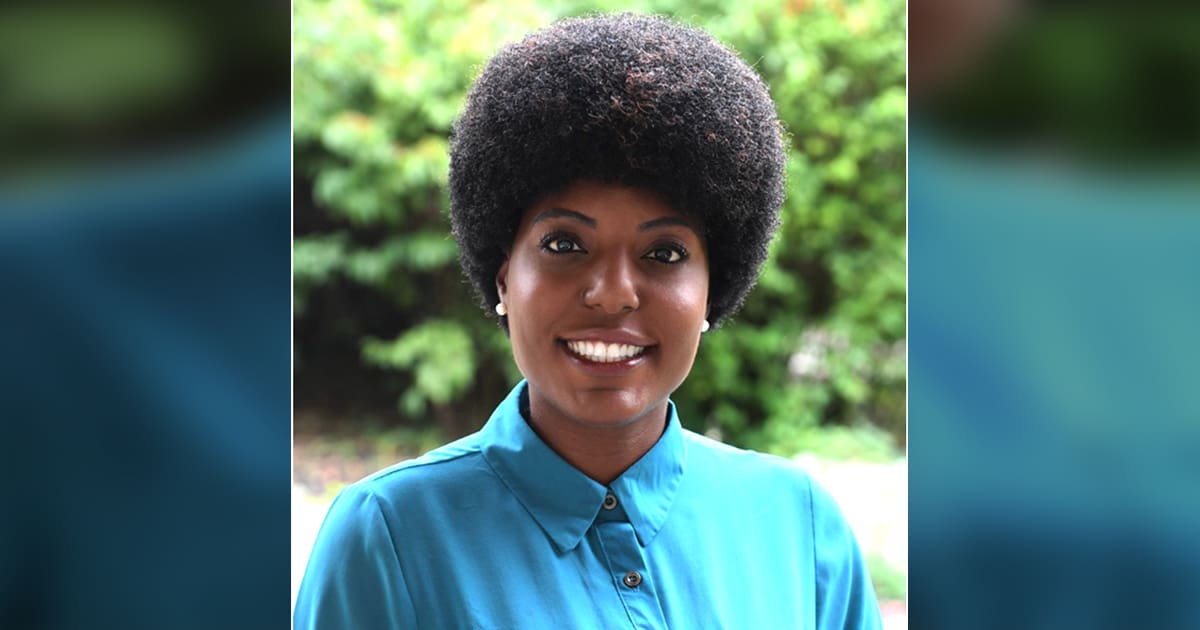
For Codi Blackmon, the University of Arkansas at Little Rock is more than a university — it’s a family legacy. After following in her mother’s footsteps, she’s now encouraging her own son to continue the tradition of higher education at the university. Blackmon earned a master’s degree in professional and technical writing from UA Little Rock and pursued further studies at East Carolina University, where she completed her Ph.D. in 2025.
Blackmon will receive an honorable mention for the Outstanding Dissertation Award in Technical Communication on Friday, March 6, during the 2026 Conference on College Composition and Communication (CCCC) Annual Convention. The honor is for her dissertation, “Unveiling Racial Dynamics: BLAIWOC Technical Communication within White-Dominated Online Recovery Spaces.”
The CCCC is a public voice for teaching and learning of writing, composition, rhetoric, and literacy in higher education contexts. The CCCC Outstanding Dissertation Award is evaluated according to five criteria: originality of research, contribution the research makes to the field, methodological soundness of the approach used, awareness of existing research in the area studied, and overall quality of the writing.
Blackmon hopes her dissertation will influence the field of technical communication by providing an ethical approach to engaging with online discourse communities. She believes bringing a critical race and trauma-informed perspective to the field can increase belonging and make online spaces more valuable and effective for the people they are designed to serve.
Humbled and grateful for this recognition, Blackmon said she looks forward to applying this achievement and her research in her teaching at Johns Hopkins University. Her hope is to bring greater confidence and insight to the classroom while helping her students prepare for the future.
Blackmon plans to continue her research and further implement this ethical framework by assessing its value across different contexts and audiences. Ultimately, she hopes her work will make a difference for Black, Indigenous, and People of Color (BIPOC) and other marginalized communities.