
Panel 1 — Land: The Legacy of Rural Farmers in Arkansas
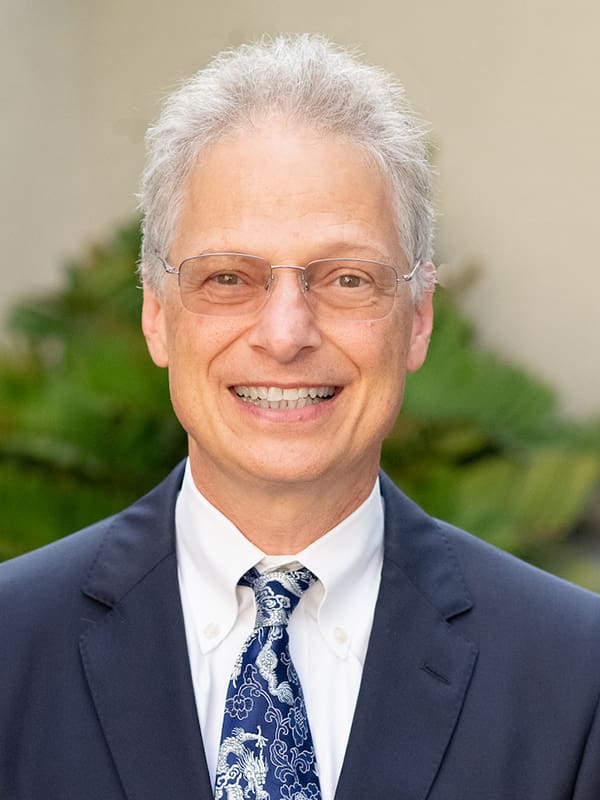
Keynote Speaker: Aaron Schwabach
Aaron Schwabach is a Professor of Law at California Western School of Law in San Diego, California, where he teaches Professional Responsibility and International Environmental Law. His scholarship addresses a range of topics including intellectual property, international and domestic environmental law, and the inheritance laws of the European Union, as well as other topics ranging from the law of war to the life and complex legal and cultural legacy of Thomas Jefferson. He is also an expert on the law of the wizarding world of Harry Potter, which somewhat to his surprise has earned him invitations to speak not only across the United States but in the United Kingdom, China, and Poland.
Before his move to San Diego, Professor Schwabach spent four happy years teaching Real Property, Decedents’ Estates, and more at Bowen. Professor Schbach is a member of the bars of California and Florida. After graduating from Berkeley Law, Professor Schwabach worked for the U.S. Department of Justice, Office of the Chief Administrative Hearing Officer, before beginning his teaching career at the University of Miami School of Law.
He has also ventured farther afield, teaching as a Fulbright Senior Specialist at Zhejiang University’s Guanghua Law School in Hangzhou, China, and at the Royal University of Law and Economics in Phnom Penh, Cambodia, as well as teaching short courses at the University of Nice Sophia Antipolis in Nice, France and the University of Debrecen in Debrecen, Hungary. Professor Schwabach has worked with the American Bar Association’s Central and Eastern European Law Initiative and Rule of Law Initiative to strengthen the development of the rule of law across the world. He is the past editor of two of the themes in UNESCO’s Encyclopedia of Life Support Systems (“Law” and “The Role of International Law and Institutions”) and of the ABA’s Probate & Property magazine, as well as a current member of the editorial board of the Hungarian Yearbook of International Law and European Law.

Guest Speaker: Stephen Carpenter
Stephen is a graduate of Drury College in Springfield, Missouri, and of Stanford Law School. In law school, Stephen was active in the East Palo Alto Community Law Project, was a Stanford Law Review Executive Editor, and received a Skadden Foundation Fellowship that brought him to FLAG in 1993.
At FLAG, Stephen’s work has centered on discrimination in agricultural lending, debtor-creditor issues for farmers, Covid-19 and disaster assistance, legal issues for beginning farmers, federal farm and farm loan programs, problems of farmers contracting for carbon capture and for livestock production, urban farming land access, sustainable agriculture, and farmer direct marketing. In addressing these issues Stephen has worked closely with dozens of grass roots farm organizations. He also served as Senior Counsel in the Office of the Monitor in the Pigford case and as the court-appointed Ombudsman for the In re Black Farmers Discrimination case.
Stephen has conducted frequent FLAG trainings and webinars for farmers, advocates, and attorneys and has spoken to farmers and their advocates in more than forty states. He has authored and edited a number of FLAG publications. Law review writing discusses rebellious lawyering on behalf of farmers, discrimination by the United States Department of Agriculture (USDA), discrimination litigation against USDA, the future of agricultural law, lawyering for family farmers in poverty, and sustainable agriculture. Other academic writing discusses federal farm policy, populist farm protest, and equality in agriculture.
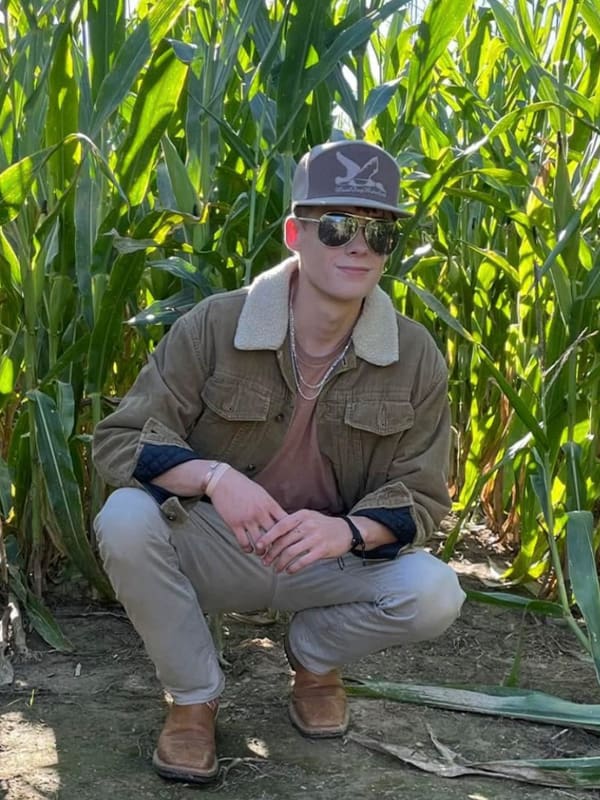
Guest Speaker: Dustin Davis
Dustin Robert Davis is a fifth generation farmer born and raised in Newport, Arkansas. He is a happy father of one little baby girl- Harlee Lynn Renee. While in high school, Dustin was a completer in Future Farmers of America (FFA).
Dustin graduated high school from Newport Senior High School in 2024 and completed an associate degree in Business of Agriculture and Plant Science at the University of Arkansas Newport in 2024. It was at this university where he continued his education to get certificates in Diesel Mechanics in 2025.
From the time he was born, Dustin Davis grew up on his family’s farm and the agricultural environment. He continued to work on his family’s farm and work for additional local farmers. This work included everything from driving tractors, working in the soybean fields, and fixing heavy equipment. After Dustin completed his college degrees, he then further his agricultural career as a dirt pan operator.

Guest Speaker: Kim Vu-Din
Professor Kim Vu-Dinh is the Louis L. Ainsworth Distinguished Professor of Business and Law at Mitchell Hamline School of Law, where she serves as director of the Center for Law and Business and the Economic Inclusion Clinic. Her teaching and scholarship focus on business law, community economic development, and innovative legal design that expands access to entrepreneurship and sustainable real estate development. Before joining Mitchell Hamline, she taught in and directed the Business Innovations Clinic at the University of Arkansas at Little Rock and previously taught at Yale Law School, Tulane University, and the Clinton School of Public Service.
Vu-Dinh’s clinical and policy work spans community-based redevelopment, social enterprise, and agricultural and land-use issues affecting under-represented communities. Her experience includes post-Katrina redevelopment work in New Orleans, international development work in Vietnam, and a Fulbright specialist appointment in Kosovo focused on social enterprise initiatives. She has also led civic engagement and legal observer training efforts and founded the Arkansas chapter of the National Lawyers’ Guild, coordinating election protection and civil-rights advocacy initiatives.
A graduate of the City University of New York School of Law and the University of California, Berkeley, Vu-Dinh has published in journals including the Alaska Law Review, Houston Business and Tax Journal, and the Business and Finance Law Review. Her work frequently bridges doctrinal business law with questions of economic inequality, land governance, and innovative legal structures that support emerging entrepreneurs and communities.
Panel 2 — Farm Hands: Migrant Laborers and the Lack of Rights for Farmworkers
Keynote Speaker: Anastasia Greene

Anastacia Greene joined the faculty of the UA Little Rock William H. Bowen School of Law as the director of the Consumer Protection Clinic in 2022 and was named Assistant Professor of Law in 2024. She teaches Real Property and Immigration Law.
Before joining Bowen, Professor Greene taught at the Immigration Clinic at University of Florida Levin School of Law, and with the Pro Bono Clinic at UIC, where she taught seminars on foreclosure law and civil litigation practices.
Professor Greene has concentrated her career on public interest law. She has worked at legal services agencies representing low-income clients in consumer law, housing law, and immigration law cases. She received her B.A. at Westminster College, and received her J.D. at Washington & Lee University School of Law, where she was staff-writer for the Law Review. When not working, she enjoys biking, singing and playing music.
Guest Speaker: Nathan Bogart

Nathan Bogart is a partner at Bogart, Small + Duell, where he works on immigration-related litigation matters, including removal defense, detention and bond matters, appeals to the Board of Immigration Appeals and the U.S. Circuit Courts of Appeal, writs of mandamus, delayed naturalization lawsuits, and habeas actions.
From 2021-2022, Nathan served as a visiting professor and director of the University of Arkansas School of Law’s Immigration Clinic, where he supervised law students in the management of immigration benefits and deportation defense matters.
He graduated from the University of Arkansas School of Law with a juris doctor in 2010 and a B.A. in political science & Latin American studies in 2007. He is currently working towards an M.A. in Refugee Protection & Force Migration Studies from the University of London.
Panel 3 — The Lack of Diversity in Agriculture: Women and Racial Inequalities
Keynote Speaker: Jenna Martin

Jenna Martin was adopted from Orenburg, Russia at 16 months old and was raised on a row crop farm in Hickory Ridge, Arkansas. As a farmer’s daughter who worked on the farm, a strong work ethic was instilled in her at an early age, as it is with most farm kids. She was homeschooled from kindergarten through high school graduation in 2015 and then received her Associate of Arts degree from East Arkansas Community College in Wynne before obtaining her Bachelor of Science degree in Agribusiness and a Strategic Communications minor at Arkansas State University in Jonesboro. During her time at A-State, Martin interned with Farm Credit Midsouth at the Wynne location, was a teaching assistant for Ag economist and professor Dr. Bert Greenwalt and interned with Pioneer Seed her graduating semester.
After graduating, Jenna farmed alongside her dad on their family farm consisting of 2,400 acres of rice, corn and soybeans in Cross, Woodruff and Jackson County. She started with the U of A Division of Ag in 2022 and was the Ag agent in St. Francis County until 2023 when she transferred to Cross County where she is the Ag agent/Staff Chair. Her roles as the Ag agent vary from day-to-day but consist of helping assist homeowners with lawn and garden issues and helping producers with their livestock, forage and row crop questions. The mission of an agent is to connect the community and clientele with the non-biased, research- based information that is conducted by the land-grant university that allows for practical application to be utilized by farmers, ranchers and the public. Workshops, technical assistance on crops, livestock, soil and pest management fall under Martin’s duties.
Martin represented Cross County and promoted rice throughout Arkansas as Miss Arkansas Rice in 2013. She and her family have been featured in promotional videos for Riceland Foods and Arkansas Farm Bureau and Martin was featured in the Field to Field: Career Snapshots series by the Arkansas Soybean Promotion Board. Her 13 years of 4-H involvement allowed her to hold leadership positions at the county and state level. She is active in the Cross County Farm Bureau Women’s Leadership Committee, has participated several times in the Arkansas Farm Bureau YF&R Discussion Meet, served as the Arkansas Women in Agriculture Northeast Arkansas Representative from 2015-2017, was featured in “Arkansas Women in Industry” by the Communications Group in 2020, has been featured in the Annual Arkansas Farm Bureau Annual Report in 2016, featured on the Farm Life Agri-Health Network Podcast in 2021, and was broadcasted on RFD-TV in the family farm video produced by Arkansas Farm Bureau.
Guest Speaker: Wilbur Peer
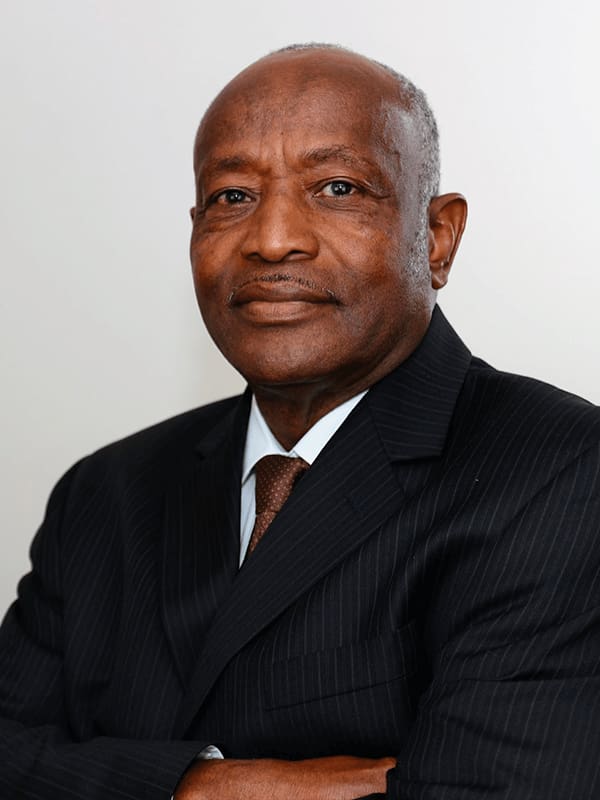
Wilbur T. Peer Sr. is the Executive Director of The KKAC Organization
(KKAC), the senior partner of Management Solutions, Inc. (MSI), has ownership in a row crop farming operation and has over 40 years of experience in managing projects with universities and federal and state agencies.
The KKAC Organization is a 501(c)(3) non- profit providing education, estate planning and technical assistance to rural farmers, ranchers, landowners, and youth. In its few years of operation, KKAC has developed a lasting footprint through its outreach efforts in Arkansas and Mississippi, establishing partnerships with the National Fish and Wildlife Foundation (NFWF), the United States Department of Agriculture (USDA), the Winthrop Rockefeller Foundation, the Walton Family Foundation, and The Nature Conservancy.
Since 2001, Management Solutions, Inc. (MSI) has provided various consulting services to a wide array of government entities and private sector clients. Previous clients include Arlington National Cemetery, Remediation Resources, Arkansas Human Development Corporation (AHDC), Little Rock Port Authority, MCL Jasco, Beacon Corporation, Maximus, the Marine base in Albany, Georgia, and the Arkansas Land and Farm Development Corporation (ALFDC), to name a few. Before serving as the senior partner of MSI, Peer worked for eight years as a senior executive service employee in the federal government. While in the federal government, he was a member of the GoreMbeki Bi-National Commission, which helped Nelson Mandela’s New Government of Unity. He also successfully operated a CBO, was a dean of continuing education and community service at a community college, and had part ownership in a manufacturing enterprise.
Panel 4 — Critical Impacts on the Environment in the Rural Areas of the South and it’s Impact on the Nation’s Food and Wildlife
Keynote Speaker: Susan Schneider
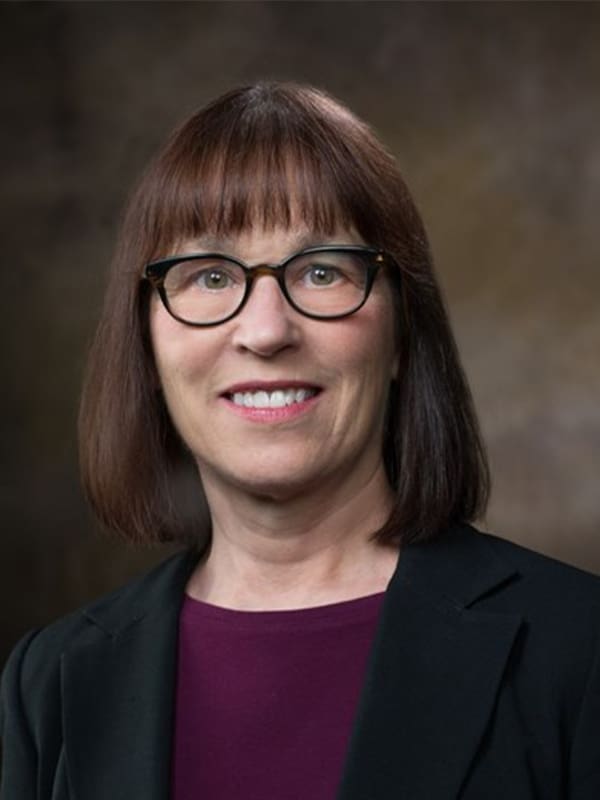
Susan Schneider is the William H. Enfield Professor of Law and the Director of the LL.M. Program in Agricultural and Food Law at the University of Arkansas School of Law in Fayetteville, Arkansas. She grew up on a family farm in Minnesota and throughout her 30 plus year career as an attorney and law professor, she has advocated for a better food system, first through her work on behalf of family farmers and then through her leadership in food law & policy. She is the author/editor of the book FOOD, FARMING AND SUSTAINABILITY, now available in its third edition and used throughout the country to teach agricultural law. She has authored dozens of law review articles spanning the full spectrum of agricultural and food law topics.
Professor Schneider is a frequent speaker at conferences, has served as President of the American Agricultural Law Association (AALA), is the recipient of the AALA Distinguished Service award, and was one of the founders of the Academy of Food Law & Policy. For the last two decades she has been a tenured law professor teaching agricultural and food law courses while directing the law school’s signature LL.M. Program in Agricultural and Food Law.
Professor Schneider is a graduate of St. Catherine’s University (B.A. Phi Beta Kappa), the University of Minnesota Law School (J.D., cum laude) and the University of Arkansas School of Law (LL.M.). She lives with her husband, fellow law professor Christopher Kelley in a cabin in the Ozark Mountains.
Guest Speaker: Dustin Davis
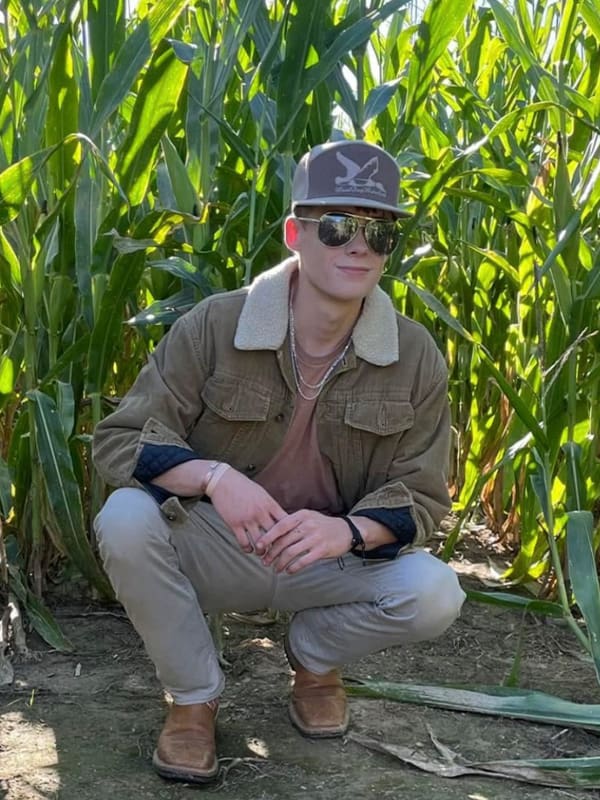
Dustin Robert Davis is a fifth generation farmer born and raised in Newport, Arkansas. He is a happy father of one little baby girl- Harlee Lynn Renee. While in high school, Dustin was a completer in Future Farmers of America (FFA).
Dustin graduated high school from Newport Senior High School in 2024 and completed an associate degree in Business of Agriculture and Plant Science at the University of Arkansas Newport in 2024. It was at this university where he continued his education to get certificates in Diesel Mechanics in 2025.
From the time he was born, Dustin Davis grew up on his family’s farm and the agricultural environment. He continued to work on his family’s farm and work for additional local farmers. This work included everything from driving tractors, working in the soybean fields, and fixing heavy equipment. After Dustin completed his college degrees, he then further his agricultural career as a dirt pan operator.
Guest Speaker: Gray Norton
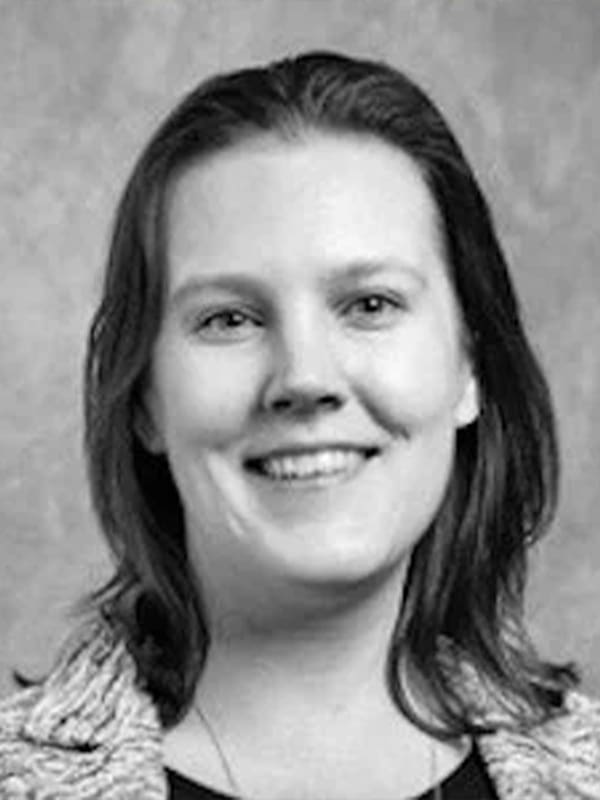
Gray Norton is a Clinical Instructor at the Harvard Law School Food Law and Policy Clinic (FLPC). She joined FLPC in January 2023 as a Clinical Fellow and previously worked with the clinic as a summer intern and research assistant. Gray’s portfolio focuses on FLPC’s Food System Justice, Food Access & Nutrition, and Climate & Sustainability initiatives. Through her commitment to helping communities build thriving local and regional food systems, she works on a range of issues, such as advancing farm to school programs and values-based procurement, strengthening child nutrition and nutrition assistance programs, and supporting systemically marginalized farmers and food system workers’ rights. She also supervises the Mississippi Delta Project, a Student Practice Organization at Harvard Law School.
Before joining FLPC, Gray served as an intern in the Office of General Counsel at the U.S. Department of Agriculture and as a law clerk in the Environment and Natural Resources Division at the U.S. Department of Justice. She also worked as an adjunct lecturer in the Fulbright College of Arts & Sciences at the University of Arkansas, teaching Intro. to American National Government.
Gray holds a J.D., cum laude, a Master of Laws (LL.M.) in Food & Agricultural Law, a Master of Public Administration, and a Graduate Certificate in Sustainability from the University of Arkansas. She is a licensed member of the Arkansas Bar.