
Join us in celebrating 100 years of UA Little Rock by exploring the milestones, achievements, and people who helped shape our remarkable journey. Explore the pivotal moments of the 1940s.
The Golden Age
The 1940s at Little Rock Junior College were a time of remarkable growth and transformation. Rising enrollment, alumni and community support, and a permanent campus strengthened the college and its impact. Trojan athletic success helped shape LRJC’s legacy. For many students and faculty, the 1940s came to be regarded as a “golden age” in the history of LRJC.
Leadership:
John A. Larson: President, 1930-1949
E.Q. Brothers: Dean, 1931-1953
Civilian Pilot Training Program Begins – 1940s
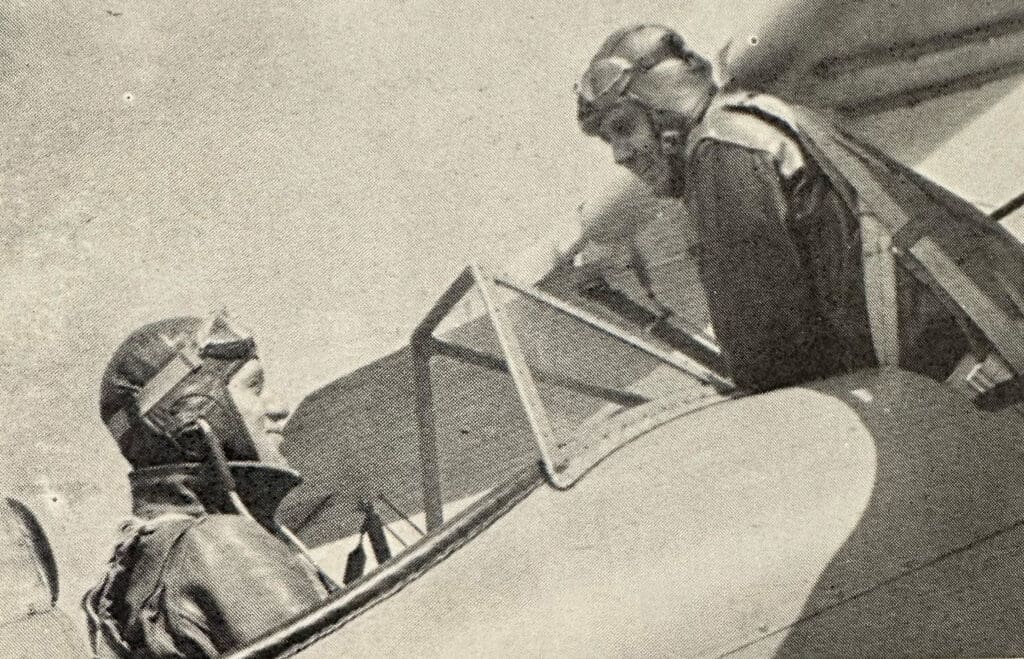
On the eve of World War II, Little Rock Junior College joined the nation’s effort to prepare a new generation of pilots. The college was among the first Arkansas institutions selected for the Civilian Pilot Training Program, in part because of the aviation facilities at the nearby Adams Field airport, now known as the Clinton National Airport.
In the two-year program, students studied civil air regulations, air navigation, meteorology, and practical skills, including cross-country flying. Those who completed the training could earn a private pilot’s certificate. Because of government regulations, women were not allowed in the secondary course.
By the early 1940s, the program had become an important part of the college’s wartime contribution, helping meet the nation’s growing need for trained pilots.
LRJC Adjusts Courses to Meet Wartime Needs – 1943
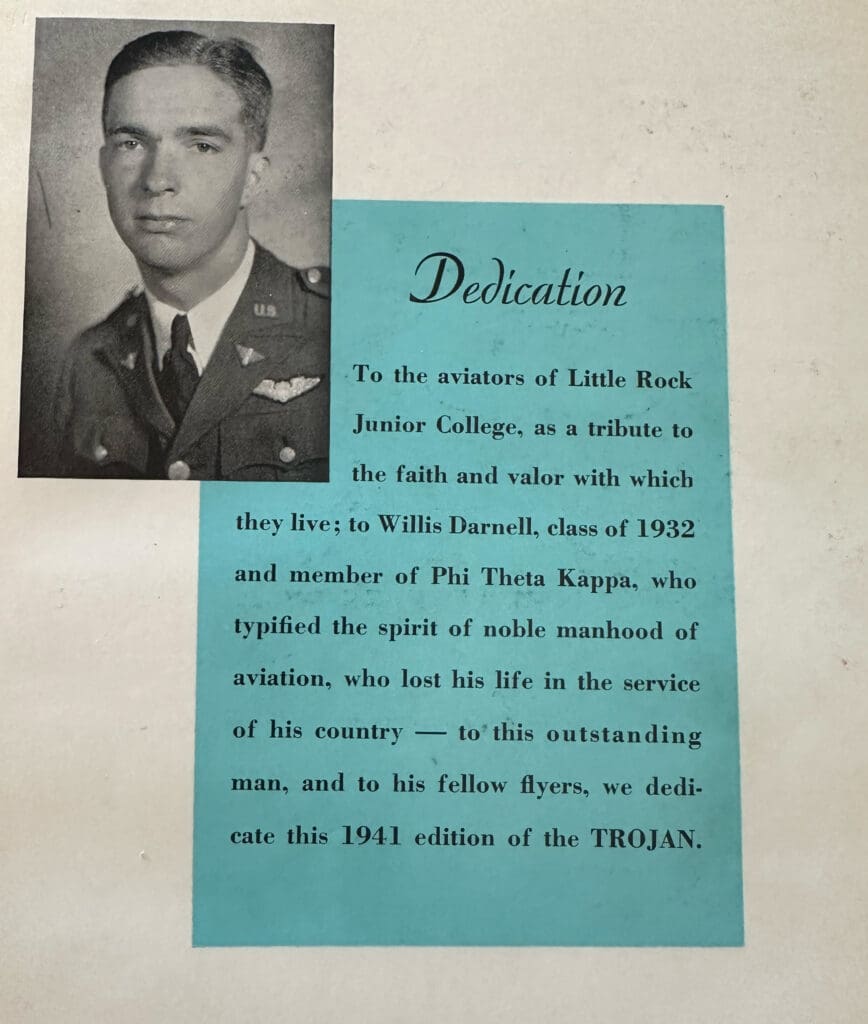
In 1943, Dean Brothers and President Larson recommended shortening the spring term by eliminating final exams in order to allow students to receive the maximum amount of college credit before entering the armed forces.
Faculty also voted to grant full credit to every student called into military service. Students and faculty participated in community service projects, such as assisting in charity drives, explaining the importance of rationing, and teaching first aid classes. A War Bond booth on campus, supported partly by the Battlecriers, helped raise more than $14,000 for the war.
Postwar Enrollment Surges – 1946
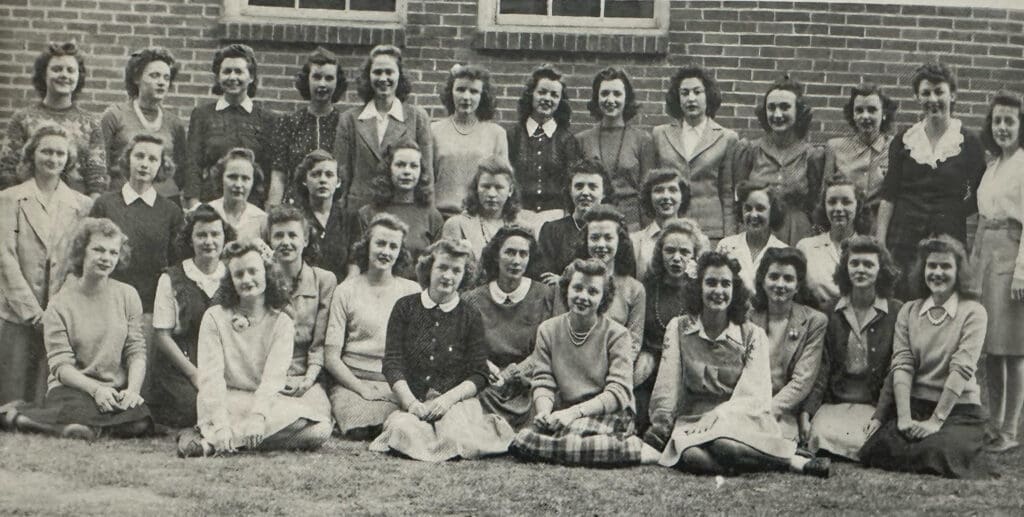
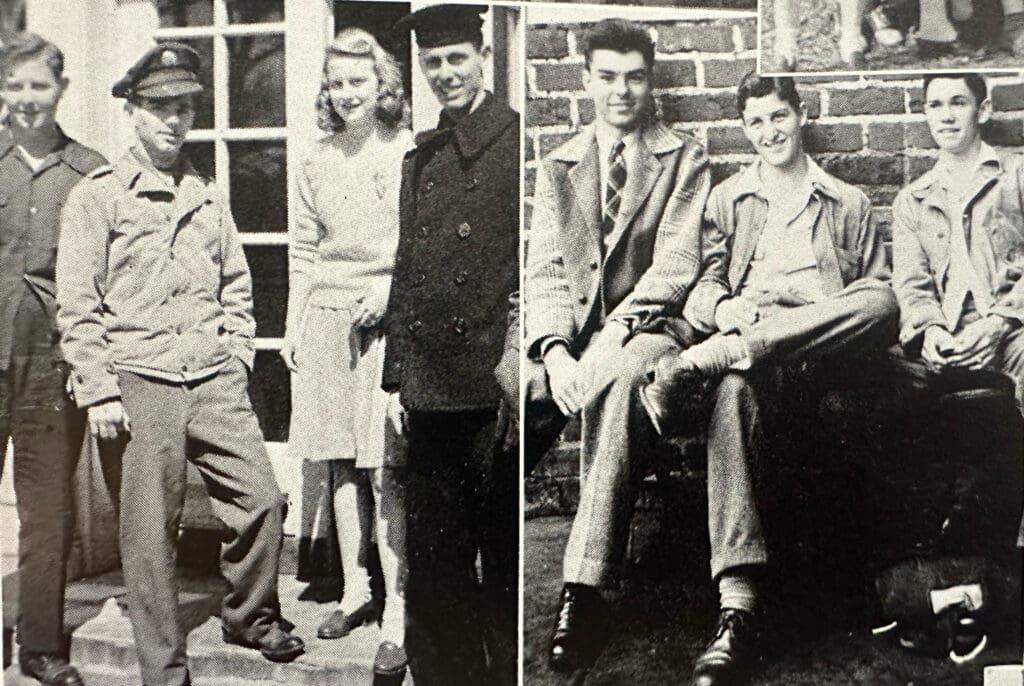
After World War II, the GI Bill provided education benefits to returning veterans and brought a rush of students to LRJC. Enrollment leaped from 250 to 800 by fall 1946, prompting classes to be held six days a week and increasing the faculty from 22 to 45. The growth also led to the addition of five temporary buildings from Camp Robinson. The surge transformed LRJC and expanded its role in meeting the community’s postwar demand for higher education.
Additionally, student veterans actively promoted the concept of expanding the school into a four-year institution. They spoke to civic groups encouraging the community to develop a complete collegiate program. Their efforts helped encourage the momentum that eventually resulted in Little Rock University.
LRJC Receives Land Donation for Permanent Campus – 1947
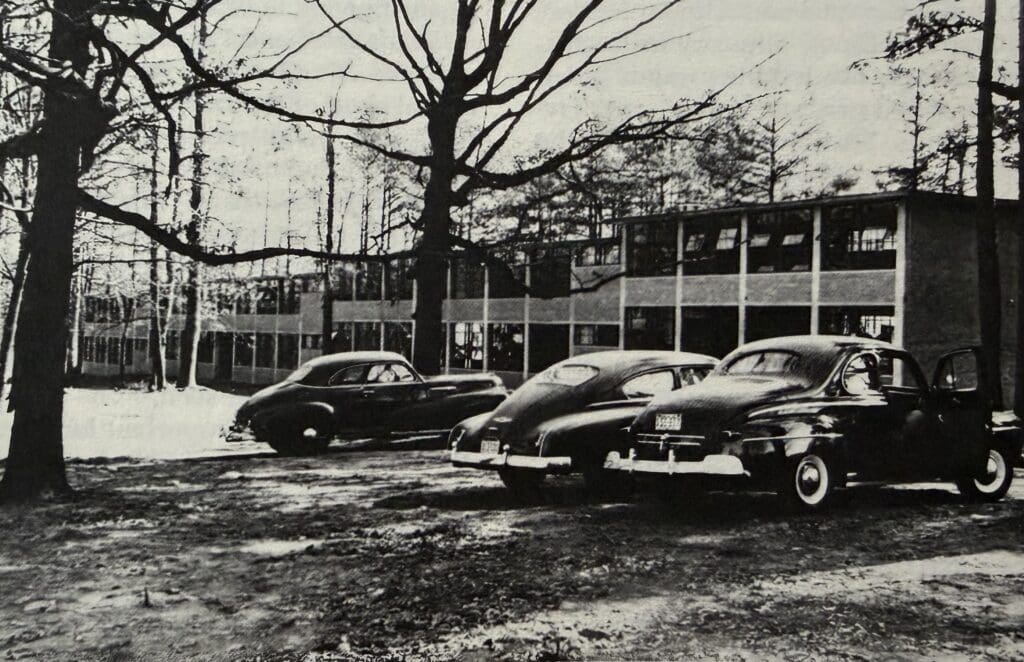
In 1947, Little Rock businessman and civic leader Raymond Rebsamen donated 80 acres along Hayes Street, now University Avenue, to LRJC for a permanent campus. In the fall term, school officials secured four temporary buildings that faced south on 32nd Street. By 1949, the campus had expanded to 12 semi-permanent buildings.
The new campus fueled significant increases in enrollment, facilities, and academic programs. Rebsamen’s gift did more than provide a new campus; it gave the college the space and opportunity to grow.
In 2008, the University of Arkansas at Little Rock honored Rebsamen’s lasting impact by designating the site the Raymond Rebsamen Campus.
Alumni Association Supports $650,000 Campaign – 1948
During the 1940s, the LRJC Alumni Association became increasingly active in supporting the college. It published a newsletter to keep former students connected, supported memorial funds, and established the Shield of the Trojan award to recognize distinguished alumni at graduation.
With LRJC’s move to Hayes Street, leadership faced the task of raising funds for permanent buildings. The newly created Little Rock Junior College Foundation, chaired by James H. Penick, launched the Permanent Home Campaign to finance the construction of a modern campus. At the time, the campaign was described as the “largest and most successful financial campaign that Little Rock had seen.”
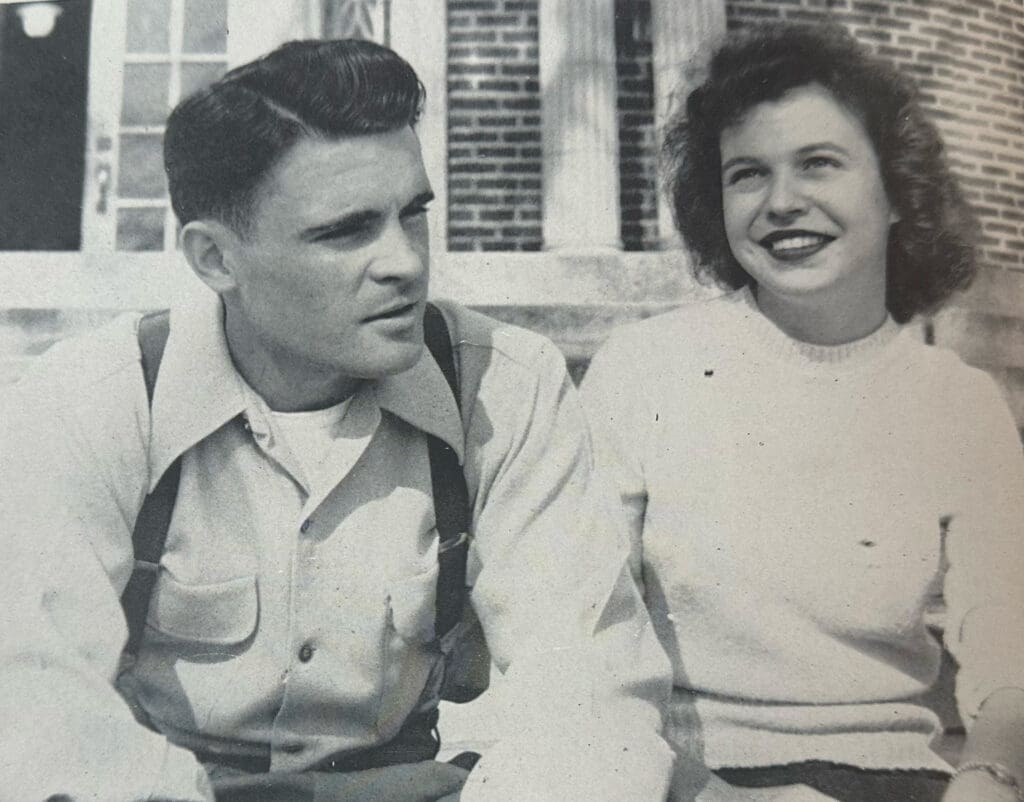
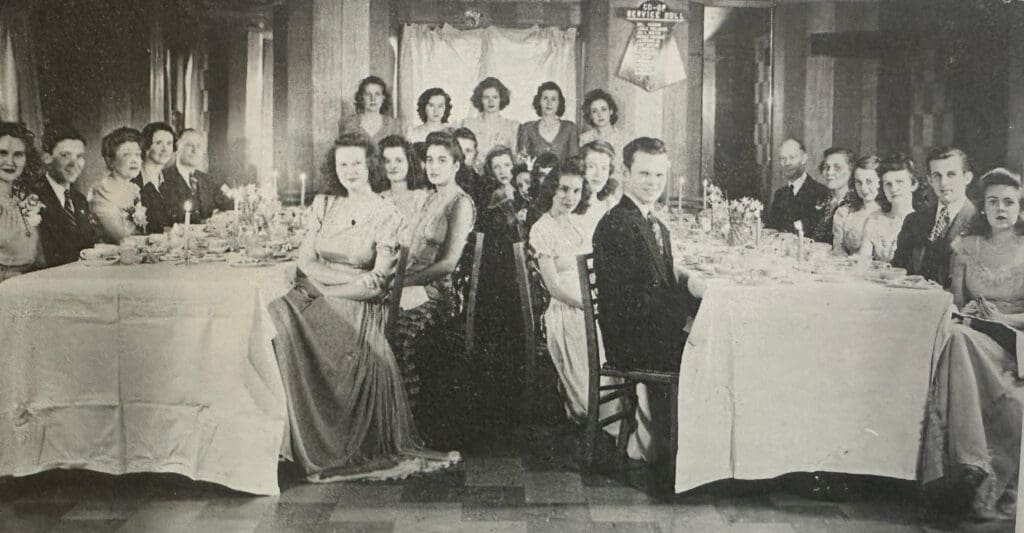
The community rallied behind the college, raising $650,000 through the efforts of corporations, alumni, and private citizens. The campaign enabled LRJC to build four modern facilities on its new campus in 1949, including two classroom buildings, a library, and a fieldhouse.
The campaign not only provided LRJC with a permanent home but demonstrated the community’s investment in the college’s future. These efforts reflected growing alumni pride and support for LRJC.
Football Returns – 1947
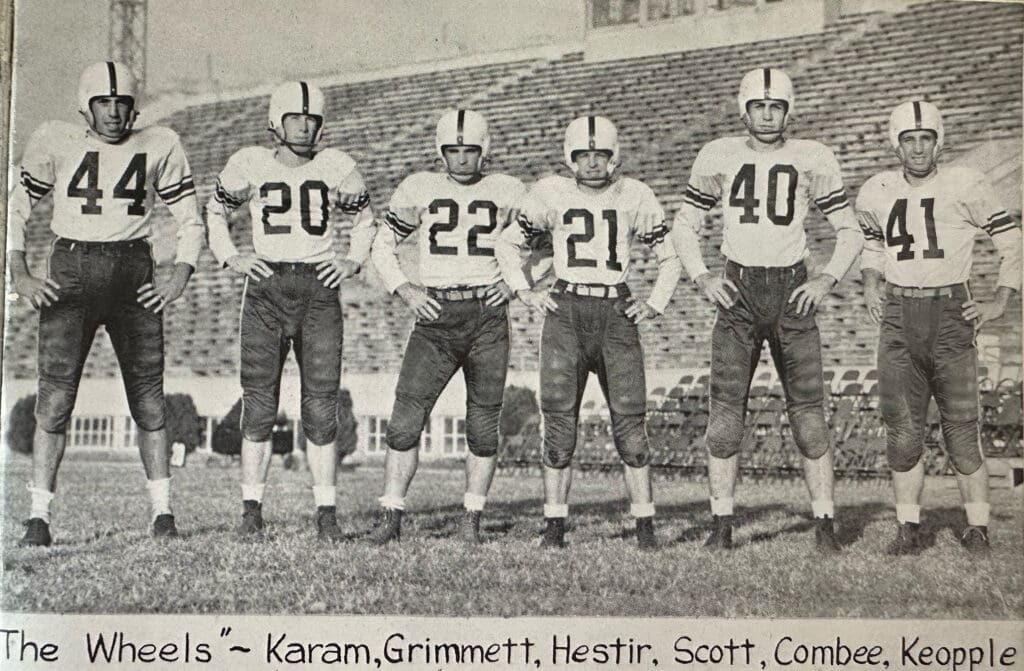
In 1947, President John A. Larson and Coach James T. “Jimmy” Karam revived football after a decade-long absence. They realized the lack of a team had a negative impact on student morale. Soon after the announcement was made, t-shirts with the Trojan emblem became a top-selling item in the campus bookstore.
The Trojans quickly became a force, winning the Coffee Bowl in 1947.
Trojans Win Junior Rose Bowl – 1949
In 1949, the Trojans achieved an historic undefeated season winning ten straight games. The team was invited to play in the Junior Rose Bowl in Pasadena, CA., the most prestigious postseason junior college game. The Trojans closed out their remarkable run by defeating Santa Ana Junior College, 25-19.
Led by Coach Karam in front of 50,000 people, the championship win brought widespread attention to LRJC and became a defining moment in Trojan athletics history.
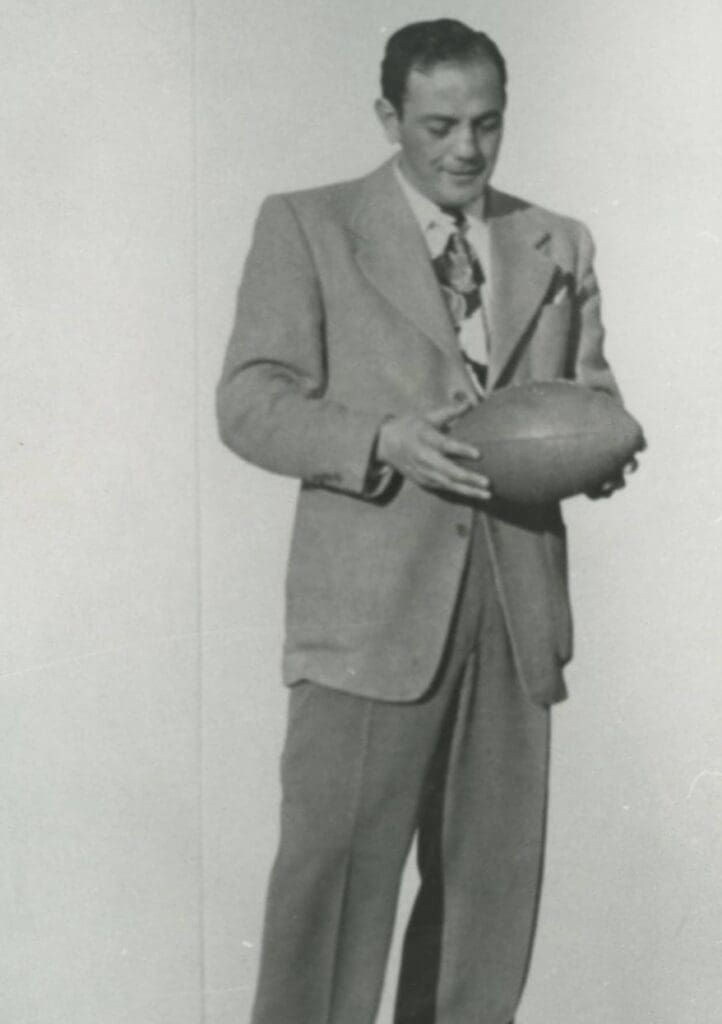
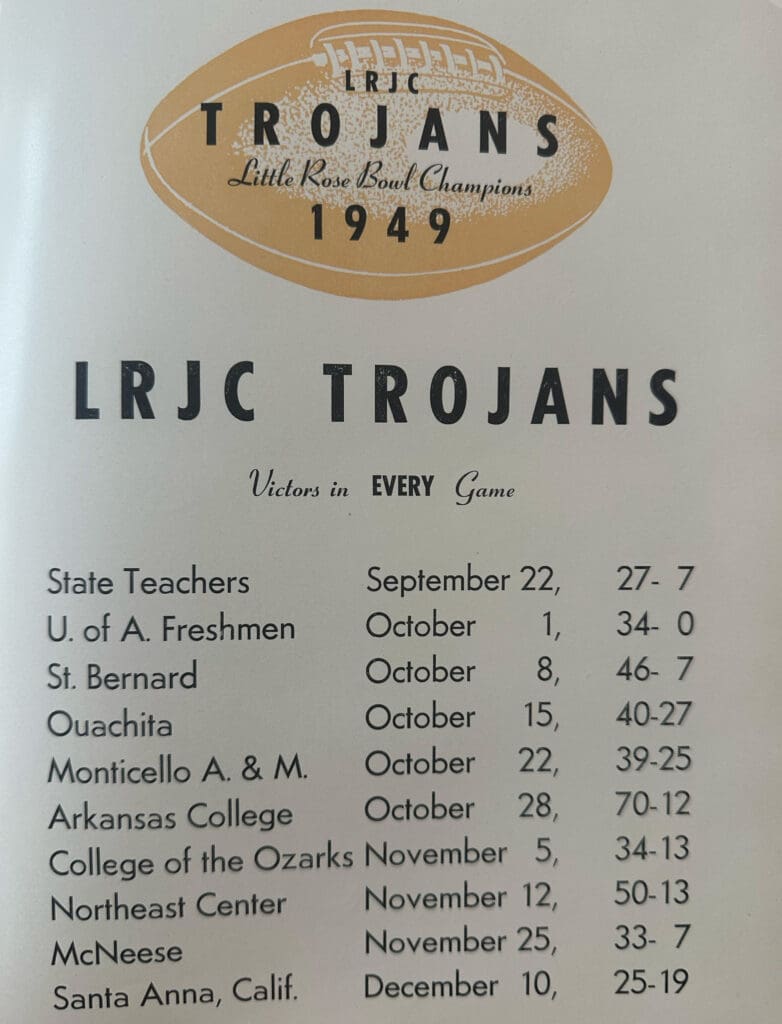
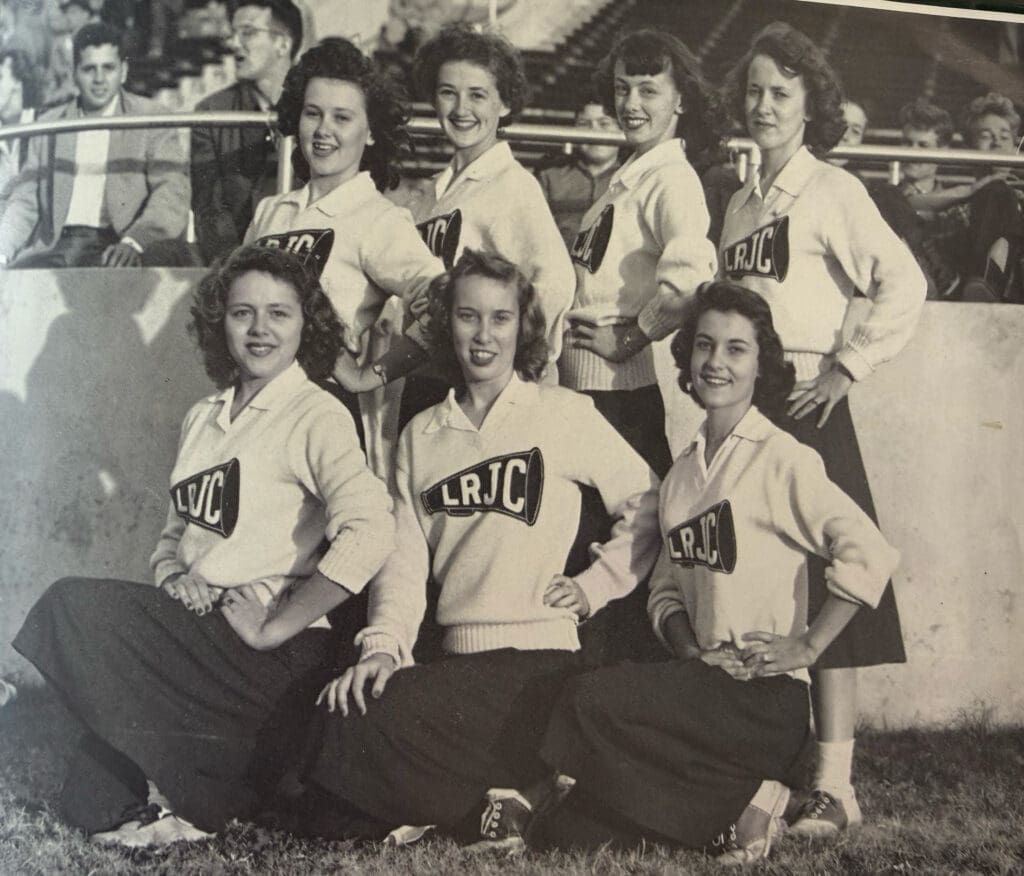
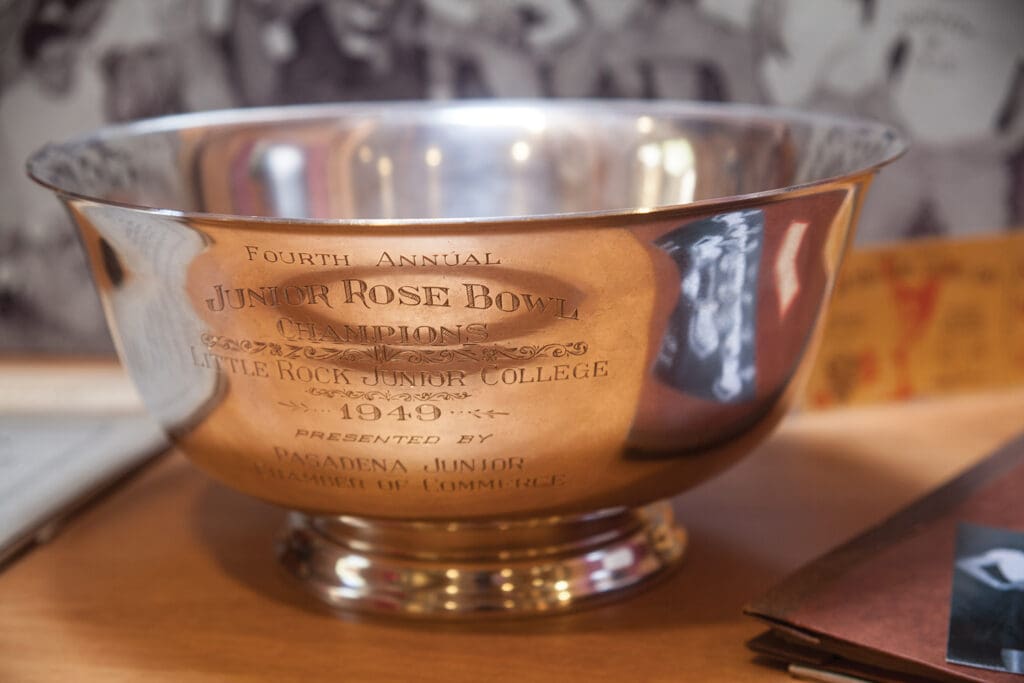
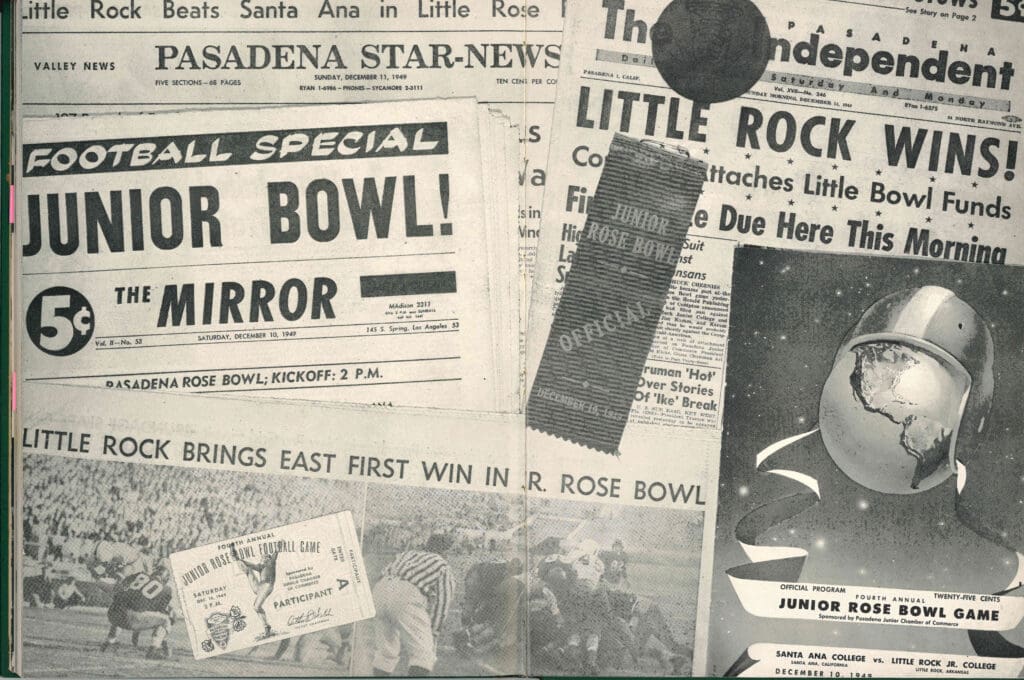
At a 2006 ceremony at the University of Arkansas at Little Rock, surviving members of the 1949 Trojans finally received their Junior Rose Bowl championship rings. For reasons unknown, the players never received them after their victory.
Construction Begins on Larson Memorial Library – 1949
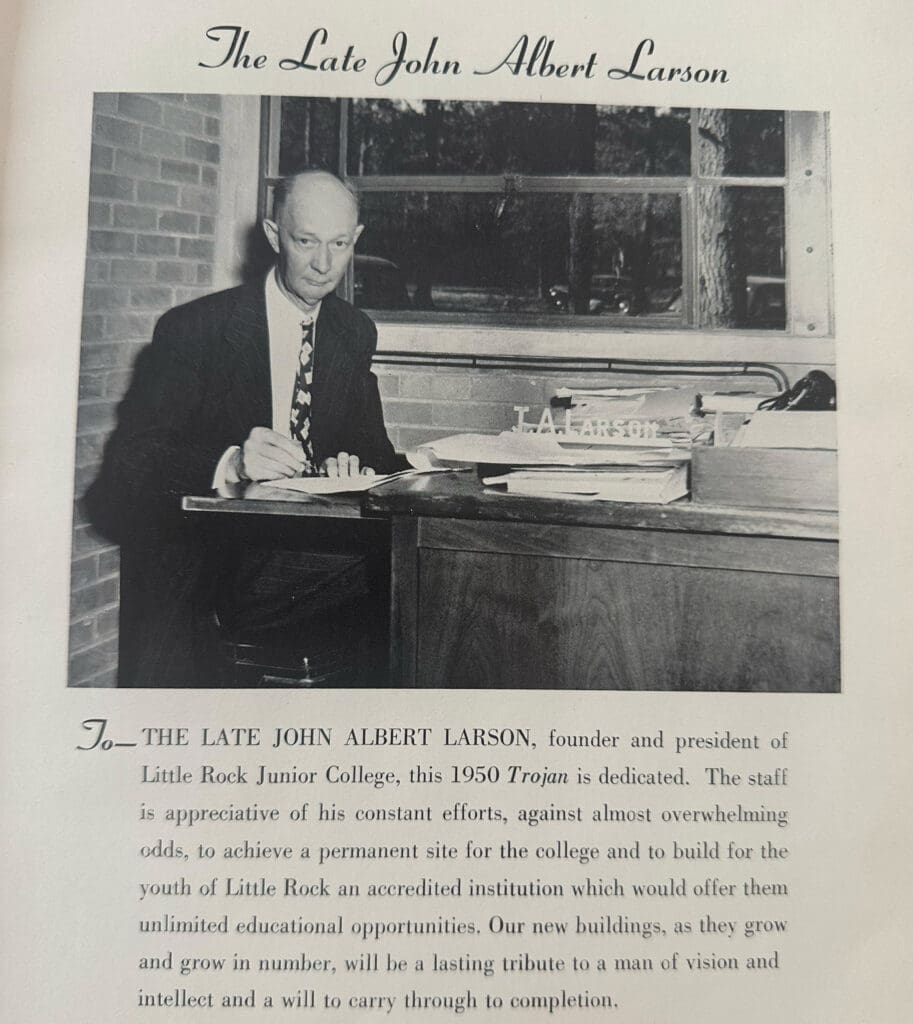
In November 1949, President Larson passed away just as the new campus neared completion. The trustees of the college immediately voted to name the new library in his honor, and construction began on the John A. Larson Memorial Library to anchor the new campus.
The innovative design of the library and two classroom buildings later drew national attention, earning LRJC a feature in the February 1952 issue of Progressive Architecture.
Moving Forward
As we celebrate our Centennial, each decade’s moments of impact will be published monthly.
Follow along as we explore the people, milestones, and moments that shaped UA Little Rock’s first century and continue to inspire its future.