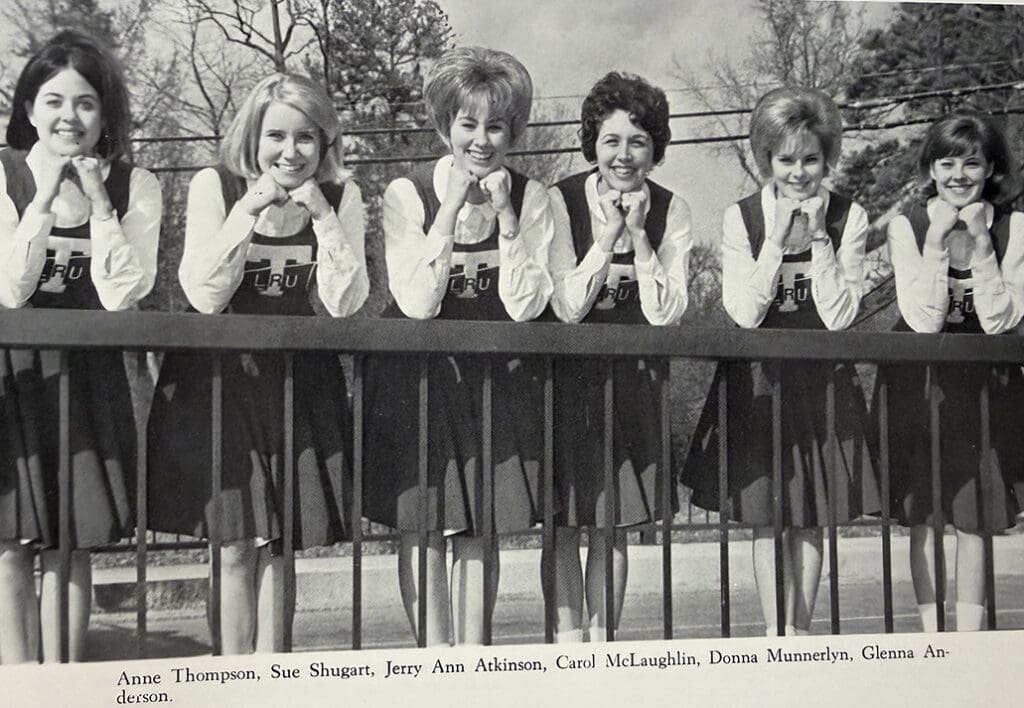
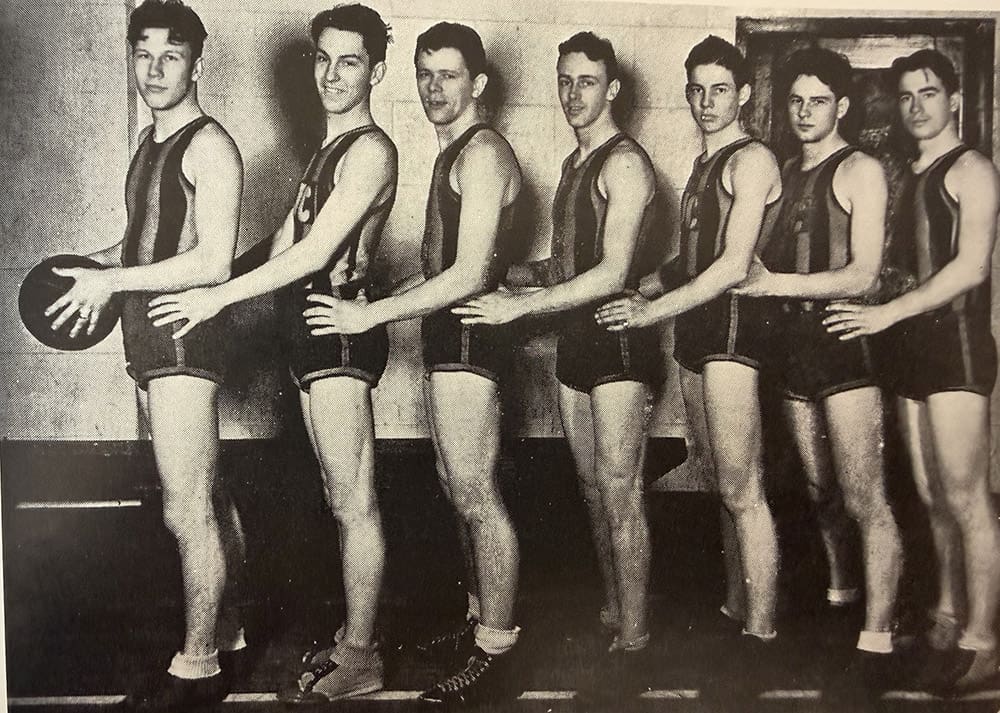
Join us in celebrating 100 years of UA Little Rock by exploring the milestones, achievements, and people who helped shape our remarkable journey. Explore the pivotal moments of the 1960s.
A Decade of Transformation
The 1960s brought remarkable progress to Little Rock University as it expanded its campus, strengthened academic programs, and welcomed a growing student population. Full accreditation and the historic integration of its student body marked important milestones. LRU’s historic transition into the University of Arkansas System ushered in a new era of higher education, shaping its future as a public metropolitan university.
Leadership:
Carey V. Stabler: President, 1956 – 1969
LRU Earns Full Accreditation – 1960
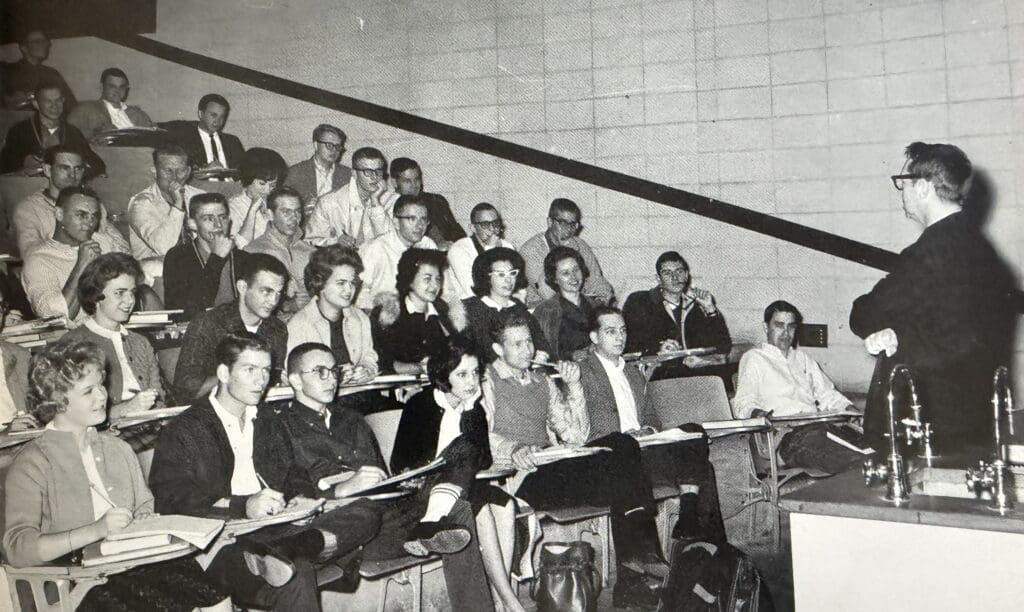
On April 20, 1960, Little Rock University reached a major milestone when the North Central Association of Colleges and Secondary Schools granted the university accreditation as a full senior institution. The designation strengthened LRU’s reputation and the recognition of its degrees.
The association’s review team praised the university’s potential, its independent Board of Trustees, and the strong spirit of cooperation between faculty and administrators. The accreditation positioned LRU for continued growth in the years ahead.
LRU Focuses on its Expanding Campus – 1960
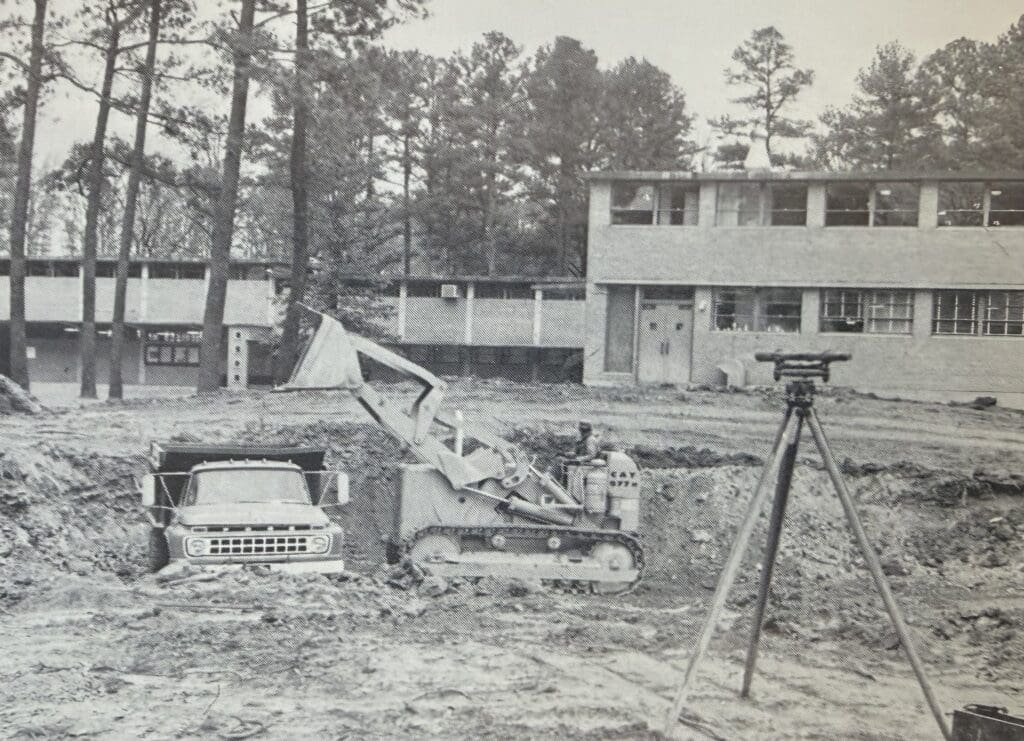
In October 1960, the LRU Board of Trustees authorized the appointment of Robert M. Staples as the university’s full-time buildings and grounds superintendent. Staples’ hiring ensured that LRU had someone dedicated to caring for its expanding campus and preparing it for the future.
Campus Improvements – 1961
A $150,000 campus beautification program brought long-awaited improvements in 1961, including paved roads and parking areas. New sidewalks connected buildings and streets, helping to end the annual mud and dust problems.
The university also completed new tennis courts. Students joined the campus improvement effort by giving the Theatre Building a facelift and painting the Music Building on Saturdays.
Students Meet President Kennedy – 1963
Numerous LRU students had the opportunity to greet President John F. Kennedy on Oct. 3, 1963, when he visited to deliver a speech at the Arkansas State Fair. Kennedy was met by Gov. Orval Faubus and two senators. With security less restrictive than it is today, people were able to line up and shake Kennedy’s hand. Some attendees recalled the young president with an outstretched hand and friendly face, who looked you in the eye as he shook your hand.
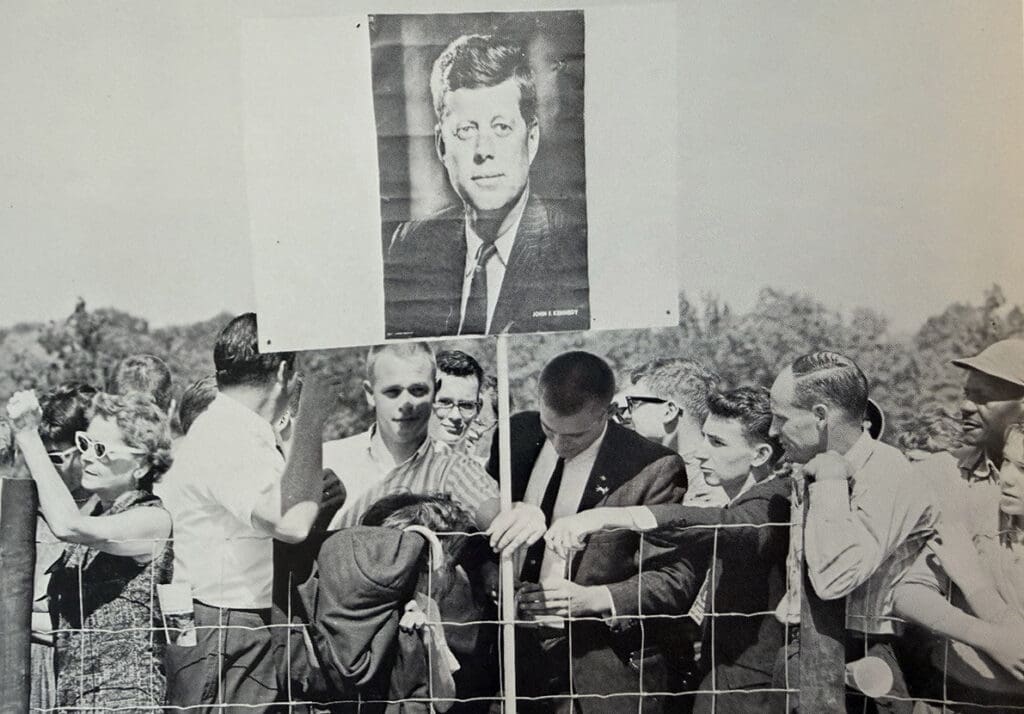
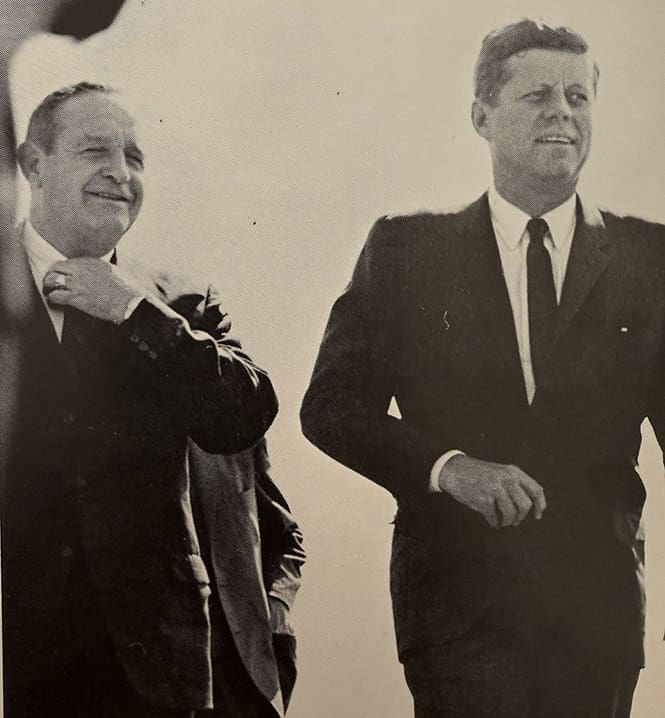
During his visit, Kennedy spoke about the nation’s promise and its responsibility to provide opportunity for all Americans.
“This country has great opportunities and great responsibilities, and I hope that this state and others like it will associate together to provide a fairer opportunity for all Americans to realize their talents, to make something of themselves, to give them a fair chance, which is what we stand for and which our Constitution promises,” he said.
Just seven weeks later, on Nov. 22, 1963, Kennedy was assassinated, compounding the significance of the memories held by those who met him that day.
Coleman Creek Bridge Construction – 1964
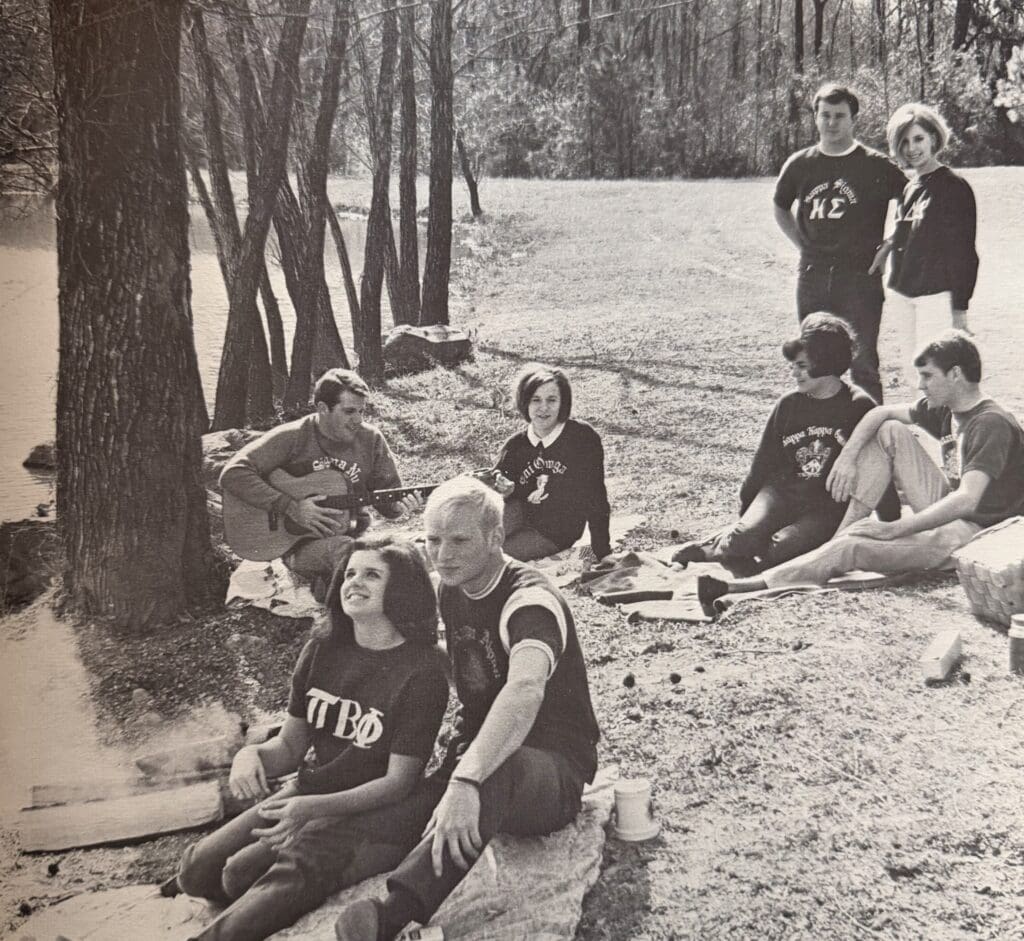
When the university relocated in 1949, there was no formal entrance, so students and faculty had to drive through Coleman Creek to reach campus. Although the waterway added scenic beauty as it wound through campus, it also posed challenges during heavy rains.
For example, in September 1949, a flash flood stranded three children in a tree until the Trojan football team rescued them. Campus access improved in 1961 with a new entrance from University Avenue (then Hayes Street). Then in spring 1964, a bridge was built at 32nd Street, connecting the east and west sides of campus for vehicles and pedestrians and replacing the need to cross the creek bed. The new bridge marked another step in the campus’ transformation.
LRU Takes Historic Step Towards Integration – 1964
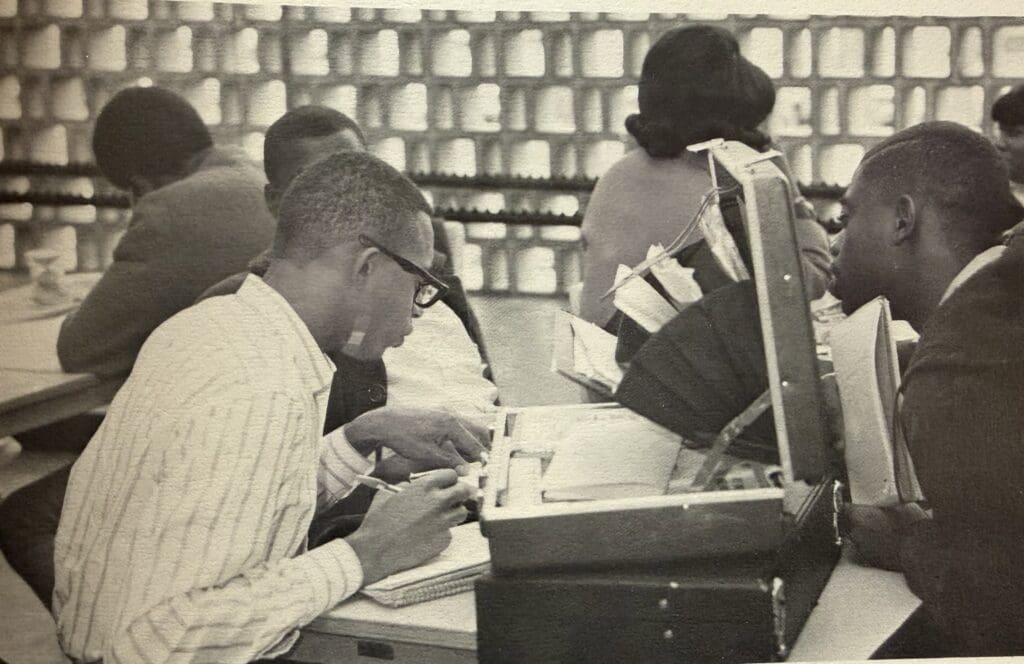
Seven Black students made history in fall 1964 when they enrolled at Little Rock University, officially desegregating the student body after the passage of the Civil Rights Act of 1964.
By the opening of classes in September 1964, the administration had adopted an official policy that prohibited “discrimination based on race or color in eligibility for courses, lectures, in classroom seating, or access to dining halls.” President Stabler reported that the historic group included three full-time and four part-time students.
Among the Black students admitted was Wanda Hamilton, who had preserved her 1963 rejection letter from the university when it was still segregated.
Enrollment on the Rise – 1967
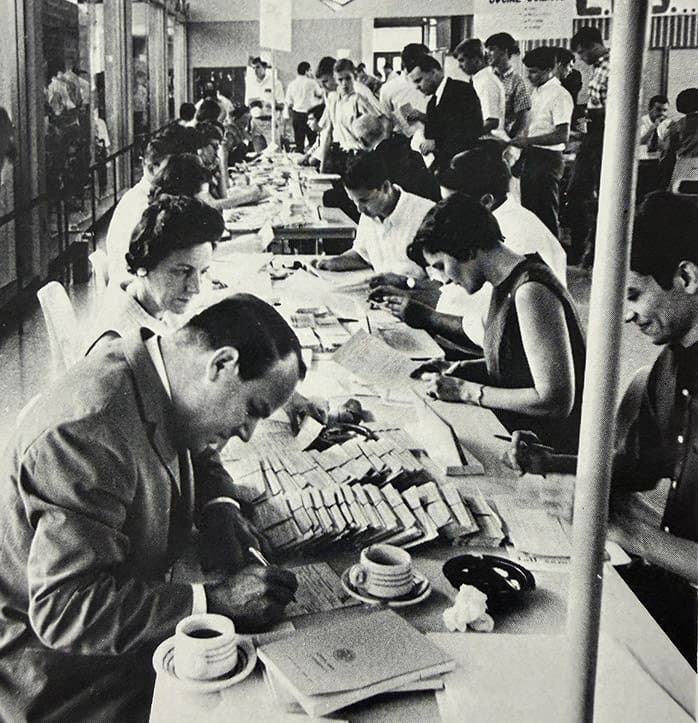
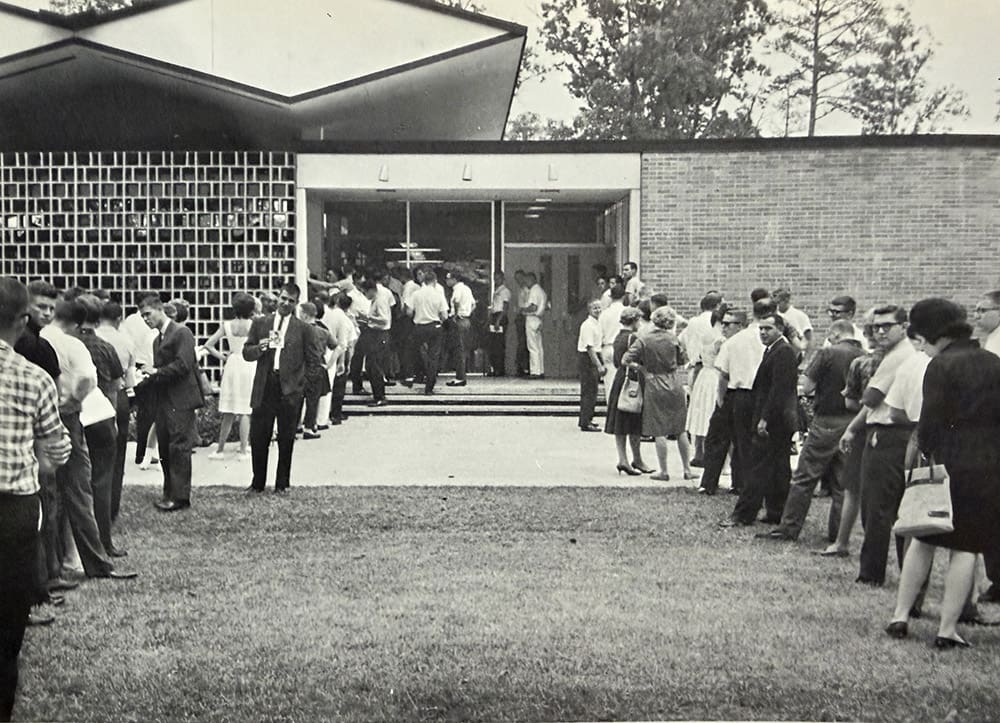
In 1967, enrollment climbed to 3,238 students, with the freshman class experiencing the biggest increase. Part-time and night students continued to outnumber full-time students, demonstrating the university’s importance to working and nontraditional students.
Registration expanded to two buildings for the first time to handle the growing student population. The university also used its IBM processing system for a second year and introduced new all-plastic ID cards featuring student photos. The rising enrollment reflected LRU’s growing reach and the demand for higher education in Little Rock.
Business and Economics Sees Highest Enrollment – 1967
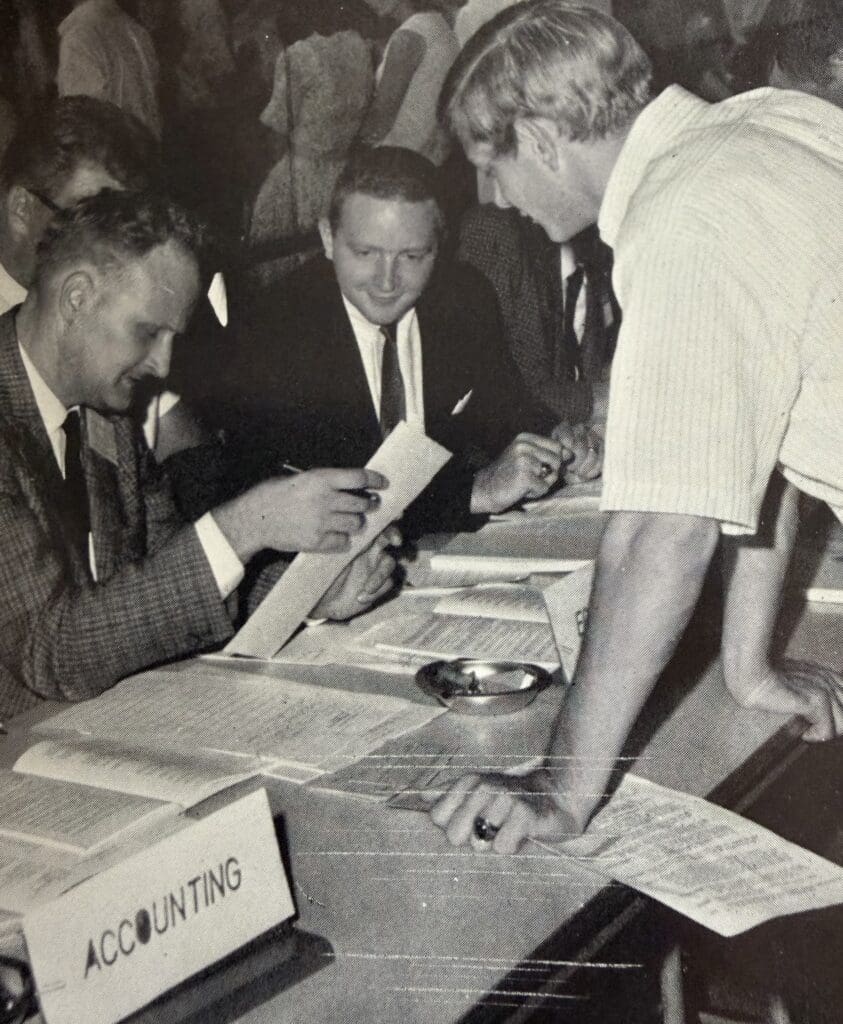
The Division of Business and Economics had the highest student enrollment in 1967, reflecting the growing interest in business education. The division’s objectives were to “to provide a professional education for young men and women planning careers in business and government service, and to prepare students for graduate study in the fields of business and economics.”
The division was organized into the specialized departments of Accounting, Business, Administration, Business Education, Economics and Finance, Management and Labor, and Marketing and Advertising.
Business continues to be one of the leading programs at the university. UA Little Rock’s School of Business ranked No. 194 in the 2026 U.S. News & World Report Best Colleges rankings, climbing nearly 30 spots from the previous year.
East Building and Library Dedication – 1967
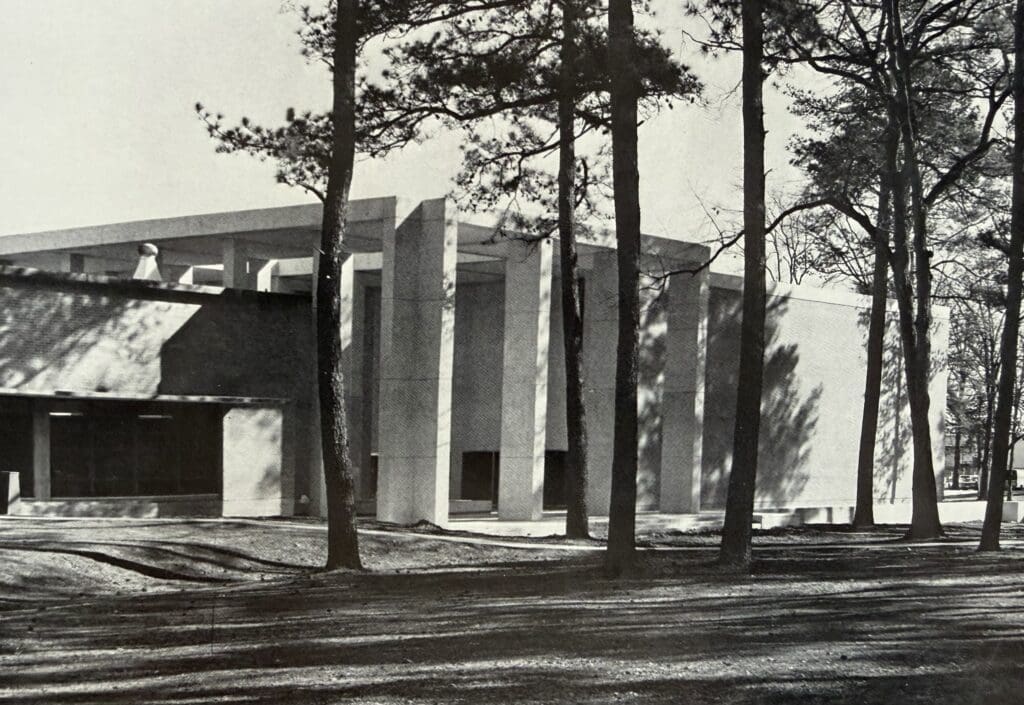
Gov. Winthrop Rockefeller was the featured speaker at the 1967 dedication of Little Rock University’s East Building and the new John A. Larson Memorial Library. The East Building, now known as Stabler Hall, was originally two stories before it was later expanded with five additional floors. Its auditorium hosted the dedication ceremony, which included a performance by the LRU Band.
The new library replaced an earlier one created in Larson’s honor in 1949. The new building housed more than 54,000 volumes and offered open stacks, reading areas, current periodicals, recreational books, reference services, and library offices.
In his address, “The Role of LRU in Higher Education in Arkansas,” Rockefeller spoke about the exciting developments underway at LRU and the university’s potential to profoundly influence social change in the region.
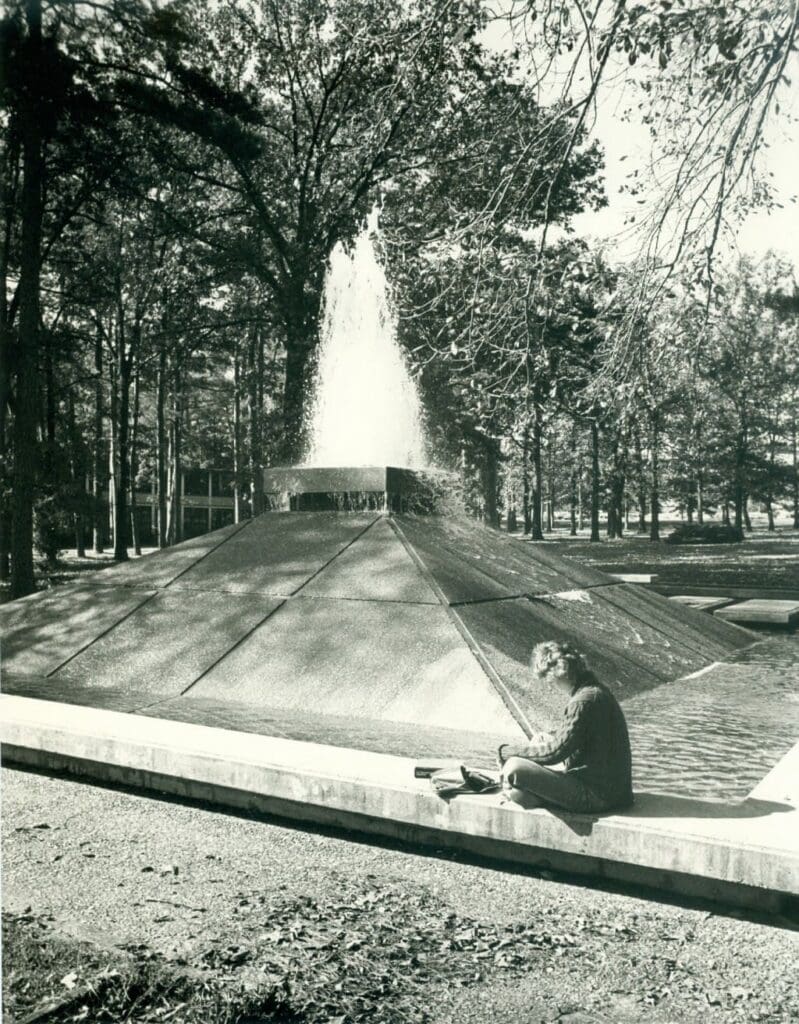
Cooper Fountain Built – 1968-69
Completed around the 1968-69 academic year, Cooper Fountain is a beloved university landmark at the heart of campus and a popular photo backdrop for students and graduates. The fountain honors Dr. William G. Cooper Jr., a long-standing member and president of the Board of Trustees for Little Rock Junior College and Little Rock University. Cooper’s sister, Mary Pelton Cooper Jewett-Gaiser, and her children made a campus beautification donation as a living tribute honoring his legacy.
In 2010, legendary NBC News anchor Tom Brokaw featured the campus landmark in the closing shot of his CNBC documentary Boomer$, which explored the Baby Boomer generation.
LRU Becomes UALR – 1969
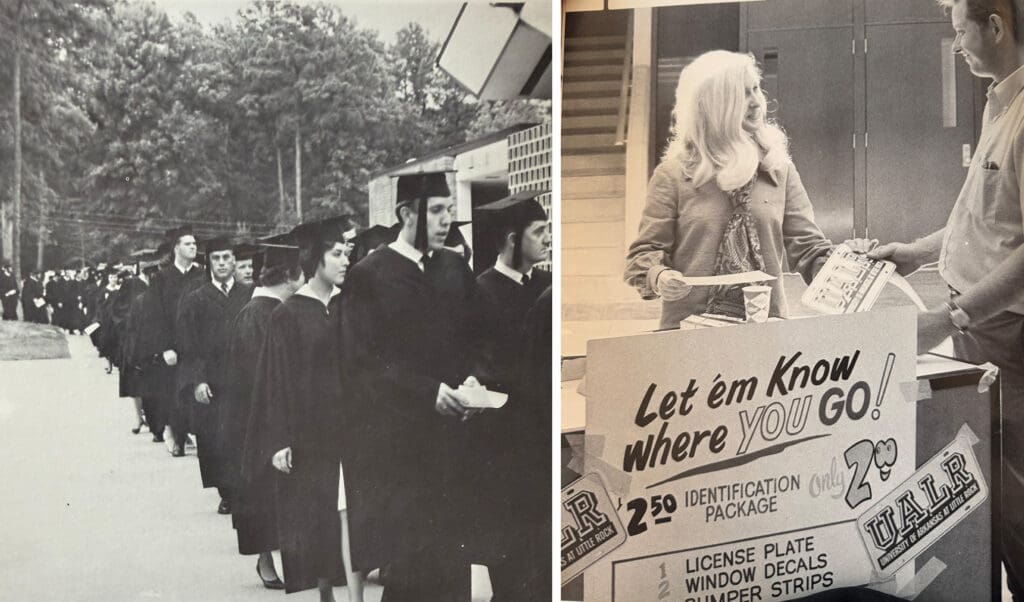
In 1966, Little Rock University and the University of Arkansas began a series of discussions looking toward a merger of the two institutions. After the Arkansas General Assembly approved the merger on Feb. 6, 1969, Gov. Winthrop Rockefeller signed the bill into law five days later, officially transferring the campus to state control.
On Sept. 1, 1969, LRU joined the University of Arkansas System, becoming the University of Arkansas at Little Rock. The new designation marked the end of LRU’s private era and the birth of a public metropolitan center of learning. By anchoring the University of Arkansas System in the capital city, the historic legislation turned a local college into a catalyst for regional growth and accessible education.
The merger also marked the start of rapid growth for what was then known as UALR. The university went from about 3,500 students and 75 full‐time faculty members in 1969, to more than 8,200 students and 362 full‐time faculty members in 2026.
Moving Forward
As we celebrate our Centennial, each decade’s moments of impact will be published monthly. Follow along as we explore the people, milestones, and moments that shaped UA Little Rock’s first century and continue to inspire its future.