
Alumni Spotlight: Dr. Shana Spriggs-Loring
Dr. Shana Spriggs-Loring brings more than 20 years of experience in education and a strong commitment to improving outcomes for students at every level. Currently serving as Assistant Superintendent for High School Transformation & Postsecondary Readiness, she has spent over 15 years leading curriculum design and evidence-based instruction to support student success and strengthen postsecondary pathways for youth and adult learners. In this Black History Month spotlight, Dr. Loring sits down with the UA Little Rock Graduate School to share her professional journey, reflect on the experiences that shaped her leadership, and discuss what continues to drive her passion for purposeful learning and educational transformation.
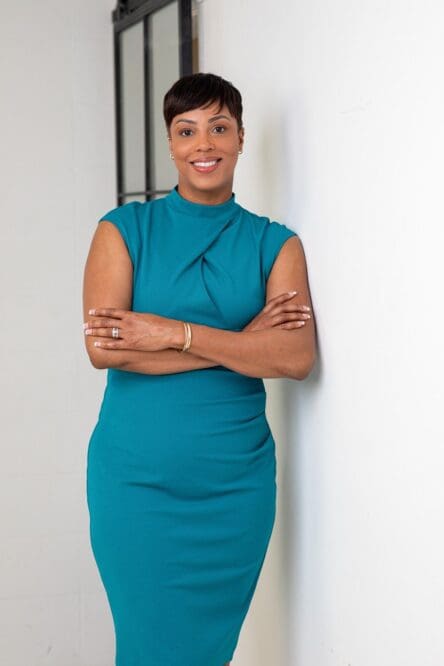
Assistant Superintendent for High School Transformation & Postsecondary Readiness
How did your time at UA Little Rock shape your perspective on educational leadership?
Initially when I entered UA Little Rock, I was enrolled in the journalism program. Through some volunteering and mentoring experiences I decided that I wanted to enter the education program. The faculty, staff and advisors were instrumental in helping me choose the program that would be more suitable for me. I was initially only pursuing a teacher’s certification but quickly decided I wanted to continue with UA Little Rock on a leadership path.
Was there a specific mentor or moment on campus that set you on the path to becoming Assistant Superintendent?
Absolutely, my advisor Dr. Judith Hayn, was definitely instrumental in pursuing a leadership pathway. If I am being honest, I did not like Dr. Hayn when we met, not because of anything she did but because she replaced someone that I really had a great bond and working relationship with. So I wasn’t excited about starting over, but Dr. Hayn really took me under her wing and gave me guidance. She even gave me leadership opportunities on the campus once I graduated, speaking to some of her middle childhood education students, doing mentoring for novice teachers, and it was her and other mentors that pushed me into considering administration.
What advice would you give to Black graduate students or professionals who aspire to leadership roles in education?
The most important thing is to understand that leadership begins where you are. You don’t become a leader when you are put into a supervisory role, leadership is from within. A lot of us wait or think that we have to gain a position in order to be leaders. But it’s important to understand that you can lead from where you are. All of us, in every role that we are in have the ability and capacity to impact significant change right from the seat that we are in. So don’t wait until a position comes open or until you are promoted to start being a leader in your school community, home community, or cultural community…lead from your seat.
You often speak about the ‘transformative power of one.’ How does that philosophy guide your work as Assistant Superintendent, and how can we empower students to believe they are that ‘one’ catalyst for change?
I think a lot of times many of us recognize the need for change but we are waiting on a movement, initiative or someone in a leadership seat to start that change. I believe the change can start with one person and that one person can be you. Somebody has to go first, so why not me? That is the same message that I share with students, teachers, and young administrators that I mentor. You see a need for change or an area of inequity or where there is a lack of diversity or fairness, why don’t you go first? Why aren’t you the first person to speak up or take a stand to propose and idea or take steps to make a meaningful or positive change.
As a Black woman in a top-tier leadership role, what does it mean to you to be a ‘living history’ for the young girls currently sitting in LRSD classrooms?
Wow, I never really thought of myself as a “living history” so I feel that is a big responsibility. But I do hold myself responsible for being and example or model for other young women to follow. Not that I am perfect, I actually want them to see my mistakes. I want them to see the times where my decisions didn’t go well. I want them to see how I rebound or how I reflect and how I come back and do better the next day. My goal is always to be a better person tomorrow than I was today. I take that with me into every classroom, meeting, and every interaction that I have with people. It’s just to encourage them to show up as your authentic self with a goal of always being better tomorrow than you were today.
Dr. Loring, you’ve been a vocal advocate for the ‘Conscious Classroom’ model. For those unfamiliar, how does this shift the traditional power dynamic between teacher and student, and how has this approach specifically helped address the achievement and discipline gaps for Black students in Little Rock?
Many of us in the world of education enter into our careers practicing strategies and classroom instructional practices that we know from our time as students. It’s almost automatic. There wasn’t a lot of thought to whether or not these things worked for us, let alone whether it worked for all students. So the idea of a conscious classroom is to be intentional about the activities, strategies, and culture that you are building inside of the classroom. Be conscious of who you are building this culture for, who you are planning instruction for and building strategies for. When you keep the student at the forefront of your planning and decision making, then you are making conscious decisions about what is in the best interest of the students. That is not to say that teachers and administrators are purposely making poor decisions, it’s just that sometimes we get in a cycle of doing what has always been done. The idea of a conscious classroom is making intentional and thoughtful choices based on the student in front of us today about how we are going to make that student successful. That is the ultimate goal of any educational organization is to make students ready for the next step in their life after school.
When you look back on your legacy at both UA Little Rock and LRSD, what is the ‘meaningful change’ you most hope to be remembered for?
I hope to be remembered as a person who, first and foremost, was an advocate and a champion for all children and learning. But also, more specifically, that I was an advocate, champion, and supporter for children who look like me at first. Then teachers, administrators, and district personnel who look like me and come from the places that I come from. Hopefully, people will see my journey and see my work and know that there is excellence all around our community and neighborhoods. What we really need is a champion, a teacher, or an advocate to see it and then to tap into it. So I hope that if I leave nothing else, I leave people with that.
After a long day in district leadership, what’s your non-negotiable reset—music, food, TV, or sleep? Why?
It should be sleep but it’s not, I actually think it’s music. I come from a very musical family so I can relate any point in my life or thing that has happened in my life to a song, band, or era of music. So music really is a soother for me or an energizer if I am feeling tired. So I think music, of that list, would be my go to right now. I recycle artist, so right now, I am very much back in my Luther and Mary J. Blige era so I’ve been listening to them on repeat a lot lately.
To see the full video, click on the the link below: