
Grant Helps UA Little Rock Campus Community Lead Healthier Lives
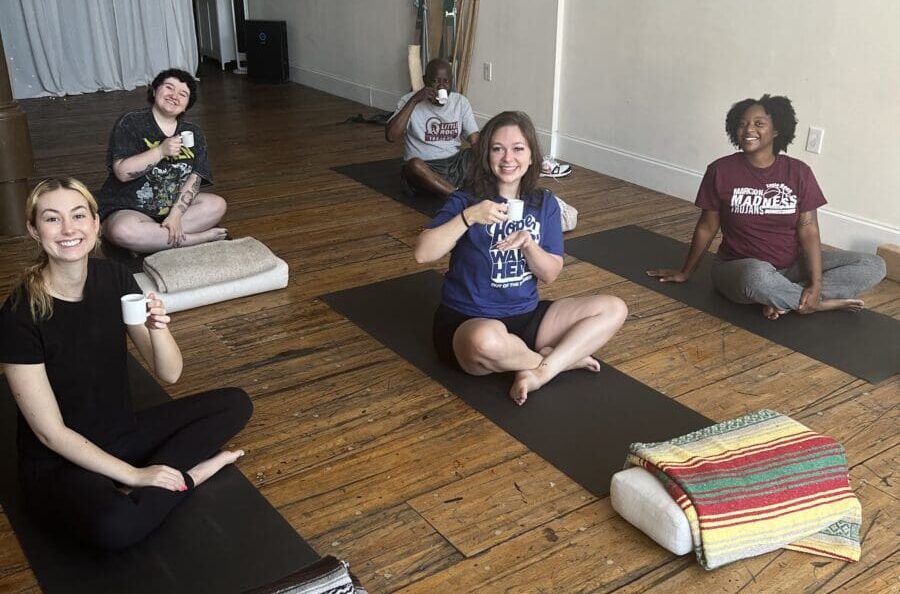
The University of Arkansas at Little Rock is expanding healthy outreach programs with the help of a grant from the state.
Counseling Services (part of the Division of Student Affairs – Wellness and Belonging) received the $27,200 grant — which concludes at the end of September — from the Arkansas Department of Human Services, Division of Aging, Adult, and Behavioral Health Services, Office of Substance Abuse and Mental Health (OSAMH) through the Arkansas Collegiate Prevention and Recovery Program. This funding is supported by the Substance Abuse and Mental Health Services Administration through a State Opioid Response Grant awarded to OSAMH, and OSAMH has contracted with the Arkansas Foundation for Medical Care (AFMC) to serve as the financial pass-through and administrative oversight entity for this initiative.
The grant supports evidence-based, movement-focused programming that promotes healthy coping strategies, social connection, and student well-being while increasing awareness of substance use prevention, overdose education, and campus resources, all run by professional and peer coaches from the campus, said Counseling Services Director Aresh Assadi. Programs such as Movement Mondays and the Trojan Summer Pickleball Club have become central to the initiative, providing students, faculty, staff, and community members with fun, accessible opportunities to stay active, build connections, and engage with prevention education in a welcoming environment.
“Pickleball has been a great example of what we are trying to accomplish: people come because they want to play, be active, and connect with others, but it also gives us an opportunity to introduce prevention and wellness resources in a setting that doesn’t feel clinical,” he said. “Movement Mondays works similarly by using physical activity as an entry point for conversations about stress management, coping, mental health, and healthy alternatives to substance use.”
At noon on Mondays, “we all meet outside the Donaghey Student Center and go for a one-mile walk on the trail or on the track, depending on the weather,” while pickleball is hosted at noon on Wednesdays in the Fitness Center, and “we share prevention resources, educational materials, and exercise healthy coping mechanisms” at all these events, noted Emily Orr, Counseling Services office manager. Offerings are also publicized on Instagram, @UALRWellness, and Orr has been “pleasantly surprised” by how interested the entire campus community is in prevention efforts.
“Our campus community sees this as an important cause just like we do, and it feels really fulfilling to be able to help provide these resources knowing how much it means to them,” she said. “When you have a campus that is interested in having a prevention–based culture, you start to see positive trends in behavior.”
The grant also supports Narcan education and training, peer-led outreach, educational events, and collaborations with campus and community partners, according to Assadi. “We have been very encouraged by the response — participation continues to grow — and the programs have created new opportunities to connect with students who may not otherwise engage with traditional wellness programming.”
With assistance from the grant, UA Little Rock is continuing its Movement Mondays and Deadlift to Uplift programming with an expanded prevention focus. Wellness sessions include: guided physical activity — such as walking groups, bodyweight training, and use of existing campus fitness resources — educational components connecting physical activity to stress regulation, emotional wellbeing, and reduced reliance on substances for coping; and promotion of substance-free lifestyle choices and campus resources.
Deadlifts are one of the most effective full-body exercises and can be adapted for almost anyone, regardless of experience or fitness level, according to Assadi. More importantly, they provide a powerful metaphor for mental health — “we often discover we’re capable of carrying more than we thought possible, but when the weight becomes too much, there’s nothing wrong with asking for help.”
“The goal is to make prevention education approachable and meet students where they are rather than waiting for them to come to us,” Assadi said. “Prevention does not always have to look like a lecture or formal presentation. Sometimes prevention is helping someone find healthier ways to manage stress, giving them a place to connect with other people, teaching them how to administer Narcan, or simply making sure they know where to go when they or someone they care about needs help.”
“That is really what Prevention Through Strength is about,” he added. “We are combining education with activities people genuinely want to participate in and using those interactions to increase awareness of opioid and stimulant misuse, Narcan, mental health and recovery resources, and positive alternatives to substance use.”
Education materials on topics like the risks of opioid and stimulant misuse, overdose prevention and naloxone awareness, healthy coping strategies, and access to campus and community resources will be distributed consistently through weekly tabling events, Counseling Services engagement, campus-wide outreach efforts, and QR code campaigns linking to recovery resources.
“We are grateful for the funding and excited to see how much more we can accomplish as students return for the fall semester,” Assadi explained in early August. “We are so happy to partner with the Arkansas Collegiate Prevention and Recovery Program. The folks at EndOverDose and AMFC have been especially helpful at guiding us through this grant process.”