
UA Little Rock’s Dr. Brian Walker Receives $72,000 Grant to Advance Anti-Cancer Research
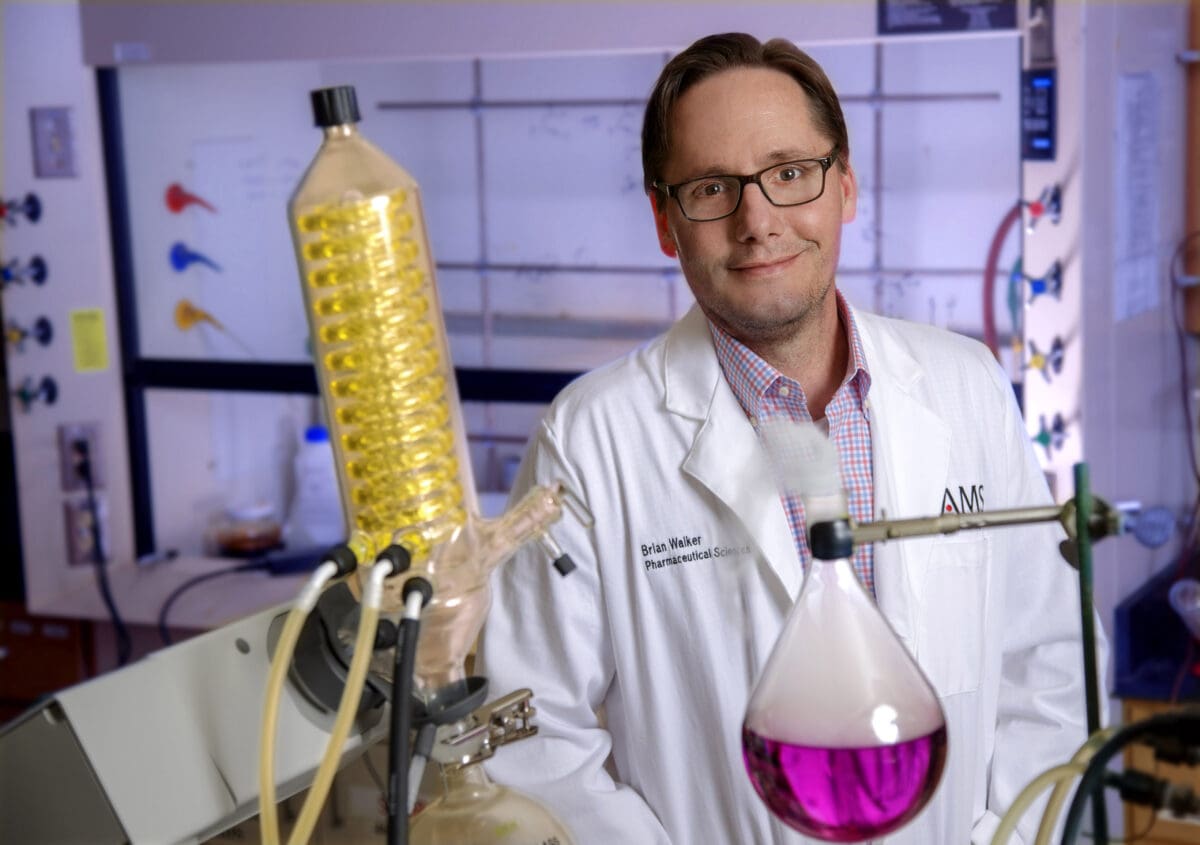
Dr. Brian Walker, assistant professor of chemistry at the University of Arkansas at Little Rock, has received a $72,000 grant through the Arkansas IDeA Network of Biomedical Research Excellence (INBRE) to support research aimed at developing new compounds with the potential to fight cancer.
Working in collaboration with researchers at the University of Arkansas for Medical Sciences (UAMS), Walker’s project focuses on creating and studying derivatives of prodigiosin, a naturally occurring compound that has shown promising anticancer properties.
“Our goal is to synthesize and characterize prodigiosin analogs and evaluate their biological activity against cancer cell lines,” Walker said.
Although the research is still in its early stages, Walker said the project could help lay the groundwork for future cancer therapies. By developing and testing how new analogs interact with cancer cells, the research will help determine which chemical structures are most promising for future drug development. The findings could eventually contribute to the development of more targeted cancer treatments that improve patient outcomes.
The collaboration combines expertise from both institutions to strengthen the research. While Walker’s laboratory specializes in designing and synthesizing new chemical compounds, Dr. Robert Griffin and his team at UAMS bring expertise in cancer biology to evaluate how the compounds perform against cancer cells. Together, the teams can more thoroughly evaluate how well the compounds work and how they affect cancer cells, helping researchers identify the most promising candidates for further study.
“The INBRE funding supports student stipends, laboratory supplies, and access to analytical instrumentation,” Walker said. “These resources allow us to carry out the synthesis and purification of analogs and identify their structure using techniques such as nuclear magnetic resonance (NMR) and gas chromatography-mass spectrometry (GC-MS).”
In addition to advancing cancer research, the project is designed to prepare the next generation of scientists by providing students with meaningful research experiences and opportunities to present their work at conferences and contribute to scientific publications.
“One of the most exciting aspects of this project is the opportunity to bridge fundamental chemistry with meaningful biomedical applications,” Walker said. “The potential to discover new compounds with real therapeutic relevance is highly motivating. Equally exciting is the role this project plays in student development, providing hands-on research experiences that prepare them for careers in science and healthcare.”
Through the collaboration with UAMS, Walker and his team hope to advance the search for more effective, targeted cancer treatments while providing UA Little Rock students with transformative, hands-on research experiences.