
UA Little Rock Dean takes Student-Focused Approach
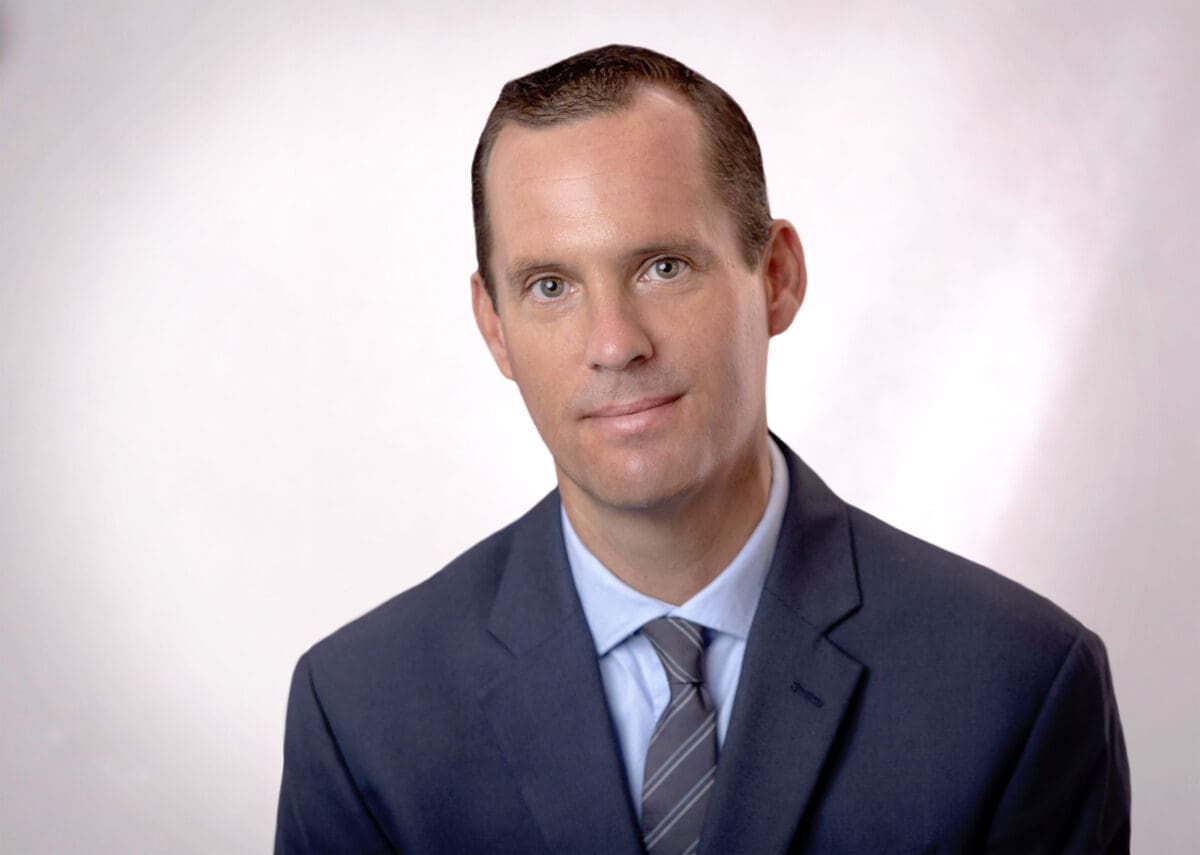
When Dr. Jeremy Ecke talks about the future of the University of Arkansas at Little Rock’s College of Humanities, Arts, Social Sciences, and Education (CHASSE), he doesn’t begin with budgets or administration. He starts with students: internships that place students in local schools, study-away opportunities that broaden perspectives, creative collaborations connecting artists with communities, and classrooms where learning goes far beyond campus.
This student-first approach has guided every role he’s held at UA Little Rock and now forms the foundation of his leadership as dean of CHASSE.
Ecke joined the university in 2012 as an assistant professor of English and has since become a familiar presence on campus and within CHASSE. Over the past 14 years, he has taken on many academic and administrative leadership roles, such as chair of the Department of English, director of undergraduate research, director of the Signature Experience Research and Creative Works Program, associate dean of college operations, and, most recently, interim dean. Each position has given him a better understanding of the college’s strengths and the opportunities that lie ahead.
Ecke views his interim-dean tenure as a time of intentional growth and preparation, laying the groundwork for initiatives that are now ready to move forward.
“That interim period was really about building some of the structures,” Ecke explained. “We focused on donor and alumni development, impact learning, and strengthening our current units. Now, the exciting part is making those structures operational, turning plans into action.”
For Ecke, this progression is at the heart of his vision for CHASSE. He recognizes the strength of the college’s existing programs, people, and partnerships and wants to build on that foundation, creating even more opportunities for students to connect what they learn in the classroom with real-world experiences.
A key goal is to expand high-impact learning, such as internships, service learning, undergraduate research, creative projects, and study-away experiences. Ecke wants more students to link their academic work with communities outside campus, so they can see how their skills apply in professional and civic life.
“Any student in CHASSE should have an opportunity to participate in a high-impact learning experience,” Ecke said. “That helps students and the community see how the skills they learn here can be used directly.”
One example is a recently renewed grant for Community Programs, which works with the Little Rock School District to bring social-emotional learning into local schools through lessons, activities, and daily engagement. The program involves a new partnership with the School of Social Work, giving social work students a chance to do internships in schools. Ecke hopes these opportunities will grow to include students in applied communication, education, and other fields, so more students can use what they learn in hands-on, real-world experiences.
For Ecke, partnerships like this show how CHASSE can connect academic programs with community needs and give students valuable experience before they graduate.
This approach also applies to faculty research and scholarship. Ecke wants to give more support to faculty research, knowing that stronger scholarly and creative work can also give students more chances to join research, creative projects, and other high-impact experiences with their professors.
Ecke’s vision also includes the physical spaces where learning, creativity, and collaboration occur. Over the past year, CHASSE completed three major infrastructure projects: Little Rock Public Radio moved into new studios in Stabler Hall with upgraded equipment; University television was renovated under Director Brant Collins and videographer Cole Clevenger, who prepared the facility and student internship opportunities; and the Stella Boyle Smith Concert Hall was retrofitted and modernized.
Soon, both the university community and the public can experience these improved spaces in person. On Sept. 10, Little Rock Public Radio will host an open house and ribbon-cutting at its new studios. Later, on Nov. 5, the Stella Boyle Smith Concert Hall and Fine Arts galleries will welcome guests for the university’s Centennial Campaign Celebration.
Ecke views this work as a foundation for future progress.
“These are the spaces where students do the work,” Ecke said. “Now we build from here.”
Ecke also plans to convert an underused space in the Fine Arts building into a shared lounge for faculty, staff, and students. This space would encourage collaboration and idea-sharing beyond traditional classrooms or offices. The concept builds on recent updates to the student lounge on the ground floor, which has quickly become a popular gathering place.
“I would like to build that space up as a CHASSE Innovation Hub,” Ecke said.
He envisions it as a space where faculty, staff, and students can develop ideas and collaborate in informal and spontaneous ways.
For Ecke, these connections matter especially in a college as wide-ranging as CHASSE. The college brings together disciplines ranging from education and psychological science, journalism, communication, history, public affairs, the arts, and the humanities. These areas may have different ways of learning and creating, but they all shape and serve the communities where graduates work — and Ecke sees that breadth not as a challenge to manage, but as one of CHASSE’s greatest strengths.
“Each discipline has its own way of knowing, a way to learn and share information,” he said. “I would love for people to see how important it is to have this variety of ways of knowing.”