
UA Little Rock Alumnus David Dunavant Finds His Path Through Music
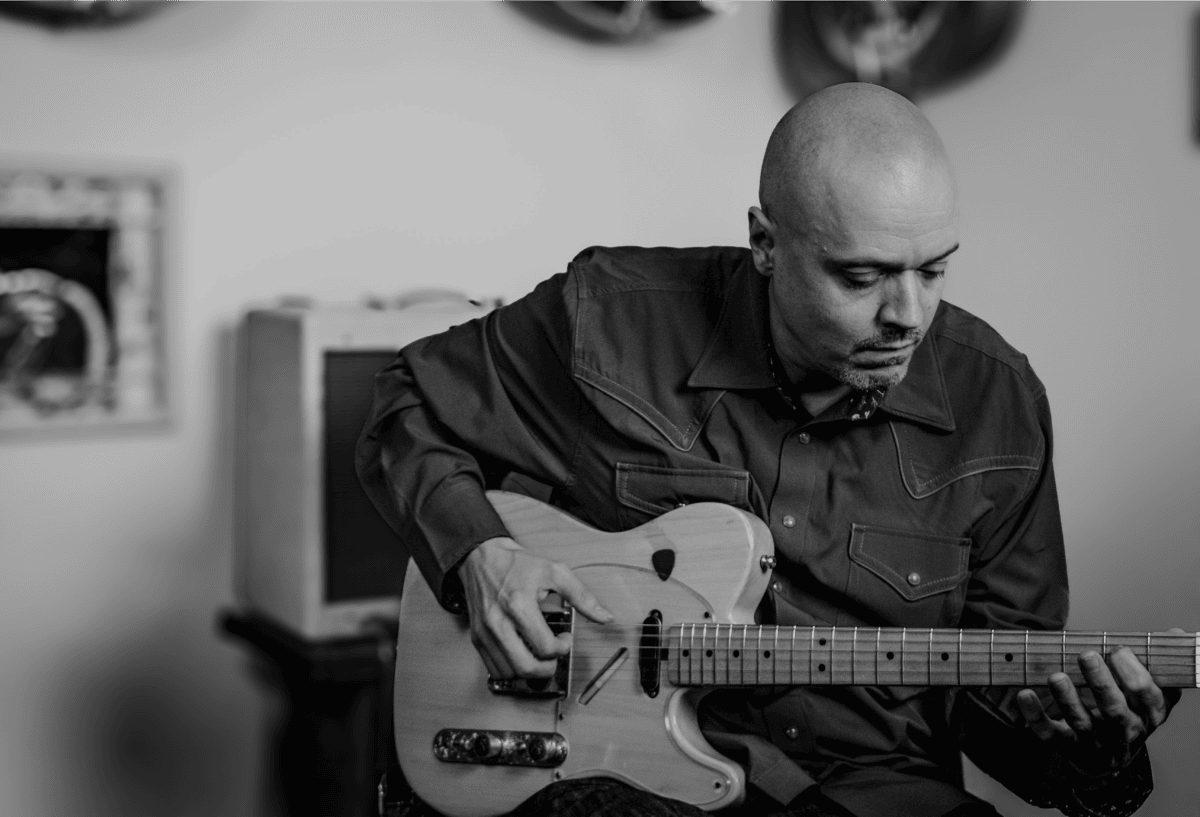
When David Dunavant arrived at the University of Arkansas at Little Rock, he didn’t have a career plan. He wasn’t even sure college was part of his future.
The Little Rock native graduated from high school in 1996 with little interest in continuing his education, but after encouragement from his family, Dunavant eventually enrolled at UA Little Rock, where he initially considered studying psychology before finding his way to the Music Program.
At the time, Dunavant had already spent years playing guitar and performing with local rock bands, so he walked into the music program confident in what he knew about the instrument, but quickly discovered how much he still had to learn.
“I’d been playing in rock bands and playing in bars in Little Rock, and thought I knew a lot about music,” Dunavant said. “And much to my dismay, they informed me I did not.”
The realization intrigued him. Dunavant became a music major with an emphasis in jazz guitar and began studying under Michael Carenbauer, now professor emeritus of music. He went on to graduate magna cum laude from UA Little Rock in 2004 with a bachelor’s degree in music and a minor in writing.
It was his relationship with Carenbauer that Dunavant credits with changing the direction of his life.
“He altered the course of my life, and he doesn’t like it when I say that,” Dunavant said. “But I tell him, ‘Too bad, I’m going to say it anyway because it’s true.’”
Carenbauer remembers a student who embraced opportunities to learn, both from his professors and the students around him.
“David was a really good student,” Carenbauer said. “What I mean by that is that he was open to taking ideas from a teacher and applying what he learned, then applying that into a career, as well. He made a tremendous amount of progress when he was (a student).”
More importantly, Carenbauer saw potential that Dunavant had yet to recognize in himself.
“I felt he had skills beyond what he knew he had,” Carenbauer said. “He was very coachable and eager to learn. I think that’s the number one thing you want from a student as a teacher is that openness to learning.”
Carenbauer’s influence extended beyond guitar. Dunavant credits his mentor with teaching him lessons about responsibility, organization, and navigating life as a professional. Carenbauer also encouraged Dunavant to minor in writing, telling him that the ability to communicate would serve him regardless of where his career took him, and that advice proved valuable. Dunavant later wrote two guitar method books and developed his Street Guitar teaching curriculum.
After graduating from UA Little Rock, Dunavant continued his education at Bowling Green State University in Ohio, where he earned a master’s degree in jazz guitar. By then, he knew he wanted to teach.
“I told Mike, ‘I want to be like you, I want to do what you’re doing,’” Dunavant said.
Dunavant returned to Arkansas and spent the next 19 years teaching at the collegiate level, including two years in the UA Little Rock music department. He also taught at Arkansas State University-Beebe and the University of Arkansas-Pulaski Technical College before eventually leaving academia to focus full time on his private Little Rock-based teaching studio, Guitar Lessons with Dave Dunavant.
That move required Dunavant to think about a career in music differently. Today, he sees musicians not only as artists but as entrepreneurs who must be willing to create their own opportunities.
“The world’s not going to come to you,” Dunavant said. “You have to go to the world.”
That philosophy also helped lead Dunavant to establish Guitar Wars Inc., a nonprofit that gives underserved Arkansas children an opportunity to learn an instrument regardless of the financial circumstances of their families. For Dunavant, the mission comes down to giving children a fair opportunity.
“You didn’t pick your parents. You didn’t pick what country you’re born in. You didn’t pick your parents’ income level,” he said.
Through Guitar Wars, selected young musicians receive a quality guitar they can keep and four months of private lessons. Dunavant researches instructors near each recipient and pays the teaching studio directly. The organization also hosts an annual amateur guitar competition in downtown Little Rock in collaboration with the city of Little Rock and the Central Arkansas Library System.
Dunavant sees a connection between the opportunities he received at UA Little Rock and those he now works to provide for others.
He also remains connected to the university through Guitar Wars. A partnership with UA Little Rock’s business program led him to Ryleigh Abbott who initially joined the nonprofit as an intern. Two years later, Abbott is serving as chief operating officer of Guitar Wars.
Abbott said Dunavant has encouraged her to pursue opportunities rather than wait for them.
“He’s always told me that if you want something, put in the effort to go and get it,” Abbott said.
Dunavant always possessed a willingness to pursue new opportunities. Persistence has been a constant throughout a career that has taken him from college classrooms to entrepreneurship and nonprofit work.
It is also a message he will bring back to UA Little Rock on Oct. 1 when he speaks with music students at the invitation of Naoki Hakutani, professor of piano.
Dunavant plans to discuss music entrepreneurship, building a sustainable private teaching studio, modern career paths for musicians, the use of artificial intelligence in the music business, and his nonprofit work. Above all, he wants students to understand that a music degree does not limit them to one career and that opportunities often require them to venture beyond what feels familiar.
“You can go out there and make your own career,” Dunavant said. “You’ve just got to go do it.”
Carenbauer hopes students recognize the same willingness to learn that he saw in Dunavant years ago.
“He was never afraid to learn things he didn’t know, and that made him successful,” Carenbauer said. “Sometimes that means learning about things that you don’t know are right in front of you.”
Dunavant’s return will also bring him back to a place that holds a particular memory.
He will speak on the Stella Boyle Smith Concert Hall stage in the Fine Arts Building, the same stage where he gave one of his first performances as a UA Little Rock student and discovered just how nervous performing in front of an audience could make him.
This time, he will stand on that stage not as a student trying to figure out where music might take him, but as an alumnus hoping his experience can help the students sitting in the audience find their own direction.
“It’ll be a full-circle moment,” Dunavant said. “Now I’m giving them advice, and hopefully it will help some of them.”