
Xiaowei Xu, Ph.D.
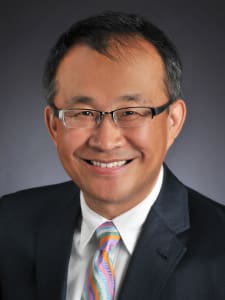
Professor
School of Computer and Information Science
Bio
Xiaowei Xu, Ph.D., is a Professor in the School of Computer and Information Sciences at the University of Arkansas at Little Rock. He is an internationally recognized researcher and educator in artificial intelligence, machine learning, data science, and information science. His research focuses on developing trustworthy and practical AI technologies that address real-world problems across multiple disciplines.
Dr. Xu’s current research interests include Agentic and AI Systems, Vector Database Indexing, OmniTrustAI, Causal AI, large language models (LLMs), foundation models, in-context learning, transfer learning, lifelong metric learning, active learning, density-based clustering, and network clustering. His recent work focuses particularly on customizing foundation models with domain and organizational knowledge so that generative AI can be applied safely and robustly to specialized tasks.
A major focus of his current research is the Train Once, Apply Anywhere (TOAA) framework, which seeks to customize foundation large language models with domain-specific and organizational knowledge without requiring retraining of the underlying model. One application of this framework is OmniMatch, a large-language-model-based entity-matching and data-linkage tool designed to work across domains without additional training.
Dr. Xu has also made seminal contributions to data mining and clustering. His work on DBSCAN (Density-Based Spatial Clustering of Applications with Noise) has had a major impact on data mining and machine learning and has been recognized with the ACM SIGKDD Test of Time Award. His research has also contributed to network clustering, lifelong learning, causal inference, natural language processing, biomedical informatics, and knowledge discovery. His CV documents more than 100 scholarly publications and extensive interdisciplinary research collaborations.
Dr. Xu has worked extensively with government, academic, and industry partners, including the U.S. Food and Drug Administration, National Center for Toxicological Research, National Institutes of Health, National Science Foundation, U.S. Census Bureau, U.S. Department of Transportation, Siemens, and other organizations. His work has been supported by NSF, NIH, FDA, industry, and other sponsors.
Education
- Ph.D., Computer Science, Ludwig Maximilian University of Munich, Germany, 1998
- M.S., Computer Science, Shenyang Institute for Computing Technology, Chinese Academy of Sciences, China, 1987
- B.S., Mathematics, Nankai University, China, 1983
Research
Dr. Xu’s research is centered on artificial intelligence, machine learning, data science, and information science, with an emphasis on developing AI methods that are useful, trustworthy, adaptable, and applicable to real-world problems.
Current research areas include:
- Trustworthy and Generative AI
- Large Language Models and Foundation Models
- OmniTrustAI
- Causal AI and Causal Inference
- Train Once, Apply Anywhere (TOAA)
- LLM-based Entity Matching and Data Linkage
- OmniMatch
- In-context Learning
- Transfer and Lifelong Learning
- Machine Learning and Data Science
- Natural Language Processing and Text Mining
- Density-Based and Network Clustering
- Biomedical Informatics and Drug Safety
His research has evolved from foundational work in data mining and clustering toward modern AI, including causal inference, language models, generative AI, and trustworthy AI. His personal research website describes his overarching goal as solving real-world problems through innovative, transdisciplinary research.
Publications
Dr. Xu has authored or co-authored more than 100 scholarly publications, including peer-reviewed journal articles, conference papers, book chapters, and other scholarly contributions. His publication record spans data mining, machine learning, clustering, information retrieval, computer vision, natural language processing, biomedical informatics, causal AI, and large language models. The current CV contains more than 140 numbered scholarly and professional contributions across publications, presentations, and related activities.
Selected publications and research contributions include:
- Wang, X., Xu, X., Liu, Z., & Tong, W. (2023). Bidirectional Encoder Representations from Transformers-like large language models in patient safety and pharmacovigilance: A comprehensive assessment of causal inference implications. Experimental Biology and Medicine, 248(21), 1908–1917.
- Wang, X., Xu, X., Tong, W., Liu, Q., & Liu, Z. (2022). DeepCausality: A general AI-powered causal inference framework for free text: A case study of LiverTox. Frontiers in Artificial Intelligence, 5.
- Dong, J., Cong, Y., Sun, G., Zhang, T., Tang, X., & Xu, X. (2022). Evolving Metric Learning for Incremental and Decremental Features. IEEE Transactions on Circuits and Systems for Video Technology, 32(4), 2290–2302.
- Schubert, E., Sander, J., Ester, M., Kriegel, H.-P., & Xu, X. (2017). DBSCAN Revisited, Revisited: Why and How You Should (Still) Use DBSCAN. ACM Transactions on Database Systems, 42(3).
- Sun, G., Cong, Y., Liu, J., & Xu, X. Lifelong Metric Learning. IEEE Transactions on Cybernetics.
- Xu, X., Ester, M., Kriegel, H.-P., & Sander, J. A Density-Based Algorithm for Discovering Clusters in Large Spatial Databases with Noise — the seminal DBSCAN research contribution.
- Xu, X. and collaborators. SCAN: A Structural Clustering Algorithm for Networks. ACM SIGKDD.
More recent work includes OmniMatch, LLM-based entity matching, generative-language-model approaches to entity resolution, causal inference from free text, pharmacovigilance, drug safety, and biomedical data analysis.
Awards and Honors
- ACM SIGKDD Test of Time Award for seminal contributions to density-based clustering and the DBSCAN algorithm.
- Recognition for the broad impact of DBSCAN in data mining, machine learning, and scientific applications.
- Research contributions spanning artificial intelligence, machine learning, data mining, biomedical informatics, and causal inference.
- Invited speaker and lecturer at international schools and universities on artificial intelligence, deep learning, big data, natural language processing, and causal inference.
DBSCAN has become one of the most widely used density-based clustering algorithms, with implementations in major machine-learning software platforms.
Teaching
Dr. Xu teaches and develops courses in artificial intelligence, machine learning, data science, data mining, deep learning, database systems, information science, network science, and bioinformatics at undergraduate and graduate levels.
Courses he has created or taught include:
- Deep Learning
- Machine Learning
- Advanced Data Mining
- Database Systems
- Information Science Principles and Theory
- Network Science
- Bioinformatics Theory and Applications
- Introduction to Bioinformatics
He has also taught internationally on Deep Learning, Large Language Models, BERT, GPT, ChatGPT, Causal Inference, and AI applications through international schools on deep learning and big data.
Dr. Xu has advised undergraduate research projects, senior capstone projects, master’s theses, doctoral dissertations, and postdoctoral researchers. His advisees have received undergraduate research, graduate research, and dissertation awards.
Memberships
- Association for Computing Machinery (ACM) — member since 1999
- Association for Information Systems (AIS) — member since 2002
- Society for Information Management (SIM) — member since 2002
- MidSouth Computational Biology and Bioinformatics Society (MCBIOS) — co-founder, 2003
Service
Dr. Xu has provided extensive professional, university, college, and departmental service.
His professional service includes serving on program committees for major international conferences, including ACM SIGKDD, IEEE ICDM, WWW, SIAM SDM, and ACM SAC, as well as serving as a reviewer and editorial board member for numerous journals and conferences. He served on ACM SIGKDD program committees from 2008–2020 and IEEE ICDM program committees from 2005–2012.
He has also served on National Science Foundation proposal-review panels, departmental and college committees, graduate program committees, personnel and promotion committees, and other university service activities.
Dr. Xu is a founder of the MidSouth Computational Biology and Bioinformatics Society (MCBIOS), an organization established to promote interdisciplinary research and collaboration in computational biology and bioinformatics.
He currently serves on editorial boards including:
Trends in Artificial Intelligence
ICST Transactions on Social Informatics
In silico Methods and Artificial Intelligence for Drug Discovery
He has also served as an Artificial Intelligence Consultant for the Center for Bioinformatics at the National Center for Toxicological Research, U.S. Food and Drug Administration.
Work History
Professor, Department of Information Science, University of Arkansas at Little Rock
2007–present
Associate Professor, Department of Information Science, University of Arkansas at Little Rock
2002–2007
Senior Research Scientist and Team Leader, Siemens AG Corporate Technology, Germany
1998–2002
Teaching and Research Associate, Department of Computer Science, Ludwig Maximilian University of Munich, Germany
1993–1998
Research Scientist, Shenyang Institute for Computing Technology, Chinese Academy of Sciences, China
1983–1992
In addition to his primary academic appointments, Dr. Xu has served as an AI consultant for the U.S. Food and Drug Administration, an ORISE professor at the National Center for Toxicological Research, an adjunct professor in Mathematics and Statistics at UA Little Rock, and a visiting professor at the Chinese University of Hong Kong and Microsoft Research Asia.