
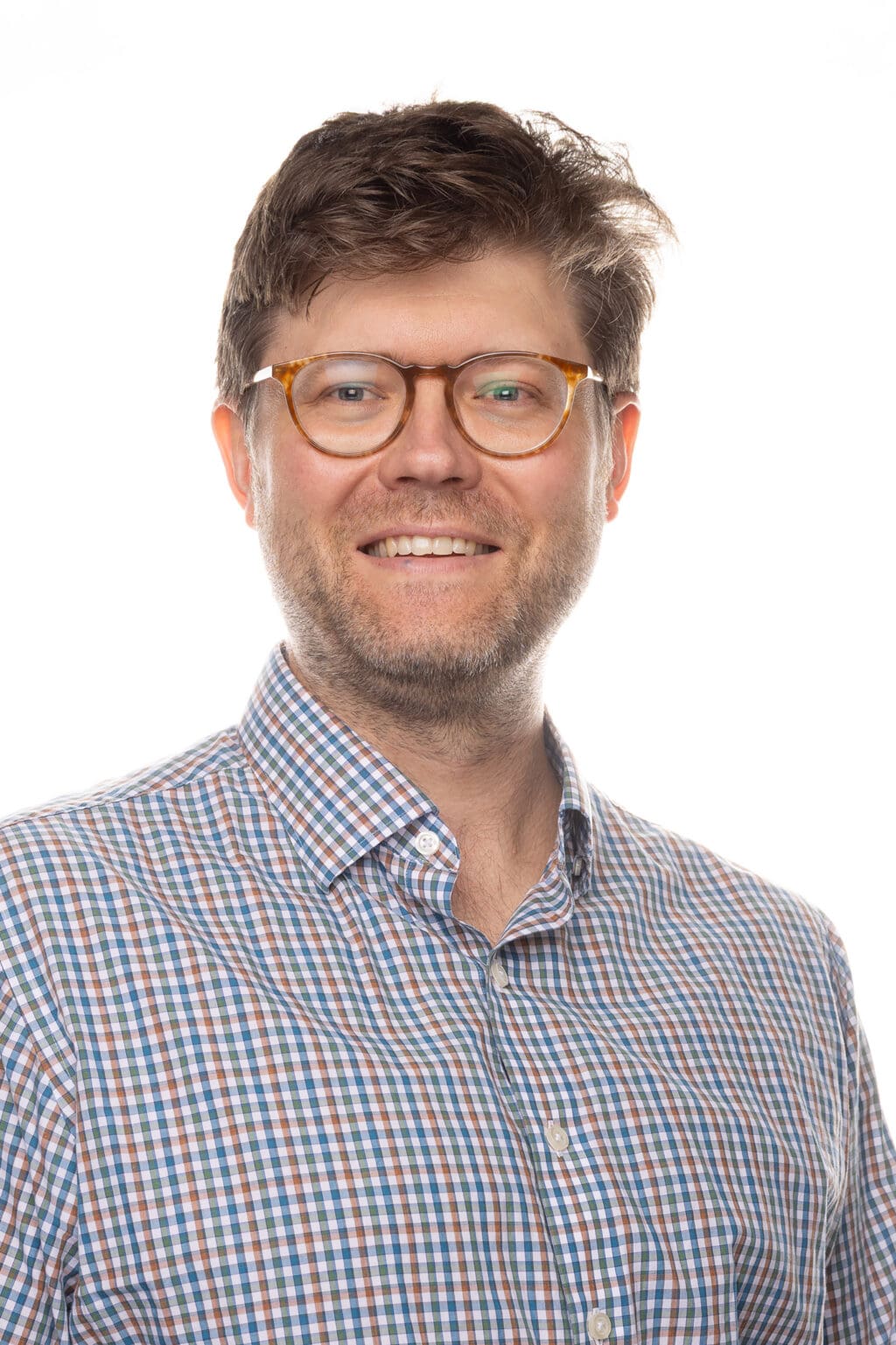
Assistant Professor of Law
B.A., 2008, Yale University; J.D., 2017, UCLA Law School; Ph.D., 2020, UCLA Philosophy
Room 425 | Phone: 501-916-5412 | Email: [email protected]
Assistant: Room 407 | Phone: 501-916-5428
Curriculum vitae | Bowen Law Scholarship Repository
Jordan Wallace-Wolf is a graduate of the law and philosophy program at UCLA, where he earned a J.D. from the law school (2017) and a Ph.D. from the philosophy department (2020). His main area of research concerns the distinction between what is private and what is public, and its significance for law and morality.
Currently, he is continuing to develop a philosophical account of privacy and its implications for various domains of law. Some recent work argues that tort liability is appropriate, both morally and legally, for pornographic deepfake images. He is also exploring whether tort doctrine should evolve in response to the growing power of internet platforms and AI providers, and whether Section 230 immunity should be reconceptualized accordingly.
Other projects concern free speech and the appropriate remedies for lawyers producing inaccurate briefs with AI.
Professor Wallace-Wolf’s research has appeared in or is forthcoming in the Journal of Free Speech Law, the Journal of Tort Law, the William & Mary Bill of Rights Journal, and the University of Chicago Law Review.
Professor Wallace-Wolf is also an award-winning instructor. His central goal is to give students the tools to untangle difficult legal and political questions for themselves, and to expose them to the value of doing so. To this end, he relies on his love of legal and philosophical questions, channeling it through the use of pedagogical best practices, such as interactive classroom activities, concept mapping, in-class writing, cutting-edge cases, and, cautiously, artificial intelligence.
Professor Wallace-Wolf teaches Torts, Remedies, Privacy Law, and Criminal Law.
Selected Publications
- Ramped Up Rule 65(c)?, U. CHI. L. REV. (forthcoming 2027)
- Less Fisher, More Doe: Non-Testimonial Mental Content and a New Rule for Unlocking Digital Devices, 34 W.M. BILL RTS. J. 683 (2026) (available here)
- A Fourth Amendment of People and Places, 108 MARQUETTE L. REV. (2024) (available here)
- Unfenced: The Fourth Circuit Gives Geofencing its First Appellate Go-Ahead in U.S. v. Chatrie, 82 WASH & LEE L. REV. Online 1 (2024) (available here)
- The Firsthand Theory: An Updated Rationale for the Privilege against Self-Incrimination, 1 AM. CRIM. L. REV. 1301 (2024) (available here)
- Think Again: The Thought Crime Doctrine and the Limits of Criminal Law, 1 J. FREE SPEECH L. 5 (2021) (available here)