
UALR cybersecurity students research methods to keep digital voting safe from hacking
UALR’s plan to protect digital voting
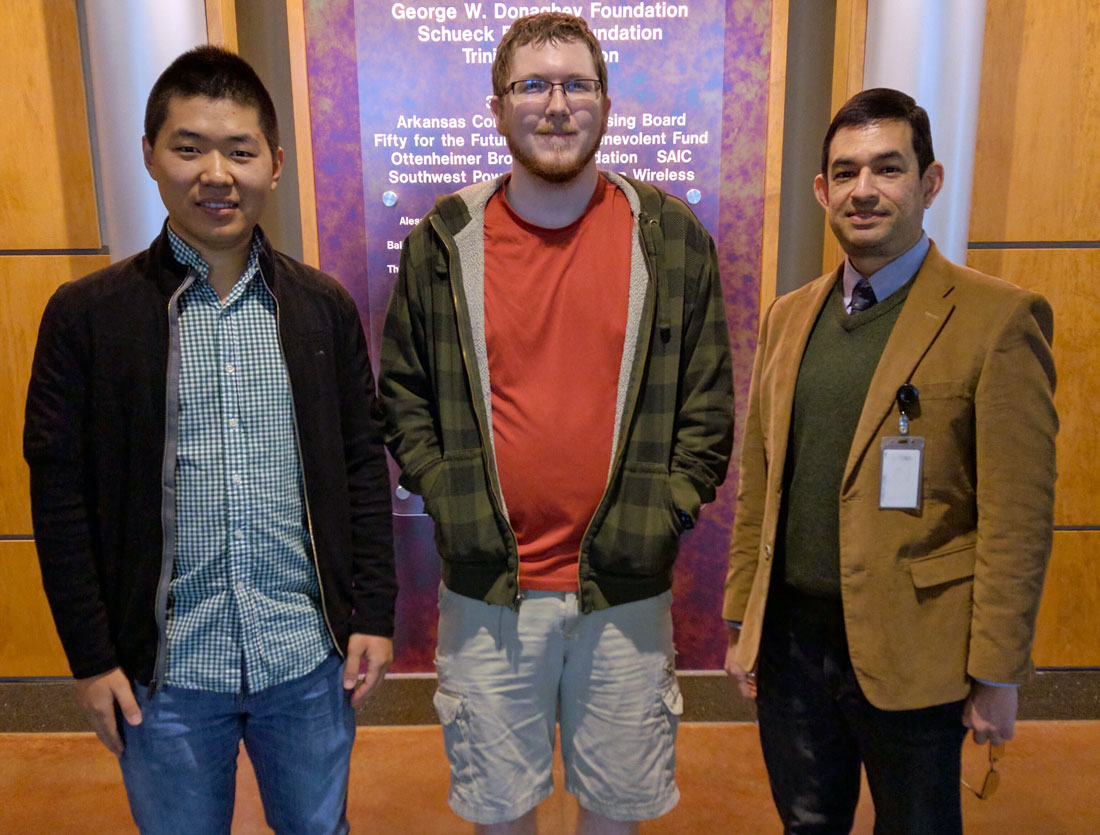
UALR’s plan to secure digital voting relied on three main components: a voter application, a registration server, and voting servers. First, voters log on to the voting app and provide voter identification, which is verified by the registration server. The registration server then provides the voter with a ballot. Voters are further protected with the use of an additional password. “In our designed system, each vote is signed with a voter’s address, the ballot it is associated with, and the registration server address,” Li said. “If somebody wants to fake another’s vote, our system will find out because the signature will be different. It is like using private/public key encryption, where we assume the private key is always kept secret and is only known to the user himself.” Votes are sent to the voting server, which updates information using blockchain technology, which allows information to be distributed to multiple databases. This allows the information to be protected from data breaches at a single location. To prevent election results from being released early, the team would divide the decryption key into pieces and distribute them to political candidates. Only when all pieces of the decryption key are united would the results be revealed. “At the end of the election, each candidate turns in his or her piece of the key, the key is reassembled, and the votes can be decrypted,” Fernandez said. “It is only at that point that the winner can be known. And because the decryption key is then shared with all the ledger holders, anybody who holds a ledger can verify independently the vote totals.” In the end, the election results can be verified by anyone. “All votes can be publicly visible without revealing voter identity, meaning that anybody could count the votes to determine who won and verify the legitimacy of the election,” Young said. Other participating universities included California State Polytechnic University, Champlain College Online, City University of New York, DePaul University, Drexel University, Edinburgh Napier University, Florida Institute of Technology, George Mason University, Maryland Cybersecurity Center, New York University, Newcastle University, Northeastern University, Plymouth University, Rutgers Graduate School, Saint Peter’s University, University College London, University of Maryland, and Queen’s University Belfast. To view the UALR team’s competition video, visit the website. In the upper right photo, UALR cybersecurity team members, from left to right, included Yanyan Li, Connor Young, and Hector Fernandez.