
Jodie Mahony Center for Gifted Education Celebrates 25 Years
For 25 years, the Jodie Mahony Center for Gifted Education at the University of Arkansas at Little Rock has helped shape the future of Arkansas classrooms — supporting educators and opening doors for thousands of talented students across the state.
Part of UA Little Rock’s College of Humanities, Arts, Social Sciences, and Education, the Mahony Center was established in 2001 to support programs that challenge and inspire advanced learners. Today, it is one of only about 20 centers of its kind in the United States.
“For 25 years, the Mahony Center has helped position UA Little Rock as a leader in gifted education,” said Dr. Ann Robinson, the center’s founding director. “Our goal has always been to cultivate talent at every level — from young students discovering their passions to educators strengthening their practice.”
Building a Talent Development Network
From the beginning, the Mahony Center was designed to connect multiple efforts under one mission: supporting talented students and the educators who teach them.
The Mahony Center combines student enrichment programs, teacher professional learning, curriculum development, and federally funded research focused on gifted education services in schools.
It also reflects the legacy of late Arkansas legislator Joseph Kirby “Jodie” Mahony II, a longtime advocate for public education who championed gifted programs and Advanced Placement opportunities across the state.
Today, the Mahony Center’s work reaches far beyond campus, supporting schools and educators throughout Arkansas and beyond.
“The Mahony Center continues to be a beacon of quality education in these challenging times for Arkansas. My father would be extremely proud of his legacy that is continued by Ann Robinson at UA Little Rock,” said Jodie Mahony III, son of the late Arkansas legislator.
Transforming Student Experiences
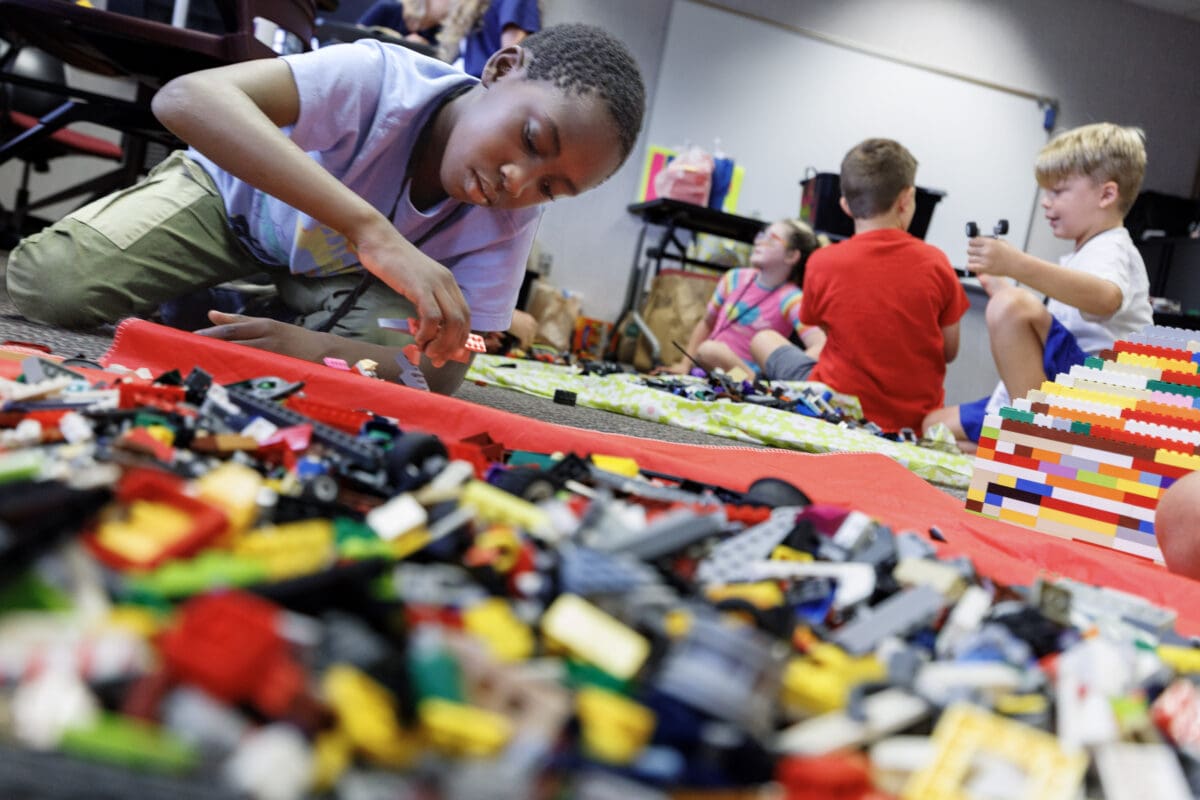
One of the center’s signature programs, Summer Laureate University for Youth (SLUFY), has offered enrichment opportunities for advanced learners and continues to thrive under the Mahony Center’s leadership.
Each summer, about 300 students in grades K–6 attend SLUFY, participating in hands-on courses that encourage creativity, critical thinking, and exploration. Over time, more than 13,500 students have taken part in the program.
Students design solutions to real-world problems, explore literature and the arts, and tackle STEM challenges in an environment that encourages curiosity and collaboration.
“We never want a child to wonder if they’ll get to return,” Robinson said. “The center exists to ensure that opportunities for accelerated and advanced learning remain accessible and sustainable.”
Robinson said for students in grades 7 through 9, challenging experiences are offered through MT Stage, a program that is funded by the Arkansas Department of Education through its AEGIS initiative. Focused on musical theatre, MT Stage offers students the opportunity to move from Shakespeare through current Broadway productions.
Supporting Educators Across Arkansas
The Mahony Center also plays a major role in supporting teachers across the state.
The UA Little Rock Advanced Placement Summer Institute (APSI), now in its 32nd year of operation, has served more than 12,000 teachers in the past 15 years alone. Through APSI, an official initiative of the College Board, teachers gain new strategies and classroom resources that help students succeed in Advanced Placement courses and prepare for college-level work.
In addition to working with high school teachers, the Mahony Center provides professional development opportunities to elementary teachers, gifted and talented coordinators, and principals. Initiated with federal funding, the Center provides support to schools to adopt the use of existing data to spot talent and provide engaging opportunities in the classroom.
Research and Curriculum Innovation
The center is also nationally recognized for developing research-based curriculum and classroom resources.
Over the years, the Mahony Center has produced 25 Blueprints for Biographies curriculum guides, including 15 STEM-focused guides developed and tested with federal support.
The Mahony Center’s STEM Starters research initiatives, funded through multiple Jacob K. Javits grants totaling more than $6.6 million, have introduced engineering and computer science learning models in elementary classrooms across Arkansas and are featured in a recent national publication, “The STEM Starters Model for Developing Talent in Elementary Students and Their Teachers: 15 Years of Innovation and Intervention.”
These programs combine literacy and STEM instruction, allowing students to explore real-world challenges while learning about inventors, scientists, and innovators.
Mahony Center by the Numbers
- 25 years advancing gifted education at UA Little Rock
- 14,000+ students served through Summer Laureate
- 300 students attend Summer Laureate each summer
- 690 educators from Arkansas, nationally, and internationally participated in APSI in 2025
- $6.6 million in federal funding supporting STEM initiatives
- 25 Blueprints for Biographies curriculum guides developed
Looking Ahead
As the Mahony Center celebrates its 25th anniversary, its mission remains the same: to encourage talented students, support educators in within-school and out-of-school settings, expand opportunities for accelerated learning across Arkansas, and engage in research on talent development.
Through partnerships with schools and community organizations, ongoing research, and innovative programs, the center continues to play an important role in shaping gifted education in the state.
“The Mahony Center is more than a program,” Robinson said. “It’s a commitment to excellence — and to the belief that talent deserves to be nurtured.”