
Modern Warriors Project Remembers Native Americans Who Served During World War I
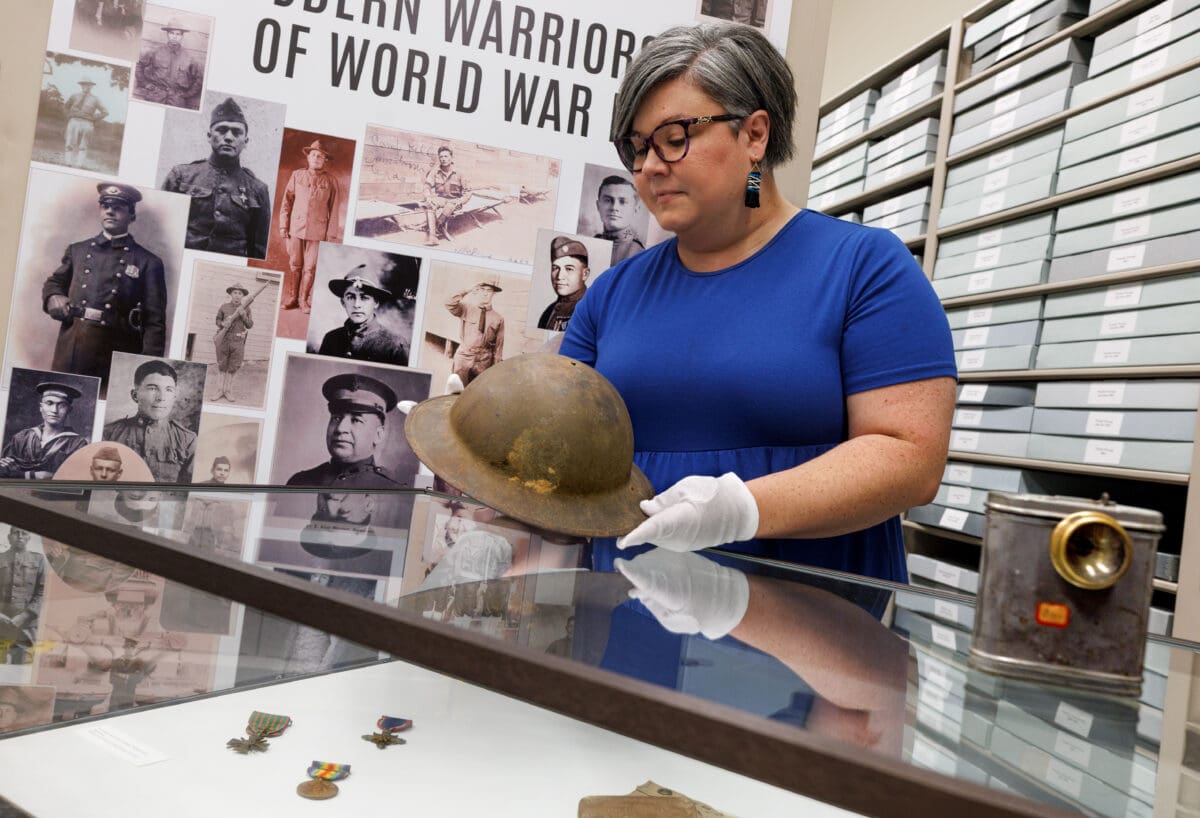
Native Americans who served during World War I are having their stories shared through a comprehensive research project from the University of Arkansas at Little Rock Sequoyah National Research Center.
The Modern Warriors of World War I website has names of more than half of the 12,000 Native Americans who served during The Great War, along with details about their lives and service. The project is ongoing — the site will continue adding names, stories, and, whenever possible, photos — but anyone can search the site for information on these individuals, including by their tribe, boarding school, hometown, military branch and unit, and medals awarded.
“We’re including everyone who served, even if for only a day” — some individuals were ultimately rejected from service due to medical conditions, for example, after enlisting — because that willingness to sacrifice deserves to be honored, said Erin Fehr, assistant director and archivist at the research center. This project is about “recognizing their service and bringing awareness to it.”
There are myriad worthy projects “in the world of archiving, but, unfortunately, many don’t see the light of day, so to see this realized is tremendous,” said Dr. Jess Porter, executive director of the university’s Center for Arkansas History and Culture. This project allows “people to reconnect with their past.”
The Modern Warriors project began nearly a decade ago, as the country marked the 100-year anniversary of the U.S. entering World War I, and the Sequoyah National Research Center offered an exhibit featuring “untold stories” of the Codetalkers of World War I, Fehr said. Only about two-thirds of Native Americans who served in WWI were full-fledged American citizens at the time, and their service ultimately was a catalyst for the Indian Citizenship Act of 1924, which declared that all Native Americans born in the U.S. were U.S. citizens.
Boarding schools proved fertile recruiting grounds for the military, because the Native Americans there were already educated in military fashion, and records from those schools have been extremely helpful in this project, Fehr said. Challenges to the work, however, include the fact that many Native Americans were given new names, a paucity of photos, and incomplete records, but the research is “still fun.”
“It’s like you’re on your own personal detective journey, and one of the most rewarding parts of this project is being able to share the information with family members and descendants” of those who served, said Fehr, who has traveled the country researching this project. “We want to make this resource available to anyone who needs it.”
Roughly 160 died overseas, including Ned Horseskin Hoskin Jr., great-uncle of Chuck Hoskin Jr., current Principal Chief of the Cherokee Nation, and the Sequoyah National Research Center is working with The World War I Valor Medals Review Project — which investigates if minority veterans were denied the Medal of Honor due to bias between 1914-1921 — recommending more than two dozen Native American service members to the Department of Defense to receive the Medal of Honor. This Valor Medals Review Project is supported by the WWI Valor Medals Review Act, which was originally co-introduced as a bill by Republican Rep. French Hill, who represents the state’s 2nd Congressional District, which includes much of Little Rock.
At the National Archives in St. Louis, Fehr discovered a treasure trove of information, including burial files, some of which she was the first to open in a century. The stories can be affirming, but also heartbreaking.
For example, she found a birth announcement in one man’s burial file — “he never got to go home and meet his daughter” — but she also learned about Watie Murrell Alberty, a Cherokee doctor who served in World War I before entering private practice, then re-joined the U.S. Navy as a cardiologist during World War II, a conflict in which his son also served, she said. “It’s the unexpected finds (like this) that make you want to share these stories.”
With the website now live, “we hope more information will be returned to us” in order to complete the historic archive, Fehr said. The site is also ideal for fellow researchers, archivists, and historians, as well as those with Native American relatives who served during WWI, or anyone interested in the country’s history.
These service members “are not just a name or a number,” she said. “They’re humans who had whole lives.”
This project “brings home the cost of war, and it makes you respect (those who serve) all the more,” said Porter, who also oversees UA Little Rock Downtown and the Sequoyah National Research Center. “They were in an incredibly meaningful situation — they gave the most you can give — it’s inspirational.”
The collections of the Sequoyah National Research Center constitute the largest assemblage of Native American expression in the world. Located in the Fine Arts building on campus, the research room is open for scholars by appointment.