
Ottenheimer Library Celebrates UA Little Rock OER Champions: Dr. Bob Belford
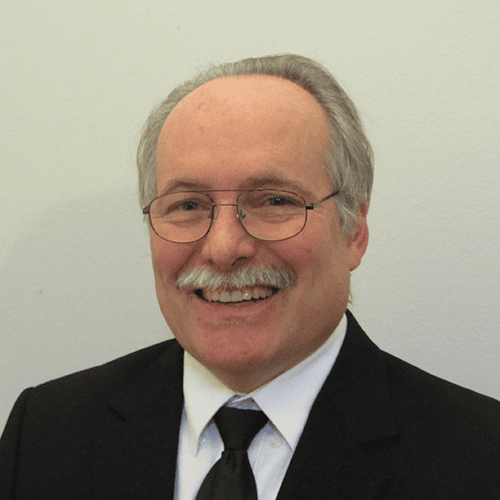
When and why did you first begin using OER?
Well, I would dare say it was before I knew of the term OER. In 1996 I was involved with a summer long ACEPT (Arizona Collaborative for Excellence in Preparation of Teachers) workshop at Arizona State University, and without knowing it, I started developing my own resources that today would be known as OERs. That is, I saw the web as an opportunity to grow and develop new resources that could be available to anyone with an internet connection. I just took a look at the Wayback Machine of the Internet Archives, and the oldest educational material of mine that I could find was my prep chem classes at Mesa and Scottsdale community colleges in 1998, which was only two years after the WayBack machine started crawling the web.
What is the greatest impact you have seen?
Through the integration of hypothes.is annotations into LibreTexts I have been very successful in flipping my classes, and in many ways the lecture discussion actually becomes a continuation of the dialogue going on in the textbook annotation overlay.
If you could describe OER in one sentence, what would that be?
OER is an expansive concept, but it is important to keep in mind the principles behind the 5 Rs of OER; Retain, Reuse, Revise, Remix and Redistribute.
What formats do you use in your teaching practice?
OK, I am not sure what you mean here. I became involved with Carnegie Mellon’s ChemCollective Virtual Laboratory back in 2001 when it was the Irydium project and I still use that OER in my lectures and pre/post lab activities. I have created cheminformatics and data chemistry Jupyter books in github pages that connect to a Jupyter Hub at the Purdue nanoHub, all of which are OER. I have also utilized GitHub Education through Notebook Intelligence to integrate AI into Jupyter notebooks that students in my advanced courses can use. I have created several hundred educational YouTubes, with the help of students workers we have created close to 1000 H5P interactive simulations that are integrated into LibreTexts questions, and set up 100s of LibreTexts ADAPT (Adaptive Learning Assessment System) questions that can be used and shared with faculty across multiple institutions.
What advice would you give to someone wanting to start using OER?
Be sure to use resources that follow the 5Rs of OER; (Retain, Reuse, Revise, Remix and Redistribute). In doing so you have the chance to learn and grow in a creative manner that makes teaching so enjoyable.
Brief Bio: Dr. Robert E. Belford joined the UALR faculty in 2002 from the University of West Virginia where he was a visiting assistant professor of chemistry. He earned his Ph.D. in chemistry from Arizona State University. His research interests include: chemistry education and development of educational material and tools, cheminformatics, and Internet of Things.
OPEN ACCESS WEEK Discover how OER can work in your classroom.