
All sessions will begin on Monday, July 6, 2026 and end on Thursday, July 9, 2026. All consultants teach or have taught AP and are endorsed by the College Board. They include AP Exam Readers and AP award winners, and they serve as lead consultants for other regional and national AP Institutes.
This week is ONLINE, with both Synchronous and Asynchronous instruction, from Monday – Thursday, 8 a.m. to 4:30 p.m.
Consultant Information and Course Descriptions
AP English Language and Composition – Combined (both New and Experienced teachers)
Katie Stueart – Fayetteville High School, Fayetteville, AR
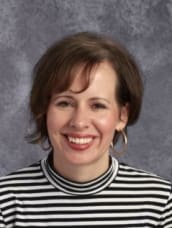
Katie Stueart teaches AP English Language and Composition and Literary Magazine at Fayetteville High School in Fayetteville, AR. She has taught various levels of English for twenty-three years. In addition, Ms. Stueart has served in a variety of leadership positions both at the district and school level including serving as department chair and the leader of a district level action team to promote diversity in advanced courses. An endorsed College Board consultant, she has participated as an AP exam reader for twelve years and has presented to teachers at the national, local, and state level. Ms. Stueart is a National Board Certified teacher in English Language Arts. She received her B.S.E. from Ouachita Baptist University and her M.A. in English from the University of Arkansas. In her spare time, she loves to read, walk her dog, and watch British crime procedurals.
Course Description
This workshop will familiarize participants to the AP English Language and Composition course as well as the accompanying exam. Participants from varying levels of experience will share their best practices. Participants will be given time to develop or revise a unit of their choice;
participants should bring any course materials they need in order to develop this unit.
The following topics will be covered:
- Pacing the course/CB units
AP Classroom
Equity and Access
Formative Assessment
Score reports
Essay Scoring
Best strategies for teaching synthesis, analysis, and argument
Feedback strategies
Close reading strategies
Annotation
Writing strategies
Discussion strategies
Research and research writing techniques
Christine Carson – Legacy Academy, Albuquerque, NM
AP English Literature and Composition for both Experience and New teachers

Christine Carson has been a teacher in the Albuquerque, New Mexico area for the last 22 years, teaching AP and Pre-AP English Language Arts in grades 9-12 for the last 18 years. She holds a B.A in Secondary Education with endorsements in English and Social Studies from the University of New Mexico and an MS in Curriculum, Instruction, and Assessment from Walden University.
Mrs. Carson has been serving as an AP Literature and Composition reader for 16 years, and is currently a Question Leader for the exam. As a consultant, she has facilitated Workshops and APSIs for the University of Tennessee Chattanooga, Texas Tech University, Augsburg University, University of California Riverside, and the University of Arkansas Little Rock, and institutions in the Kansas City, San Francisco, Minneapolis, San Diego, Los Angeles, Albuquerque, and Atlanta areas. In addition, she has authored assessment materials for AP English Literature for a renowned textbook company, and is a mentor and workshop facilitator for AP New Mexico . She describes herself as a diligent, enthusiastic educator who seeks genuine, authentic connections with students to encourage them to grow into mature readers, writers, and thinkers.
Course Description
This workshop explores the world of teaching AP® Literature and Composition for New AP English Literature and Composition teachers. Some of the areas that will be covered will include the Course Framework, passage analysis strategies, close reading methods and practices, drawing inferences, and importance of purpose or effect in analysis as well as novel unit organization suggestions and activities. Creation of challenging analytical tools for major works, teaching and scoring student writing, creative discussions, strategies for multiple choice testing, Lesson simulations in poetry, short fiction and longer works of fiction, and simulated AP® exam grading will be included. Participants will also have opportunities to share best practices as well in this asynchronous and synchronous interactive workshop.
Aaron Mathieu – Acton-Boxborough Regional High School, Acton, MA
AP Biology – Combined (New and Experienced teachers)

Aaron Mathieu is an award-winning AP Biology and Science Research Teacher at Acton-Boxborough Regional High School in Acton, Massachusetts. Throughout his 29-year teaching career, Aaron has worked to broaden student access to rigorous, engaging, and authentic science learning experiences. Aaron was named the 2015 Outstanding Biology Teacher for the state of Massachusetts. He has been an AP Biology Reader since 2017 and became an AP Biology Consultant in 2022. Aaron served on the 2006 MCAS standard setting committee for the Massachusetts grade 10 biology exam, and has developed and written curriculum as an American Association of Immunology research fellow, as a BioBuilder Teacher leader, and as a consultant for the Amgen Biotech Experience and LabeXchange, from 2016-2022, he hosted the Life of the School Podcast where he interviews life science teachers about their teaching practices and goals. He has also been featured in Quanta Magazine and as an AAAS Featured teacher.
Course Description
In our 4-Day AP Summer Institute, you’ll develop a toolkit of effective, ready-to-use strategies and pedagogical techniques to integrate into your teaching practice immediately. We’ll begin with an overview of the course, breaking down the course and exam description (including unit guides) making connections to the course requirements. This includes planning your AP course within your school’s academic calendar (with shared pacing guides for various schedule types) and, for new teachers, resources to assist with AP Audit approval. We’ll explore both formative and summative assessment items to identify key content and skill pairings, building lesson plans that reinforce these connections. This includes utilizing AP Classroom resources, along with data from AP Classroom, Instructional Planning Reports, and the Chief Reader’s Report, to focus on areas needing instructional emphasis. We’ll also discuss AP Exam scoring, including how to use rubrics from past FRQs and practice applying the latest scoring guidelines to student work. Additionally, we’ll cover the AP Reader experience. In our sessions, we’ll also introduce engaging, ready-to-use strategies and materials, including labs that let students actively explore the six science practices integral to AP Biology. Finally, we’ll exchange valuable resources as a group, establish meaningful connections, and discuss ways to connect with the broader AP Biology community. If you would like more details, check out the 4-day Agenda.
Todd Abronowitz – Parish Episcopal School, Dallas, TX
AP Chemistry – Combined (New and Experienced teachers)

Todd Abronowitz is co-author of Fast Track to a 5: Preparing for the AP Chemistry exam and co-author of the textbook Chemistry An Atoms-Focused Approach and currently teaches all levels of chemistry at Parish Episcopal School in Dallas. Previously, he was the lead AP Chemistry teacher for Dallas ISD. Prior to this, he taught at John Paul II High School in Plano (and served as science department chair) for five years. He has also taught at Creekview High School, in the Carrollton-Farmers Branch ISD for 8 years, South Garland High School (Garland ISD) for six years. He has served as the lead chemistry teacher at Creekview High School. Since starting his teaching career in 1990, he has taught regulars chemistry, honors chemistry, Pre-AP Chemistry and Advanced Placement Chemistry. He has started three AP chemistry programs, at South Garland HS, Creekview HS, and most recently at John Paul II HS. He is involved with several professional organizations: Science Teachers Association of Texas (STAT), Associated Chemistry Teachers of Texas (ACT2), and the American Chemical Society. He has presented workshops at several STAT Conferences for the Advancement of Science Teaching and Southwest Regional Meeting of the American Chemical Society. He has presented at two-day conferences and one-day conferences for the College Board and been the presenter for APSIs around the country. He served as a State Chemistry Textbook Review member for Texas in 2001. He was co-founder of a Traveling Science Show that performed shows across the DFW Metroplex. He wrote his own laboratory manual and study materials for use in his AP chemistry class. Mr. Abronowitz has received numerous awards including NMSI All-American Teacher of the Year 2012, Shultz Award for outstanding high school chemistry teacher from the DFW section of the ACS, Radio Shack National Teacher Award, Associated Chemistry Teachers of Texas Teacher of the Year in 2000, and Wal-Mart Teacher of the Year 1996. Currently he is a member of the Chemistry Advisory Board for Texas A&M University-Commerce.
Course Description
The AP Chemistry institute is designed to assist AP teachers in building the foundations for success in teaching AP Chemistry. Emphasis will be placed on the rigor of the material that students need to be successful on the AP Chemistry exam. Time will be allowed for best practices and for sharing ideas as a group. Laboratory investigations will be incorporated with the discussion of the theory. Investigations may include determination of molar mass of an unknown, determination of Ka, redox titration, kinetics, Beer’s law. The material covered (and the sequence) will be determined by the needs of the group as a whole, based on the results of a survey emailed before the workshop.
Topics may include the following:
- Equilibrium
Thermodynamics
Kinetics (non-calculator and calculator approaches)
Electrochemistry
multiple choice strategies
acid-base chemistry
atomic structure and periodicity
particle level diagrams
bonding
What participants will take with them?
- Access to everything developed for Chemistry and AP Chemistry by the lead consultant.
Gina McCarley – Russellville High School, Russellville, AL
AP Computer Science Principles (New and Experienced teachers)
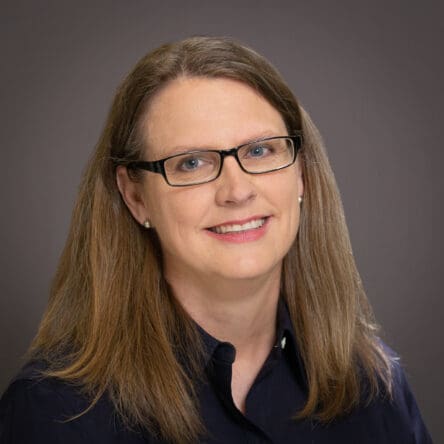
Gina McCarley was one of the original national pilot teachers for the AP Computer Science Principles course. She has been a teacher of the AP CSP course since the pilot and involved in the exam reading as both a table leader and a reader. Previously she was the moderator for the AP CSP community. Gina also works as an AP Computer Science Principles teacher mentor and student study session leader. She has taught both AP CS Principles and AP CS A to students in North Alabama where she lives. Gina has been working in education since leaving industry in 1999.
Course Description
AP Computer Science Principles is an introductory computer science course. Students in AP CSP will design and evaluate solutions through creative development of algorithms and programs. They will evaluate data and explore the impacts of computing innovations and computings systems.
APSI AP CSP Description:
Participants will learn about the AP Computer Science Principles introductory computer science course. They will examine the course requirements and framework through the Big Ideas of the course that include Creative Development, Data, Algorithms and Programming, Computer Systems and Networks, and Impact of Computing.
APSI Takeaways:
Participants will …
1. Gain an understanding of the course and the curriculum framework.
2. Examine requirements for the required performance task and end of course assessment.
3. Explore options for pacing, planning and sequencing their course.
4. Consider lesson examples and strategies for addressing multiple big ideas in the same unit or lesson.
5. Review the curricular requirements and syllabus development.
AP Precalculus (New and Experienced teachers)
Todd Steckler – Jimmy Carter Early College High School, La Joya, TX
Todd Steckler – Hi. My name is Todd Steckler. I live in McAllen, TX with my wife Mayra. We have two children, Angela (22 years) is a senior at the University of Texas in Austin, and Jacob (17 years) is a senior in high school.
I grew up in North Dakota and graduated high school in 1984 from Mandan High School, in Mandan, North Dakota. I studied Mathematics at Minot State University in Minot, North Dakota and graduated with my B.S. in 1988.
After college graduation, I moved to Texas and accepted my first teaching job with the La Joya Independent School District. I continue to work with LJISD, as this is my 35th year of teaching mathematics. My first 30 years were at La Joya High School and the past 5 years have been at the Academy of Health Science Professions. I have taught AP Calculus AB each year (since 1995), AP Calculus BC most of those years (when there is sufficient enrollment), AP Statistics each year (since 2006), and Precalculus each year (since 1992). I am definitely looking forward to the first installment of AP Precalculus during the next school year.
I continued my university studies at the University of Texas – Pan American, in Edinburg, from 1997-2000, where I earned my Masters of Mathematical Sciences in 2000. Since 2001, I have been part-time employed as a dual enrollment and adjunct faculty member (mathematics) for South Texas College, in McAllen, TX.
I am a T^3 Regional Instructor for Texas Instruments and enjoy giving inservice trainings to fellow educators about TI graphing calculators, especially TI NSPIRE. I do some item writing for different companies for math assessments, I do some tutoring for Tutor.Com, and I do some consultant work for Hudson Global Scholars.
When I have some spare time, I enjoy following the Green Bay Packers. I am a proud owner of one piece of stock of this publicly-owned franchise. I enjoy working puzzles, preparing fajitas on the barbecue grill, and spending time with family.
Course Description
This course is for teachers preparing to teach AP Precalculus. A discussion regarding course purpose and philosophy will help guide our week’s work. We will fully explore the current Course and Exam Description (CED) to gain an in-depth understanding of the vision of the course. A detailed analysis of the Essential Knowledge statements will provide a cohesive view of function analysis, rate of change work, and modeling implementation. A variety of effective activities to support student learning will help increase student access to content. We will discuss common student misconceptions, AP exam question approaches and scoring, and classroom strategies to maximize learning. Discussions will focus on enhancing teacher understanding and development of topics as well as sharing ideas and activities. The online course will run for 5 days and will have both synchronous and asynchronous components. Participants will find access to a Google Drive beneficial since sharing can occur efficiently within the Google platform.
Course Goals
The topics listed below will be incorporated throughout the week. The emphasis, order, and inclusion of these and other topics will be driven by participant needs and goals.
- Introductions and Goals for the Week
Curricular Requirements Discussion
Diversity & Inclusion and Equity & Access Discussions
AP Precalculus Course and Exam Description Deep-Dive
AP Classroom Resources and Implementation
Course Pacing Plan Development
Strategies for Using Data to Assess, Reflect, and Adjust
Unpacking and Implementing the Three Mathematical Practices
Limit Notation as a Descriptive Thread in the Course
Modeling Analysis Along with Interpretation of Residuals and Assumptions/Limitations
Development and Planning of Unit 1: Polynomial and Rational Functions
Incorporating Multiple Representations
How Topics Appearing in Prerequisite Courses Manifest Differently
Key Components of Unit 2: Exponential and Logarithmic Functions
Key Components of Unit 3: Trigonometric and Polar Functions
Key Components of Unit 4: Functions Involving Parameters, Vectors, and Matrices
Analysis of CED Topic Notes and Learning Notes
Creating a Classroom Community and Culture of Success
Instructional Strategies and Effective Activity Design
Exam Style Questions and Task Verbs
A Deep-Dive with Practice Questions in the CED
AP Exam Structure Discussion
Expectations for Student Use of Justifications
Graphing Calculator Discussions
What to bring
Items you should have access to during the week include:
- A laptop computer/ tablet
A favorite lesson or practice to share
A copy of your school’s academic calendar
A copy of the textbook you will be using next year (if you have access to one)
A graphing calculator
Doug Tyson – Central York High School, York, PA
AP Statistics – Combined (New and Experienced teachers)

Doug Tyson has taught mathematics and statistics to high school and undergraduate students for more than 30 years. He currently teaches AP ® Statistics, Introduction to Statistics, and Statistical Reasoning in Sports at Central York High School in York, PA. He also teaches undergraduate statistics classes at Millersville University in Millersville, PA. Doug is committed to increasing the visibility and quality of statistics education around the country. To that end, he happily served on the NCTM/ASA Joint Committee on Curriculum in Statistics and Probability, worked as a Question Leader at the AP ® Statistics Reading, is a Professional Development/Workshop Consultant for the College Board, runs workshops and teacher training events in statistical education around the country, and is an active NCTM and ASA member.
Doug’s commitment to statistics education includes various publications: a College Board curriculum module on random sampling and random assignment (co-author), creator of AP ® Daily Videos for the College Board, the Teacher’s Edition for Statistics and Probability with Applications, 3rd , 4th , and 5th editions (author), media supplements to accompany The Practice of Statistics 5th , 6th , and 7th editions (author and project manager), and the Teacher’s Edition for The Practice of Statistics 7th and 8th editions (author). He has been a speaker at regional and national mathematics education conferences, including NCTM Annual and state conferences, and has been nominated for the Presidential Awards for Excellence in Mathematics and Science Teaching.
In a perfect world, Doug would be able to teach statistics without talking. While he still hasn’t achieved this goal, he’s gotten closer to achieving it.
Outside of work, Doug likes to hunt, fish, scuba dive, read, eat corn dogs, and make snow with his homemade snow-making machine.
Course Description
Welcome
Welcome to AP ® Statistics! I’m excited to help you as you prepare to teach this course. I have spent many
years teaching statistics and without a doubt, this is the most enjoyable course I get to teach. Here is
what you can expect to get from this APSI:
- New CED: You will examine the 2026 Course and Exam Description (CED) for AP ® Statistics, including additions, deletions, and points of emphasis.
- Activities: You will participate in classroom-proven activities that engage students and illustrate key statistical concepts.
- AP ® Classroom: You will learn how to use resources from the College Board found within AP ® Classroom including Progress Checks and the Question Bank.
- AP ® Exam: You will review free-response questions from the AP ® Statistics exam, discuss how the AP ® Statistics exam is created and how it is scored, and learn about common student errors. Special emphasis will be given to the changes in the AP® Statistics exam for 2026-2027.
- Technology: You will practice using various types of technology, including graphing calculators and web apps.
- Instructional resources: You will discuss important topics for running an AP ® Statistics course, including textbook selection, recruiting students, assessing students, and other day-to-day issues.
- Q&A: You will have your questions answered!
- Lesson plans: You will receive digital copies of my lesson plans and other resources through our APSI website.
When you attend the APSI, please have a laptop/tablet and the graphing calculator you plan to use for this course. I will feature the NumWorks graphing calculator, Desmos, and the TI-84 graphing calculator. Optionally, if you have already adopted a textbook, bring that too.
Tentative Agenda
DAY 1 Unit 1: Exploring One-Variable Data and Collecting Data
- Morning: Exploring One-Variable Data
- Afternoon: Collecting Data
- Course planning/structure: assessment/grading, AP ® Exam information, AP ® Exam preparation
DAY 2 Unit 2: Probability, Random Variables, and Probability Distributions
Unit 5: Regression Analysis
- Morning: Probability and Random Variables
- Afternoon: Regression Analysis
- Course planning/structure: AP ® Classroom resources, other resources
DAY 3 Unit 3: Inference about Categorical Data: Proportions
- Morning: Confidence Intervals for Proportions
- Afternoon: Hypothesis Tests about Proportions
- Course planning/structure: AP ® Classroom resources, other resources
DAY 4 Unit 4: Inference about Quantitative Data: Means
- Morning: Confidence Intervals for Means
- Afternoon: Hypothesis Tests about Means
- Course planning/structure: expanding AP ® opportunities, student recruitment, AP ® Teacher Community
Scott Ravinius – Montgomery County Public Schools, Rockville, MD
AP Comparative Government – Combined (New and Experienced teachers)

Scott Rivinius has been a public school teacher for twenty-three years in North Carolina, Massachusetts, Texas, and Maryland. For the past fifteen years, he has taught AP Comparative Government and Politics, along with a range of other AP courses including World History, U.S. History, U.S. Government, and Macro/Microeconomics. A native of the Boston area, he earned a B.A. in history from Elon University, an M.A. in history from Salem State University, and an M.S. in education from Ohio University.
Scott has participated in the AP Comparative Government and Politics Reading since 2013, serving as a reader, table leader, and question leader. These roles have given him valuable insight into writing instruction and the free-response process, which he shares with his students and APSI participants.
He has written multiple-choice and free-response questions for the College Board and currently serves on the Comparative Government and Politics Test Development Committee. He also contributed questions to Comparative Government: Stories of the World for the AP Course by Karen Waples.
For the past eight years, Scott has been an AP Consultant, leading numerous APSIs and workshops both in person and online. He also filmed AP Daily videos for AP Classroom during the 2020–21 school year.
Course Description
AP Comparative Government and Politics is one of the most unique courses in the entire College Board catalogue and a joy to teach. It truly is a college level experience for students. It exposes students to high level content and allows them to practice and develop skills that will help them in high school, college and beyond. Students will learn how political decisions and policies made by governments can have major local, regional, and global implications. For this APSI, we will work together to discuss strategies, techniques, and lessons to help make this course come alive for your students and give them the best chance for academic success and skill development.
This will be my eighth year conducting a virtual APSI and I think there are some definite positives to this format. The workshop will have 30 hours of instruction over the course of 4 days. We will have a blend of synchronous and asynchronous activities. The synchronous portion of our days will begin in the morning and end in the early afternoon. I will make time for help or assistance during asynchronous sessions for anyone that needs extra help, assistance or wants to brainstorm.
We will maximize our time together and some of our focus areas will be:
– Using the Course and Exam Description (CED) to maximize your instruction and how to make it work best for you.
– Using the digital resources provided by College Board to enhance your instruction and make your job easier such as AP Classroom, AP Daily Videos, Personal Progress Checks and Teacher Community.
– Deep dive into the free response questions and strategies on how to best teach each of the four types of FRQs (conceptual analysis, quantitative analysis, comparative analysis, and argumentative essay).
– Discussion on how to provide both scaffolded and exam level multiple choice questions for your students.
– Different methods of teaching the course such as thematically, country by country or hybrid.
– Pacing and calendar development for both full year semester-based calendars.
– Inclusion of current events and secondary sources into the curriculum.
– Deep dive into the required essential knowledge of our case study countries: China, Iran, Mexico, Nigeria, Russia, and the United Kingdom.
– Development of project-based lessons and simulations.
– Discussing what is the best textbook and review books for your students.
– Exam reviewing strategies, methods, and schedule.
– Insights of the exam from an AP reader and how to best prepare your students for the exam.
– Expanding the course at your school and how to recruit and convince more students to take this class.
– Activities for post exam.
This APSI will focus on how enjoyable this course is to teach and will include plenty of secondary sources, video clips, simulations, solo projects, group projects and cultural activities that you can bring back to your classroom.
We will be utilizing a LMS for this APSI as well as Google Shared Drive. I will include access to all our resources for the week on this platform as well as including a link to my Course Shared Drive that includes resources such as assessments, writing strategies, lesson plans, activities, projects, print resources and current event resources.
Matt Tawney – Los Osos High School, Rancho Cucamonga, CA
AP Seminar (New and Experienced Teachers)

Your presenter, Matt Tawney, has spent 29 years in education and currently teaches AP Seminar while serving as the Activities Director at Los Osos High School. Matt has been consulting for and scoring for AP Seminar since 2016. As an Early Table Leader for AP Seminar scoring, he brings firsthand knowledge of what strong performance tasks look like and how teachers can coach students effectively through inquiry, research, and argumentation.
Matt is passionate about helping students gain confidence as thinkers and communicators. He prides himself on creating welcoming, practical sessions filled with resources, examples, and strategies teachers can implement immediately. Matt’s background in leadership, community-building, and instructional planning shapes a workshop experience that is engaging, supportive, and grounded in real classroom practice.
Course Description
Join us for a collaborative, engaging AP Summer Institute focused on helping you feel confident and ready to teach AP Seminar. Over the week, we’ll break down the QUEST framework, explore each performance task step-by-step, and discuss the routines and scaffolds that make the course successful for students at all levels.
You’ll have time to practice scoring, build resources, and share ideas with other educators. We’ll look closely at real student samples so you understand exactly what the College Board is looking for, and you’ll walk away with lessons, handouts, and structures you can use on Day 1.
Whether you’re brand new to AP Seminar or looking to refresh your approach, this APSI will equip you with tools to support student inquiry, research, collaboration, and confident communication.
Erin Reiner – Mullen High School, Denver, CO
AP Art History – Combined (New and Experienced teachers)
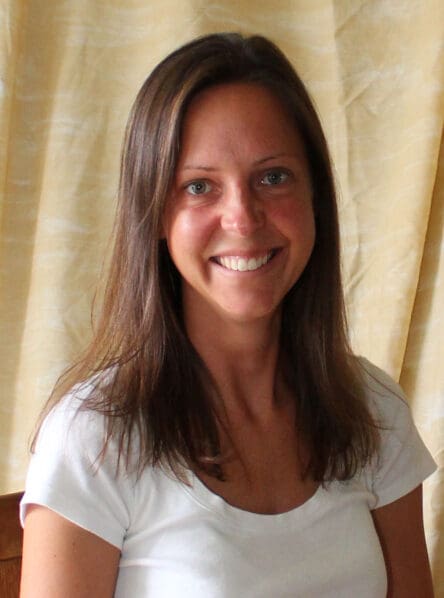
Erin Reiner has dedicated her career to teaching visual arts at the high school level since 2000, with experience across several states including Missouri, Texas, Florida, Connecticut, and Colorado. She has specialized in Advanced Placement Art History since
2003, teaching in-person, through distance education, and online formats. Since 2011, Erin has been an active participant at the AP readings, taking on various roles from reader to table leader and question leader. As a College Board consultant since 2014, she regularly leads Advanced Placement Summer Institutes and workshops across the country and internationally, both in-person and online. Erin played a role in developing resources for the redesigned AP Art History course and authored the AP Course Planning and Pacing guides for Thames and Hudson’s text, Art History, A Global View. Additionally, she regularly teaches Art History and Art Business courses at Sotheby’s Summer Pre-College Institute in New York City. Passionate about art, Erin travels frequently to experience art firsthand, with adventures that include walking the Camino in Spain, attending the opening of Christo’s
Wrapped Arch in Paris, and visiting historic sites throughout Europe and the world, including recently visiting Israel, Turkey, Jordan, Peru, and China. Her teaching style is active, engaging, and fun, driven by a desire to share her love for art history with students
and fellow educators alike.
Course Description
I really see our APSI as a version of our high school art history classroom for the week: at first there is some fear, apprehension, and nervousness, but by the end participants are bonded, have greater confidence, enthusiasm, and a “can-do” attitude about what they will be able to bring to their own classrooms. Whether this is a future course offering, your first time teaching the course, or one you’ve been teaching for decades, every instructor will leave feeling inspired and with strategies for improving their own preparedness and ultimately student scores on the AP exam.
Some of the major highlights we cover in our time together include the Course and Exam Description, how to use AP Classroom, strategies for the eight Art Historical Thinking Skills, and in-depth study, strategies, and scoring of released long and short free response essay questions as well as how to read and improve multiple choice question preparedness. We also walk through and briefly discuss all 10 Content Area Units and the 250 works of art that are included in our Image Set. We also delve into ways of organizing and planning your course.
I actually enjoy the online format with both the freedoms it provides as well as being able to gather together amazing educators from all over the world sharing their passions. Not only do we spend most of our time together in group instruction, but also complete tasks in breakout rooms as well as on your own throughout the week. At the end of each day time is built in for
working on asynchronous work, but I will remain available until the end of the scheduled session to answer any other questions you might have. I spend a lot of time sharing images/files/activities and walking everyone through using the resources provided including how I run my own class, and share a google drive folder/flash drive with you with about 10 gigs of content I’ve created that you can pick and choose from in teaching your own course.