
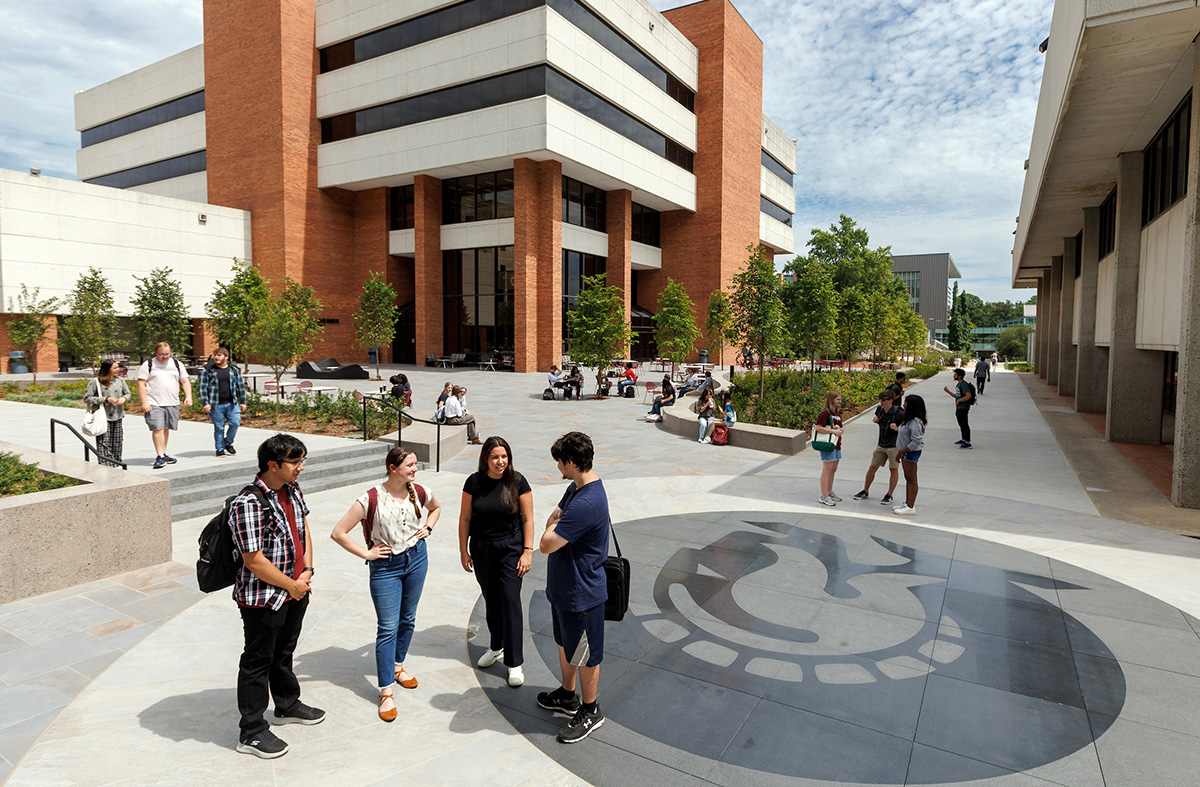
All sessions will begin on Tuesday, July 28, 2027, and end on Friday, July 30, 2027. All consultants teach or have taught AP and are endorsed by the College Board. They include AP Exam Readers and AP award winners, and they serve as lead consultants for other regional and national AP Institutes.
This week is face-to-face instruction on the UA Little Rock campus, from 8 a.m. to 5 p.m. each day.
Consultant Information and Course Descriptions
Gabriel Dorrego – East River High School, Orlando, FL
AP Art and Design for New and Experienced Teachers
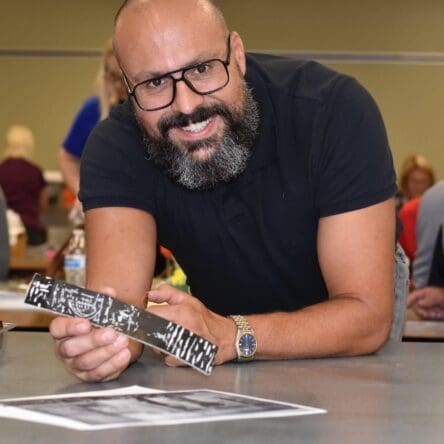
I want to introduce myself. My name is Gabriel Dorrego.
I teach ceramics, AP 2D, 3D, and Drawing at East River High School in Orlando, in Florida’s Orange County Public Schools. I have been teaching for twenty-three years, 19 of which include AP art and design.
Fourteen years ago, I began scoring the AP art exam as a reader (scorer). During that time, I’ve had the opportunity to write the scoring rationale for 2D portfolios for the College Board website. I did that for three consecutive years. Later, I was able to contribute to making the AP Daily videos. These live-recorded lessons in the AP online classroom are accessible to students and teachers and help to communicate the skills and expectations needed to succeed. In recent years, I have continued to serve as a Table Leader. TLs train and manage groups of readers who score the exam. Finally, I’ve been an AP consultant for five years, leading workshops on strategies for teaching art and design.
I believe in the College Board’s commitment to serving students towards college readiness through rigor and access. I have an intimate understanding of the course through my work on the exam with the College Board and as a high school teacher in Florida’s public schools.
I look forward to sharing what I’ve learned with you all.
Heartfelt fist bumps to each of you,
Gabriel Dorrego
AP Art and Design Consultant
[email protected]
Course Description
This workshop combines 30+ hours of content-rich training with seminar sessions and hands-on activities designed to meet the needs of both inexperienced and experienced teachers. In addition to presenting information regarding the AP Art and Design program requirements, sessions will include an in-depth look at the three portfolios, ideation for developing lessons for the Selected Works and Sustained Investigation sections of the portfolios, and studio experiences that can be adapted for the classroom.
To help increase understanding and delve into what we are asking our high school students to do during our individual work time, you will create a mini-sustained investigation of your own, centered on your own self-directed guiding question (aka inquiry). The “Sustained Investigation” is the primary art-making that your AP Art
students will be documenting during the course of the year. You will put yourself in the students’ shoes, create your own sustained investigation, and create a reasonable amount of work within the workshop time frame in relation to your inquiry.
You can explore 2D, 3D, or Drawing. The AP Course Exam Description states, “There is no preferred (or unacceptable) use of material, process, idea, style, or content.” Please assemble your preferred art-making tools and materials. You will create multiple works of art (sketches, drafts, first versions) that lead to a “finished work” (as finished as possible within the time frame of our APSI) with written and visual documentation of your process, just like the AP exam. On the last day, we will share our individual “mini” sustained investigation made during our time together in a class critique.
You will have opportunities for peer dialogue and discussion and also develop curricula to meet specific unique needs in Drawing, 2D, and 3D Art and Design. Additionally, we will share thoughts on organization and management in the AP Art and Design class; on integrating individual and group critiques into the curriculum; on using technology and research effectively; and on the role of historical and contemporary art in image making.
You should be prepared to share your instructional approaches with other participants.
Todd Abronowitz – Parish Episcopal School, Dallas, TX
AP Chemistry (New and Experienced teachers)

Todd Abronowitz is co-author of Fast Track to a 5: Preparing for the AP Chemistry exam and co-author of the textbook Chemistry An Atoms-Focused Approach and currently teaches all levels of chemistry at Parish Episcopal School in Dallas. Previously, he was the lead AP Chemistry teacher for Dallas ISD. Prior to this, he taught at John Paul II High School in Plano (and served as science department chair) for five years. He has also taught at Creekview High School, in the Carrollton-Farmers Branch ISD for 8 years, South Garland High School (Garland ISD) for six years. He has served as the lead chemistry teacher at Creekview High School. Since starting his teaching career in 1990, he has taught regulars chemistry, honors chemistry, Pre-AP Chemistry and Advanced Placement Chemistry. He has started three AP chemistry programs, at South Garland HS, Creekview HS, and most recently at John Paul II HS. He is involved with several professional organizations: Science Teachers Association of Texas (STAT), Associated Chemistry Teachers of Texas (ACT2), and the American Chemical Society. He has presented workshops at several STAT Conferences for the Advancement of Science Teaching and Southwest Regional Meeting of the American Chemical Society. He has presented at two-day conferences and one-day conferences for the College Board and been the presenter for APSIs around the country. He served as a State Chemistry Textbook Review member for Texas in 2001. He was co-founder of a Traveling Science Show that performed shows across the DFW Metroplex. He wrote his own laboratory manual and study materials for use in his AP chemistry class. Mr. Abronowitz has received numerous awards including NMSI All-American Teacher of the Year 2012, Shultz Award for outstanding high school chemistry teacher from the DFW section of the ACS, Radio Shack National Teacher Award, Associated Chemistry Teachers of Texas Teacher of the Year in 2000, and Wal-Mart Teacher of the Year 1996. Currently he is a member of the Chemistry Advisory Board for East Texas A&M University.
Course Description
The AP Chemistry institute is designed to assist AP teachers in building the foundations for success in teaching AP Chemistry. Emphasis will be placed on the rigor of the material that students need to be successful on the AP Chemistry exam. Time will be allowed for best practices and for sharing ideas as a group. Laboratory investigations will be incorporated with the discussion of the theory. Investigations may include determination of molar mass of an unknown, determination of Ka, redox titration, kinetics, Beer’s law. The material covered (and the sequence) will be determined by the needs of the group, based on the results of a survey emailed before the workshop.
Topics may include the following:
- Equilibrium
- Thermodynamics
- Kinetics (non-calculator and calculator approaches)
- Electrochemistry
- multiple choice strategies
- acid-base chemistry
- atomic structure and periodicity
- particle level diagrams
- bonding
What participants will take with them?
- Access to everything developed for Chemistry and AP Chemistry by the lead consultant.
Gina McCarley – Russelville High School, Russelville, AL
AP Computer Science Principles (New and Experienced Teachers)
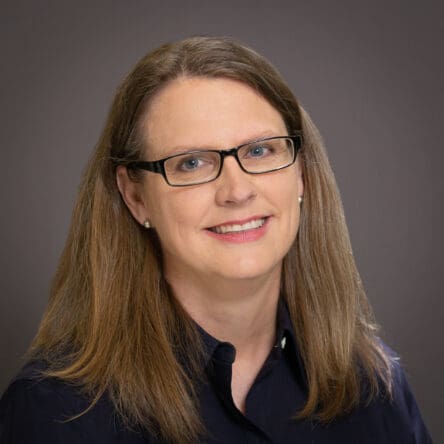
Gina McCarley was one of the original national pilot teachers for the AP Computer Science Principles course. She has been a teacher of the AP CSP course since the pilot and involved in the exam reading as both a table leader and a reader. Previously she was the moderator for the AP CSP community. Gina also works as an AP Computer Science Principles teacher mentor and student study session leader. She has taught both AP CS Principles and AP CS A to students in North Alabama where she lives. Gina has been working in education since leaving the industry in 1999.
Course Description
AP Computer Science Principles is an introductory computer science course. Students in AP CSP will design and evaluate solutions through creative development of algorithms and programs. They will evaluate data and explore the impacts of computing innovations and computings systems.
APSI AP CSP Description:
Participants will learn about the AP Computer Science Principles introductory computer science course. They will examine the course requirements and framework through the Big Ideas of the course that include Creative Development, Data, Algorithms and Programming, Computer Systems and Networks, and Impact of Computing.
APSI Takeaways:
Participants will …
1. Gain an understanding of the course and the curriculum framework.
2. Examine requirements for the required performance task and end of course assessment.
3. Explore options for pacing, planning and sequencing their course.
4. Consider lesson examples and strategies for addressing multiple big ideas in the same unit or lesson.
5. Review the curricular requirements and syllabus development.
DeLora Mowery – Yukon High School, Yukon, OH
AP Environmental Science
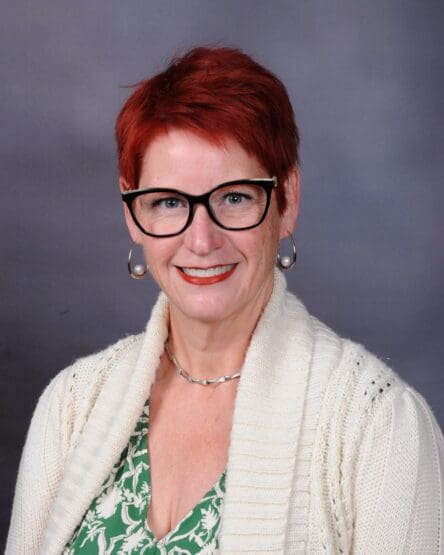
DeLora Mowery began teaching in 1999 and is currently at Yukon High School (Yukon, OK). During her tenure (2012 to present) there she has taught Biology, Pre-AP Biology, Chemistry, AP Physics I, Pre-AP Chemistry, AP Chemistry, APES, and Environmental Science. She was Science Department Chair from 2014 – 2016, and is currently a YHS PLC Facilitator under the Professional Learning Community model, on the YHS AP Advisory Board, a member of the Advisory Planning Committee, and the National Honor Society Advisor.
DeLora has been an adjunct faculty member for Redlands Community College (2012 to 2020) and Oklahoma City Community College (2018 to present). DeLora has been awarded several grants over her teaching career including Weyerhauser “Excellence in Recycling” Award, Yukon Foundation Grant, the Samsung “Solve for Tomorrow” Competition winning the State Award for Oklahoma acquiring $20, 000 worth of Samsung technology, and the Funds For Teachers Fellowship in 2025. In 2026, the Oklahoma Science Teaching Association (OSTA) named her High School Science Teacher of the Year for 2026.
DeLora earned a Bachelor of Science in Biology from Oklahoma City University, earned a Master of Science in Environmental Science from the University of Oklahoma, did her PhD work in Environmental Science, and earned a Master of Education in Chemistry Education from Illinois State University. She has been an AP Environmental Science teacher since 2015. In addition, she has been working with the College Board as an APES Reader since 2020 and an AP Consultant for both AP Environmental Science and AP Chemistry since 2021.
Course Description
This in-person course is designed to maximize the learner experience, providing relevant AP content and pedagogy through meaningful engagement—all focused on best practices for preparing your AP students for success. This class is designed for AP Environmental teachers with varying experience. The intensive four-day course will provide an overview of the entire AP Environmental Science (APES) curriculum. Each day, important concepts will be discussed and related specifically to APES free-response questions, and participants will perform laboratories associated with these concepts. The major goal is to expose participants to both content and hands-on activities important to teaching a successful APES course. In addition, additional AP resources will be discussed, specifically AP Classroom. Participants will be expected to spend a small amount of time on homework for this Institute, which might include working up lab data, preparing a course syllabus, or completing a Free Response Exam. Participants are encouraged to share electronic materials/favorite web sites as some class time will be reserved for this purpose. Participants should have their school calendar for the coming year and a scientific calculator of some type available.
Ryan Brink, Sweeney High School, Sweeney, TX
AP Precalculus (New and Experienced Teachers)
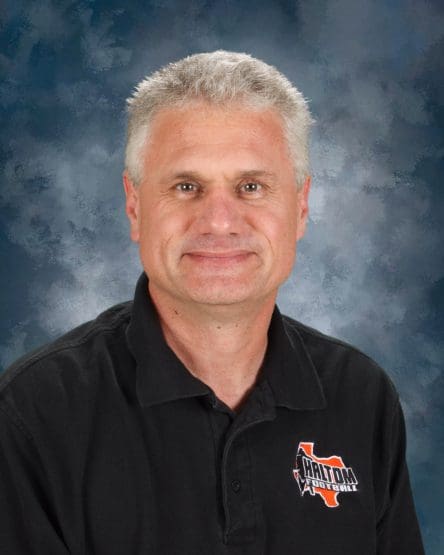
I am currently in my 23rd year of teaching high school mathematics in Texas, currently serving as the math department head at Sweeny High School in Sweeny, Texas. I have been involved with the AP Program for over 15 years having taught 7 different AP subjects in both math and science. I have served as an AP Reader and AP Table Leader. I am currently a CollegeBoard consultant for the new AP Precalculus and I am excited about being involved in the launch of this new opportunity for our students. I earned my bachelor’s degree in Mechanical and Aerospace Engineering from the University of California, Irvine, my M.Ed. from the University of North Texas, and have a graduate certificate in Mathematics from Texas Tech University. In my spare time, I enjoy traveling and going to the beach.
Course Description
During this AP Precalculus APSI, you’ll explore the course framework, the exam, and the AP resources that will help you plan and focus instruction to help make your students successful in the course and on the AP exam. You’ll also complete the digital activation process that will give you immediate access to the new resources and will help ensure that your students can register for AP Exams by the new fall deadlines. By attending this APSI, you’ll gain deeper insight into the following key takeaways, among several others: Understand the Course; Plan the Course; Teach the Course; Assess Student Progress; and Engage as a Member of the AP Community. In addition, specific attention will be paid to the following AP Classroom resources: unit guides, personal progress checks, AP teacher community, and the AP question bank. You will walk away from the Summer Institute confident that you are ready to teach the course with a strong understanding of the format of the exam, the language of the exam, and the content of the course.
What to Bring
Laptop, USB drive to save your work
Kris Campos – Cedar Park High School, Cedar Park, TX
AP Spanish Language and Culture (New and Experienced Teachers)

Kris Campos has been a Spanish teacher at Cedar Park High School in the suburbs of Austin, Texas since 2008, where she also serves as Department Chair for Languages other than English and Sponsor of the Sociedad Honoraria Hispánica. Prior to moving to Texas, she taught for 10 years at Topeka West High School in Topeka, Kansas. Kris has taught AP Spanish Language and Culture for 25 years, and has also taught all other levels of Spanish, from Spanish I through AP Spanish Literature. She has participated in the AP Reading since 2004, as a Reader, Table Leader, Sample Selector and most recently as Question Leader. In addition to serving as an AP Consultant and AP Mentor, Kris has also presented workshops at local conferences and served as a mentor for new AP teachers in her district. She received both her Bachelor’s and Master’s Degrees from Kansas State University.
Course Description
This comprehensive workshop is designed to help all teachers of AP Spanish Language and Culture, whether they are new to AP or have years of experience and are looking to refresh and refine their teaching. We will cover all aspects of the course and exam, from designing and planning the course to implementing and assessing instruction. We will explore the Course and Exam Description, including the course revisions that are expected to take effect for the 2026-2027 school year, and provide guidance on how to design and pace the course. Sample classroom activities and materials will be provided, and participants will have multiple opportunities to work collaboratively and share best practices for developing student proficiency. In addition, we will develop thematic units that the participants can take and use in their classes.
Some specific topics that will be covered are:
- Signing up for the AP Audit
- Participating in the AP Community
- Ensuring equity and access for our students
- Exploring the new digital exam format
- Incorporating the six course themes
- Developing proficiency in the three modes of communication (interpretive, interpersonal and presentational)
- Introducing the new course project, which will require students to use authentic source materials in the target language to prepare for authentic speaking tasks on the exam
- Expanding vocabulary
- Incorporating literature into the language course
- Developing cultural proficiency using the 3 Ps
- Maximizing the use of AP Classroom resources, such as AP Daily Videos, Progress Checks and the AP Question Bank
- Applying the scoring guidelines to student samples of the free response questions